What Is a Jab, Drywall, and Keyhole Saw? What Are They Used For?
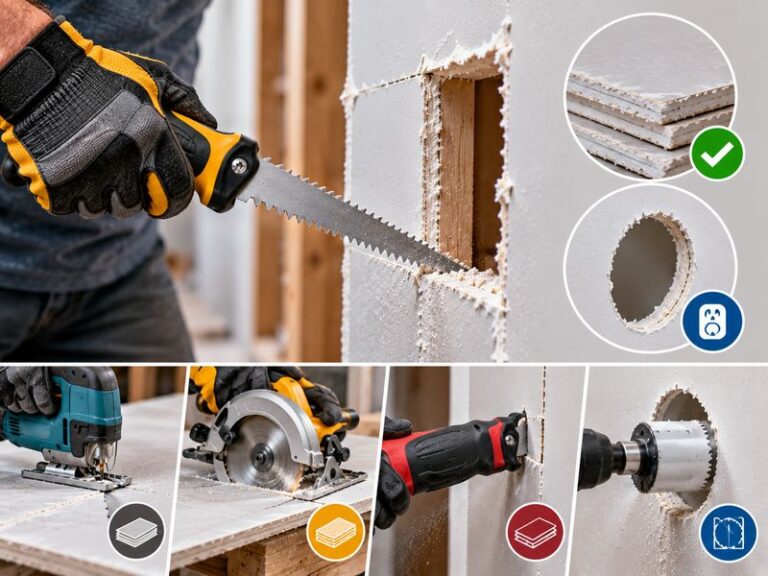
If you are looking at small hand saws for cutting drywall, you may come across three names again and again: jab saw, drywall saw, and keyhole saw. At first glance, they can look almost identical. Each usually has a narrow blade, a pointed or tapered end, and a handle designed for one-handed cutting. That naturally raises an important question: are they actually different saws, or are they simply different names for the same tool?
The answer is that there is a lot of overlap. A jab saw and a drywall saw are often essentially the same tool, especially when the saw has a pointed blade designed to punch directly through gypsum board. A keyhole saw follows the same general idea but is traditionally a little more versatile. Its narrow blade is useful for making small openings, curved cuts, and interior cuts in materials such as drywall, thin wood, plastic, and paneling.
For a beginner, the names matter less than the blade shape, tooth design, material being cut, and type of cut you need to make.
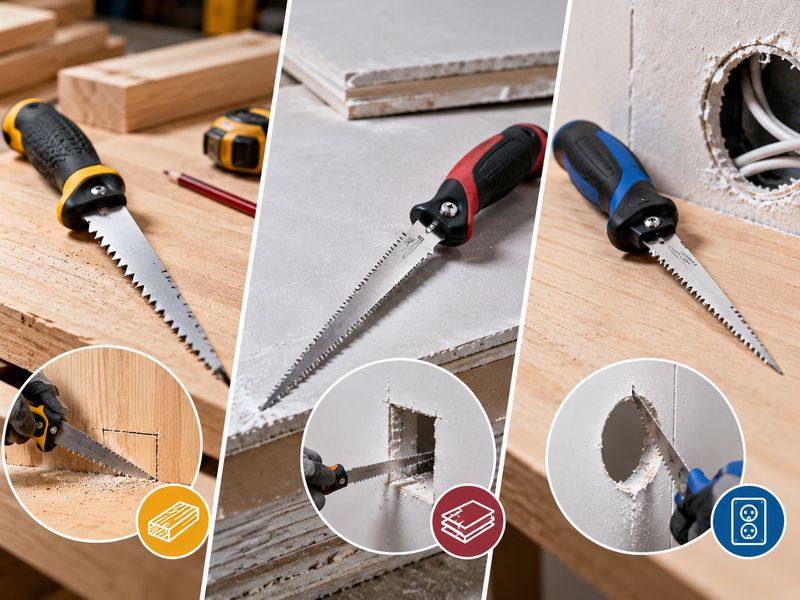
In this guide, you will learn what each saw is, what it is used for, how the three types compare, how to use them safely, and how to choose the right one for common DIY, remodeling, electrical, plumbing, and drywall projects.
What Is a Jab Saw?
A jab saw is a small hand saw with a narrow, pointed blade designed primarily for making openings in drywall and other relatively soft building materials.
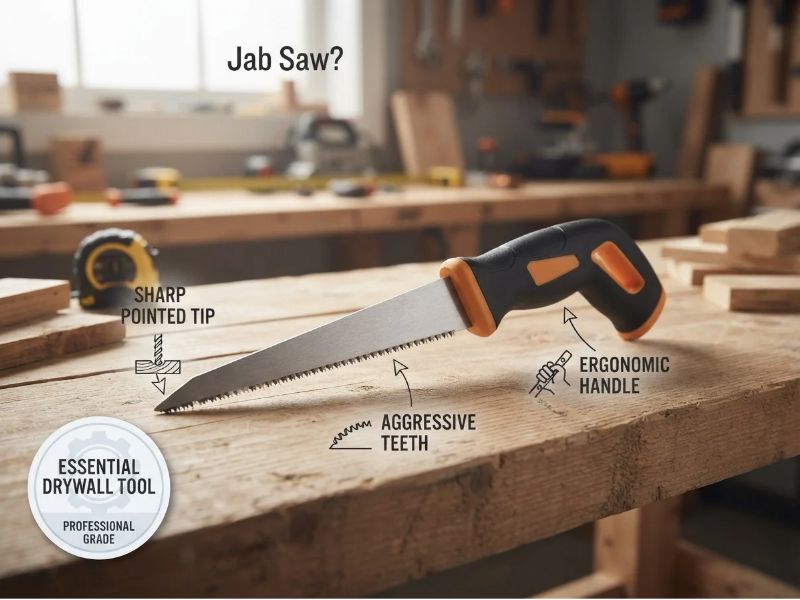
The word “jab” comes from one of the tool’s most recognizable features. The pointed tip allows the user to carefully push or jab the blade through drywall to create a starter hole. Once the blade is through the surface, the toothed edge is used to saw along the marked cutting line.
Most jab saws have a relatively short blade compared with traditional woodworking hand saws. The blade is normally narrow enough to turn around corners and follow moderately curved lines.
A typical jab saw includes:
- A pointed blade tip
- Sharp, relatively aggressive saw teeth
- A narrow metal blade
- A comfortable one-handed handle
- A blade long enough to pass through standard drywall
Some jab saws have teeth on only one edge, while others may have cutting teeth arranged to work efficiently during both push and pull strokes.
Because it is small, inexpensive, and requires no electricity, a jab saw is commonly found in the toolboxes of drywall installers, electricians, plumbers, remodelers, maintenance technicians, and DIY homeowners.
What Is a Jab Saw Used For?
A jab saw is mainly used for cutting holes and openings in drywall, particularly when the cut begins somewhere in the middle of a sheet rather than at an exposed edge.
Common jab saw uses include cutting openings for:
- Electrical outlet boxes
- Light switches
- Junction boxes
- Recessed lights
- Plumbing pipes
- HVAC vents
- Access panels
- Speaker openings
- Cable pass-throughs
- Small drywall repair sections
For example, imagine that an electrical box has already been installed behind a sheet of drywall. Once you locate and mark the box, you can use the pointed tip of a jab saw to create a starter hole and then carefully cut around the outline.
The same technique can be used when installing a small access panel for plumbing or wiring.
Cutting Drywall Openings
Drywall is where a jab saw performs best.
The gypsum core inside drywall is relatively soft, allowing the saw’s aggressive teeth to remove material quickly. Because the blade is narrow, it is also easier to control around small rectangular or irregular openings.
Making Interior Cuts
One of the major advantages of a jab saw is its ability to make an interior cut.
With a conventional hand saw, you generally need to start from an exposed edge. A jab saw can start in the middle of a drywall panel because its pointed blade can create the initial opening.
This makes it particularly useful during remodeling and renovation.
Cutting Around Pipes and Fixtures
The narrow blade also makes a jab saw useful when creating irregular openings around pipes, conduit, cable bundles, or other fixtures.
However, extra care is required whenever the saw is being used on an existing wall because electrical wires and plumbing lines may be hidden behind the drywall.
What Is a Drywall Saw?
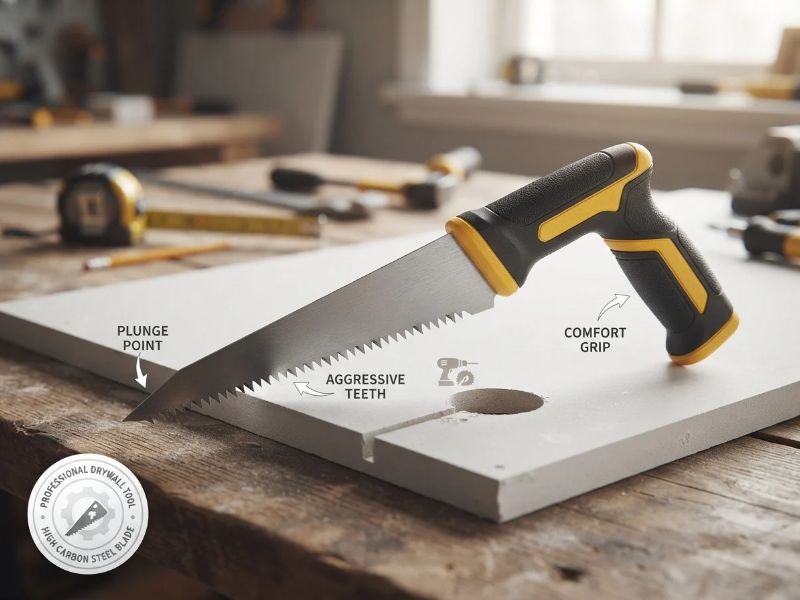
A drywall saw is a hand saw specifically designed for cutting drywall, gypsum board, plasterboard, and similar wallboard materials.
In many cases, a drywall saw is simply another name for a jab saw.
Walk into different hardware stores or look at different tool manufacturers and you may find essentially the same tool labeled as:
Drywall saw
Jab saw
Drywall jab saw
Wallboard saw
The exact terminology depends on the manufacturer.
A typical drywall saw has a narrow steel blade, an aggressive tooth pattern, and a sharpened point at the end of the blade. This pointed end allows the user to penetrate drywall without first drilling a large starter hole.
The handle is usually thick enough to provide a secure grip because cutting drywall produces both forward-and-backward motion and a fair amount of dust.
What Is a Drywall Saw Used For?
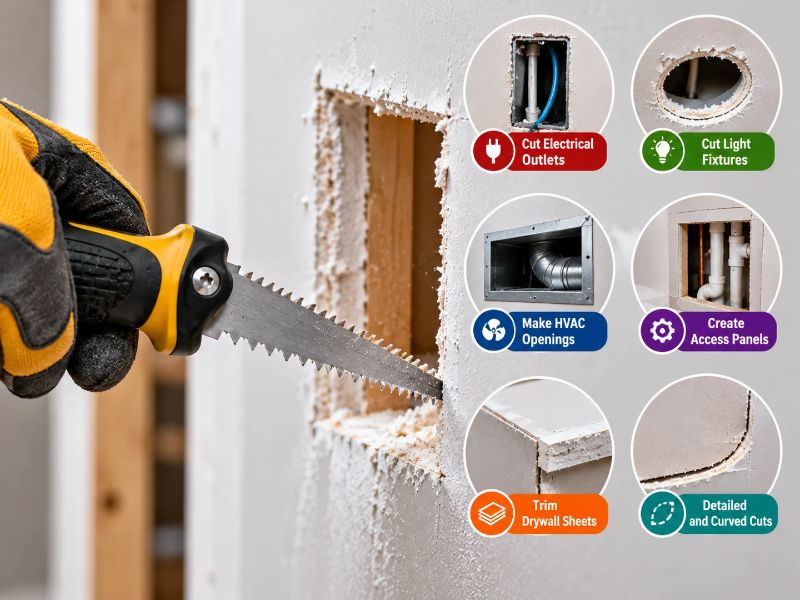
A drywall saw is used for making small to medium-sized cuts and openings in drywall sheets.
Its most common applications are similar to those of a jab saw because the two names often describe the same tool.
A drywall saw is especially useful when installing or modifying:
- Electrical boxes
- Wall outlets
- Switch boxes
- Recessed lights
- Ceiling fixtures
- Plumbing access points
- Vent openings
- Small access doors
- Low-voltage wiring
- Cable outlets
Drywall Installation
During new drywall installation, sheets often need openings for outlets, switches, pipes, and fixtures.
A drywall saw allows the installer to cut these openings after marking their locations.
For long, straight cuts across an entire drywall sheet, however, a utility knife and straightedge are usually more efficient. Drywall can often be scored with a knife, snapped along the score line, and cut through the backing paper.
A drywall saw is more useful for internal openings and irregular shapes.
Drywall Repair
The tool can also be used when removing a damaged section of drywall.
For example, if water damage affects a small rectangular area, the damaged section can be marked and cut away before a replacement patch is installed.
Care must be taken not to cut too deeply into the wall cavity.
Is a Jab Saw the Same as a Drywall Saw?
In most everyday situations, yes—a jab saw and a drywall saw refer to the same or extremely similar hand tool.
Both normally feature:
- A short, narrow blade
- A pointed tip
- Aggressive cutting teeth
- A one-handed handle
- A design intended for drywall openings
The biggest difference is usually the name used by the manufacturer or retailer, rather than a major mechanical difference between the tools.
“Jab saw” describes the way the pointed blade can be pushed or jabbed into the material.
“Drywall saw” describes the material the tool is primarily intended to cut.
Therefore, a tool advertised as a drywall jab saw combines both descriptions.
This overlap is important for beginners because you do not generally need to buy separate jab and drywall saws simply because the packaging uses different names.
Instead, look at the blade length, blade stiffness, teeth, handle quality, and intended material.
What Is a Keyhole Saw?
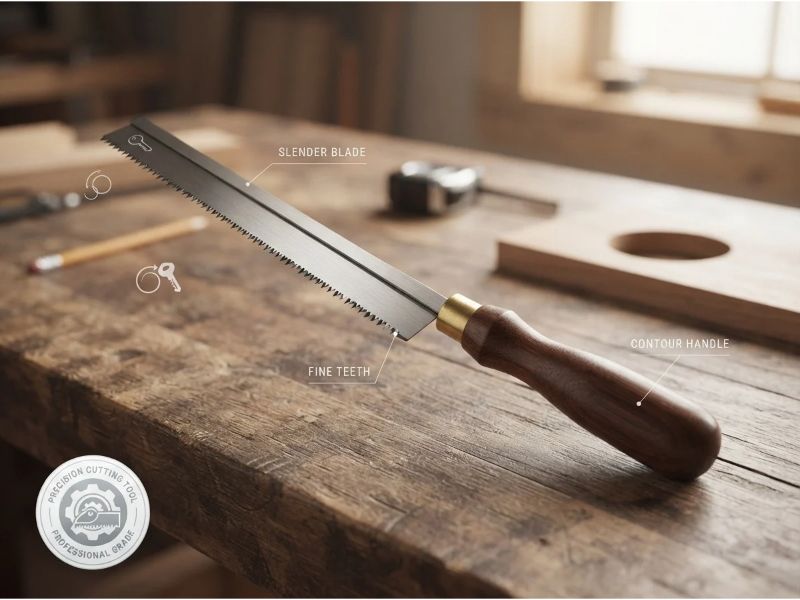
A keyhole saw is a narrow-bladed hand saw designed for making small openings, curved cuts, irregular shapes, and interior cuts.
The name comes from the type of small, enclosed opening that this style of saw can create. Traditionally, keyhole saws were useful for cutting shapes that could not easily be reached with a large hand saw.
A keyhole saw usually has:
- A narrow blade
- A tapered or pointed tip
- A relatively short cutting length
- A straight or pistol-style handle
- Teeth suitable for thin materials
Some keyhole saws have replaceable blades, while others may have retractable or adjustable blades.
Unlike a tool marketed specifically as a drywall saw, a keyhole saw may be intended for several different materials.
Depending on its tooth pattern and blade design, it may cut:
- Drywall
- Thin wood
- Plywood
- Soft plastic
- Wallboard
- Paneling
- Fiberboard
- Some plaster-based materials
Because of this broader range of applications, a keyhole saw can be considered a more general-purpose narrow hand saw.
What Is a Keyhole Saw Used For?
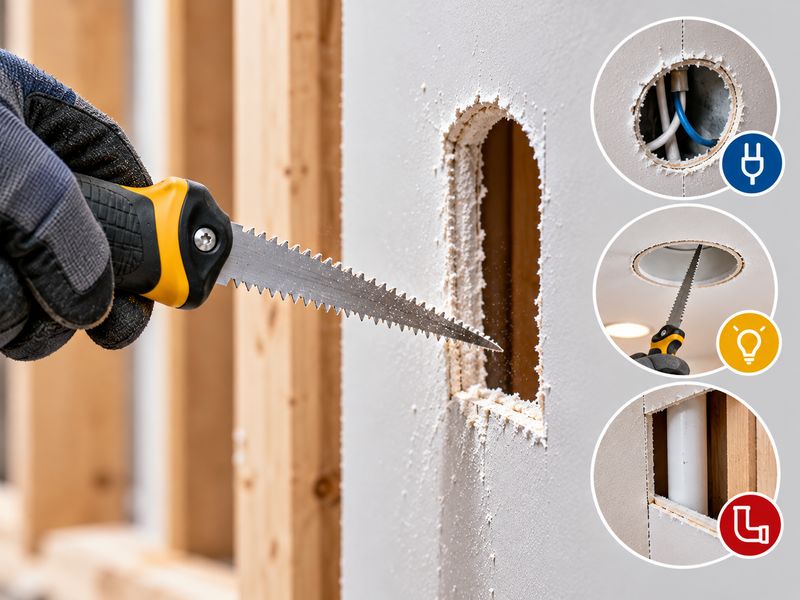
A keyhole saw is used when a standard hand saw is too large, too wide, or unable to start inside the workpiece.
Its narrow blade makes it especially useful for small interior openings and shapes that require tighter control.
Typical uses include:
- Cutting small holes in drywall
- Making openings in thin wooden panels
- Cutting curved shapes
- Trimming around fixtures
- Making openings for pipes
- Cutting access points
- Creating interior cutouts
- Working in confined spaces
Cutting Curves
The narrow blade of a keyhole saw can turn more easily than the wide blade of a conventional hand saw.
That makes it useful for curves and irregular shapes.
It will not normally produce curves as smoothly or quickly as a jigsaw, but for small manual jobs where power tools are unnecessary, it can be very effective.
Cutting Thin Wood and Paneling
Depending on the blade, some keyhole saws can cut thin plywood, wood paneling, fiberboard, and similar sheet materials.
This is one area where the term keyhole saw can be broader than drywall saw.
A drywall-specific jab saw may have very coarse teeth optimized for gypsum board. A keyhole saw designed for woodworking may have a different tooth pattern that produces a more controlled cut in wood.
Jab Saw vs Drywall Saw vs Keyhole Saw
The three tools belong to the same general family of small, narrow-bladed hand saws, but their names emphasize slightly different characteristics.
| Feature | Jab Saw | Drywall Saw | Keyhole Saw |
| Main purpose | Interior cuts and openings | Cutting drywall | Small and curved interior cuts |
| Common material | Drywall | Drywall/gypsum board | Drywall, thin wood, plastic, paneling |
| Blade shape | Narrow and pointed | Narrow and pointed | Narrow, often tapered |
| Can start inside material? | Yes | Yes | Usually yes |
| Good for drywall? | Excellent | Excellent | Usually |
| Good for curves? | Moderate | Moderate | Good |
| Typical tooth pattern | Aggressive | Aggressive | Varies by application |
| Names interchangeable? | Often with drywall saw | Often with jab saw | Sometimes, but not always |
The important takeaway is that jab saw and drywall saw are usually the closest match.
A keyhole saw overlaps with them but can be designed for a wider range of materials and tighter cutting shapes.
Why Do These Saws Look So Similar?
All three tools solve a similar problem: making a cut where a large traditional saw cannot easily work.
A regular hand saw has a wide blade designed primarily for longer cuts from the edge of a board.
A jab, drywall, or keyhole saw uses a narrow blade because narrow blades can:
- Enter small openings
- Turn more easily
- Work in confined spaces
- Cut internal shapes
- Follow irregular lines
A pointed end also allows some models to penetrate softer materials without requiring a separate drill hole.
That shared design explains why the terms are sometimes used interchangeably.
What Does a Jab Saw Look Like?
A typical jab saw looks like a large, heavy-duty knife combined with a small saw.
It usually has a 3- to 8-inch narrow metal blade, although dimensions vary by manufacturer.
The blade becomes narrower toward the tip, ending in a relatively sharp point.
Along one or both edges are coarse saw teeth.
The handle is normally made from plastic, rubber, or a combination of materials. Many modern models use a rubberized ergonomic grip to reduce slipping and improve control.
Some models also fold like a folding knife. A folding jab saw protects the blade during storage and can be convenient for a tool bag.
What Does a Drywall Saw Look Like?
Because drywall saw and jab saw frequently describe the same design, a drywall saw normally has:
- A pointed blade
- Coarse teeth
- A rigid metal spine or blade
- A large hand grip
The pointed nose is one of the easiest ways to recognize it.
Unlike a standard handsaw, which may have a blade more than a foot long, a drywall saw is intentionally compact.
What Does a Keyhole Saw Look Like?
A traditional keyhole saw has a very narrow, tapered blade extending from a handle.
The blade may look thinner and less aggressive than a dedicated drywall saw.
Some keyhole saw designs allow blades to be changed depending on the material being cut.
Older or traditional versions may have a wooden handle, while modern models commonly use molded plastic or rubber.
How Does a Jab Saw Work?
A jab saw works through simple manual sawing action.
The teeth on the blade scrape and remove material as the saw moves backward and forward.
When working with drywall, the pointed nose may first be pushed through the paper facing and gypsum core.
Once enough of the blade enters the wallboard, the user starts making short, controlled strokes along the marked line.
Because drywall is relatively soft, the saw does not require a motor.
However, more speed is not always better. Slow, controlled strokes give the user better control and reduce the chance of damaging nearby drywall or hidden components.
How to Use a Jab or Drywall Saw
Using a jab saw is straightforward, but wall cavities can contain electrical wires, plumbing pipes, insulation, and structural components, so preparation matters.
1. Mark the Cutting Area
Use a pencil and measuring tool to clearly mark the shape of the opening.
For an electrical box, for example, mark the box dimensions carefully.
Accurate marking helps prevent an oversized hole.
2. Check Behind the Wall
Before pushing a blade into existing drywall, consider what may be behind it.
Look for nearby:
- Electrical outlets
- Switches
- Plumbing fixtures
- Studs
- Pipes
- Wiring routes
A stud finder with appropriate detection functions may help identify framing or some hidden utilities, but no detection method should be treated as perfect.
3. Create the Starter Opening
On safe, clear drywall, position the pointed tip inside the marked waste area.
Apply controlled pressure to create an opening.
Do not aggressively drive the entire blade deep into an unknown wall cavity.
The blade only needs to penetrate enough to begin cutting the drywall.
4. Begin Sawing
Use short, steady strokes.
Keep the blade close to the surface so unnecessary blade length does not enter the wall cavity.
5. Follow the Marked Line
Guide the blade along your outline.
At corners, slow down and reposition the saw rather than forcing the blade sideways.
6. Remove the Cut Piece
Once the opening is complete, carefully remove the waste piece.
Clean loose gypsum dust and inspect the edges before installing the fixture.
How to Use a Keyhole Saw
Using a keyhole saw follows the same basic principle, but the exact technique depends on the material.
For drywall, a pointed keyhole saw may create its own starter opening.
For wood or plastic, it is often better to drill a starter hole first rather than forcing the saw tip through the surface.
Insert the narrow blade through the starter opening and make controlled strokes along the cutting line.
When cutting curves, move gradually and avoid twisting the blade aggressively. Narrow blades can bend or break if excessive sideways force is applied.
Can a Jab Saw Cut Wood?
A jab saw may cut thin wood, but that does not necessarily mean it is the best choice.
A drywall jab saw usually has coarse teeth designed for cutting gypsum board quickly. In wood, those teeth can produce a rough cut and may be harder to control.
For thin wooden paneling, a keyhole saw with an appropriate wood-cutting blade is generally more suitable.
For larger woodworking cuts, consider tools such as a:
- Hand saw
- Jigsaw
- Circular saw
- Oscillating multi-tool
The correct choice depends on the shape and size of the cut.
Can a Drywall Saw Cut Plywood?
A drywall saw can physically cut some thin plywood, but results may be rough.
Drywall blades are optimized for gypsum and paper, not clean woodworking.
A keyhole saw or jigsaw equipped with a wood blade will normally provide better control.
For precise plywood work, avoid treating a drywall saw as a universal cutting tool.
Can a Keyhole Saw Cut Drywall?
Yes. Many keyhole saws can cut drywall very effectively.
In fact, this is one reason the terms jab saw, drywall saw, and keyhole saw are sometimes mixed together.
If the keyhole saw has an appropriate pointed blade and aggressive teeth, it can perform many of the same tasks as a drywall jab saw.
The main difference is that not every keyhole saw is designed specifically for drywall.
Can a Jab Saw Cut Plaster?
It depends on the type of wall.
Modern gypsum drywall is relatively easy to cut with a jab saw.
Traditional plaster walls may be much harder, especially when the plaster is installed over wood lath or metal lath.
Trying to force a basic drywall saw through hard plaster or metal reinforcement can damage the blade and create an uncontrolled cut.
Older plaster walls also require additional caution because the wall construction may differ significantly from modern drywall systems.
Can a Jab Saw Cut Metal?
A typical drywall jab saw is not designed for cutting metal.
Its tooth geometry is intended primarily for drywall or other soft materials.
If an opening contains metal framing, conduit, sheet metal, or another metal component, use a saw or blade specifically rated for metal.
Using the wrong blade can damage the saw or increase the risk of injury.
Jab Saw vs Utility Knife
Both tools are commonly used during drywall work, but they perform different jobs.
A utility knife is excellent for making long straight cuts in new drywall sheets.
The surface paper is scored, the sheet is snapped along the score line, and the backing paper is cut.
A jab saw is better for internal openings and irregular shapes.
For example:
Use a utility knife for trimming several inches from the edge of a drywall sheet.
Use a jab saw for an outlet opening in the middle of the sheet.
Most drywall projects benefit from having both tools available.
Jab Saw vs Jigsaw
The names sound similar, but a jab saw and a jigsaw are very different tools.
A jab saw is manual.
A jigsaw is a powered saw with a rapidly moving blade.
A jigsaw is better for:
- Longer cuts
- Repeated cutting
- Wood
- Plastic
- Curves
- Projects requiring more speed
A jab saw is better for:
- Small drywall openings
- Tight spaces
- Quick manual cuts
- Jobs where electricity is unnecessary
For a single electrical outlet opening, using a jigsaw may be unnecessary. A simple jab saw is often faster to set up and easier to control.
Jab Saw vs Oscillating Multi-Tool
An oscillating multi-tool is another popular option for drywall openings.
With the correct blade, it can create clean, controlled cuts and is particularly useful when cutting flush against an edge or working with multiple building materials.
However, an oscillating tool costs significantly more than a basic jab saw and requires a battery or electrical power.
For occasional DIY drywall work, a jab saw remains one of the simplest options.
Advantages of a Jab Saw
The popularity of the jab saw comes from its simplicity.
No Power Required
There are no batteries to charge and no electrical cord.
Inexpensive
Basic drywall saws are generally affordable compared with powered cutting tools.
Easy to Carry
Their compact size makes them convenient for a toolbox or tool pouch.
Good for Interior Openings
A pointed blade can begin cutting in the middle of drywall.
Good Control
For small openings, manual cutting provides direct feedback and allows the user to move slowly.
Minimal Setup
For one or two small cuts, there is usually no need to prepare a power tool.
Limitations of a Jab Saw
A jab saw is useful, but it is not the ideal tool for every cutting job.
It can be:
- Slow for long cuts
- Rough on wood
- Unsuitable for metal
- Difficult for highly precise finish work
- Risky when used blindly inside finished walls
It also produces drywall dust, so eye protection and appropriate cleanup are important.
How to Choose a Jab, Drywall, or Keyhole Saw
For a beginner, focus on practical features rather than the exact product name.
Blade Type
For drywall, choose a blade with aggressive teeth and a pointed tip.
For thin wood or plastic, look for a keyhole saw specifically rated for those materials.
Blade Strength
A blade that is too flexible may wander during drywall cutting.
A reasonably rigid blade gives better control.
Handle Comfort
Look for an ergonomic, non-slip grip.
A secure handle matters because hand sawing involves repeated movement.
Folding Design
A folding drywall saw can be convenient if you carry multiple tools in a bag.
The folded blade reduces the chance of exposed teeth damaging other equipment.
Replaceable Blades
For frequent use, replaceable blades may increase the useful life of the tool.
Safety Tips When Using a Drywall or Jab Saw
The most serious risk is usually not the drywall itself—it is what may be hidden behind it.
Always remember that walls may contain live electrical wiring, plumbing, gas lines, data cables, insulation, and structural framing.
Keep these safety principles in mind:
- Do not drive the blade deeply into an unknown wall cavity.
- Use controlled, shallow strokes.
- Identify likely wiring and plumbing routes before cutting.
- Wear safety glasses to protect against drywall dust.
- Consider respiratory protection when producing significant dust.
- Keep your free hand away from the blade path.
- Do not use a damaged or badly bent blade.
- Use the correct blade for the material.
- Shut off relevant electrical circuits when appropriate before working around electrical boxes.
If you are uncertain about what is behind a finished wall, investigating the wall cavity safely is more important than making the cut quickly.
How to Maintain a Jab or Keyhole Saw
These saws require little maintenance.
After use, remove drywall dust and debris from the blade.
Keep the tool dry to help prevent rust.
If the teeth become dull, damaged, or badly bent, replace the blade or saw depending on its design.
Folding saws should also be checked occasionally to make sure the locking mechanism functions properly.
Which Saw Should a Beginner Buy?
If your main goal is cutting drywall openings, choose a good-quality jab saw or drywall saw.
You do not need separate tools simply because one package says “jab saw” and another says “drywall saw.”
If you expect to work with drywall plus thin wood, plastic, paneling, or curved openings, a versatile keyhole saw with appropriate blades may be worth considering.
For many DIY toolkits, a simple drywall jab saw and a utility knife will handle a large percentage of basic drywall cutting tasks.
Frequently Asked Questions About Jab, Drywall, and Keyhole Saws
Are a jab saw and drywall saw the same?
In most cases, yes. Jab saw and drywall saw are commonly used as interchangeable names for a pointed, narrow-bladed hand saw designed for cutting drywall.
Is a keyhole saw the same as a drywall saw?
Not exactly. A keyhole saw uses a similar narrow-blade design, and many keyhole saws can cut drywall. However, keyhole saws may also be designed for wood, plastic, paneling, and other thin materials.
Why is it called a jab saw?
It is called a jab saw because the pointed blade can often be pushed or “jabbed” into drywall to create the initial opening before sawing begins.
What is the main purpose of a drywall saw?
The main purpose of a drywall saw is to create openings and irregular cuts in drywall, such as holes for outlets, switches, pipes, vents, and access panels.
What is the main purpose of a keyhole saw?
A keyhole saw is primarily used to create small interior openings, curves, and irregular shapes where a larger saw would be difficult to use.
Do I need to drill a hole before using a jab saw?
Usually not when cutting drywall with a pointed jab saw. The tip is designed to create a starter opening.
For harder materials such as wood or plastic, drilling a starter hole is often safer and easier.
Can I use a jab saw for electrical outlet holes?
Yes. Cutting openings for electrical outlet and switch boxes is one of the most common uses of a jab saw.
Be extremely careful when cutting existing walls because live electrical wiring may be located behind the drywall.
Can you use a drywall saw on ceilings?
Yes. A drywall saw can make openings in drywall ceilings for recessed lights, vents, speakers, and other fixtures.
Ceiling work can produce falling dust and debris, so proper eye protection is particularly important.
Is a jab saw a power tool?
No. A traditional jab saw is a manual hand tool.
Powered tools such as jigsaws, reciprocating saws, rotary cutout tools, and oscillating multi-tools can perform some similar jobs but operate differently.
What is another name for a drywall saw?
Depending on the manufacturer or region, a drywall saw may also be called a jab saw, drywall jab saw, wallboard saw, or plasterboard saw.
Is a jab saw good for long straight cuts?
It can make them, but it is generally not the most efficient option.
For long straight cuts in new drywall sheets, a utility knife and straightedge are usually faster.
Can a keyhole saw make curved cuts?
Yes. Its narrow blade is one of the main reasons a keyhole saw works well for small curves and irregular openings.
Final Thoughts
A jab saw, drywall saw, and keyhole saw all belong to a closely related group of compact hand saws designed for cuts that are difficult to make with a conventional full-size saw.
A jab saw has a narrow, pointed blade that can penetrate drywall and is commonly used for electrical boxes, plumbing openings, vents, access panels, and other interior cutouts.
A drywall saw is generally the same type of tool, with the name emphasizing its primary purpose: cutting drywall or gypsum board. In many stores and tool catalogs, the terms drywall saw and jab saw are used interchangeably.
A keyhole saw follows a similar narrow-blade design but can be somewhat more versatile. Depending on its blade, it may cut drywall, thin wood, plastic, paneling, and other sheet materials. It is especially useful for small openings, curves, and irregular interior cuts.
For most beginners working primarily with drywall, there is no need to purchase three separate saws. A well-made drywall jab saw can handle most wallboard openings, while a keyhole saw becomes useful when you need greater versatility or tighter curved cuts.
Ultimately, the right tool depends less on what the manufacturer calls it and more on the material you are cutting, the blade and tooth design, and the shape of the opening you need to create.