Will a Miter Saw Cut Metal? What You Need to Know Before Cutting
A miter saw is commonly associated with cutting wood, trim, molding, and other construction materials. However, many people wonder whether the same tool can also be used for metal.
So, will a miter saw cut metal? The answer is yes, but only when the saw and blade are specifically suitable for the material. A standard wood-cutting miter saw should not automatically be used to cut metal simply by installing any metal blade.
The type of metal, blade design, blade speed, thickness of the material, and the manufacturer’s specifications all matter. Using the wrong blade or an incompatible saw can result in poor cuts, excessive heat, sparks, blade damage, or a dangerous kickback.
Will a Miter Saw Cut Metal?
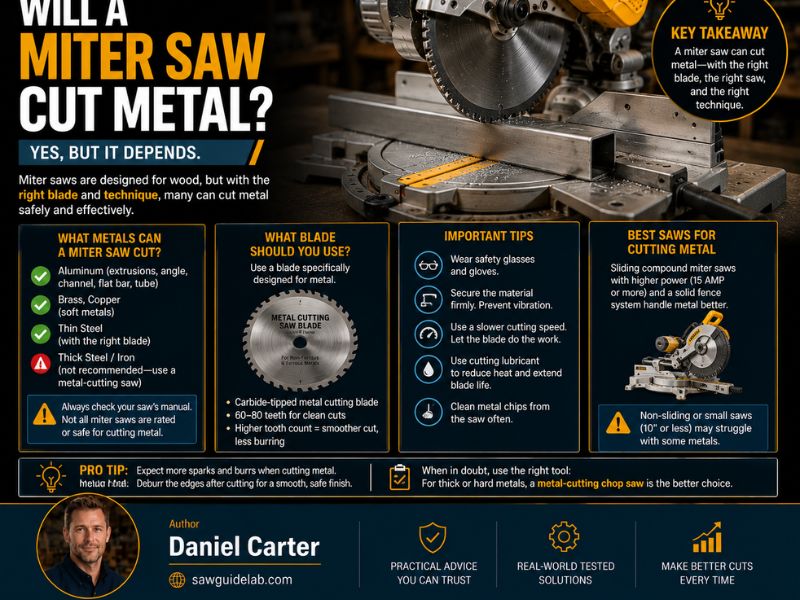
Yes, a miter saw can cut certain types of metal when equipped with an appropriate metal-cutting blade and used within the tool manufacturer’s specifications.
The important point is that not every miter saw is designed for metal cutting.
Metal behaves differently from wood. It can generate substantial heat and resistance during cutting, and some metals require specialized blades and cutting speeds.
Before cutting metal, check:
- The miter saw’s manufacturer specifications
- Recommended blade types
- Maximum blade RPM
- Material thickness limitations
- Whether the tool is approved for metal cutting
If the saw is specifically designed or approved for metal cutting, follow the manufacturer’s instructions carefully.
What Types of Metal Can a Miter Saw Cut?
The type of metal you can cut depends on the saw, blade, and material thickness.
Aluminum
Aluminum is relatively soft compared with steel, so it can be easier to cut.
A suitable carbide-tipped blade designed for non-ferrous metals can produce clean cuts in aluminum profiles, tubing, and similar materials.
However, aluminum can still create chips and potentially bind a blade if it is not properly secured.
Steel
A suitable miter saw and metal-cutting blade can be used to cut some types of steel.
Mild steel is generally easier to work with than harder alloys.
Applications may include:
- Steel tubing
- Angle iron
- Metal profiles
- Thin structural components
The blade must be specifically rated for steel, and the material thickness must remain within the tool’s capabilities.
Stainless Steel
Stainless steel can be more challenging to cut because it is harder and can generate considerable heat.
A blade specifically designed for stainless steel or the particular material being cut may be necessary.
Cutting too aggressively can cause excessive heat and shorten blade life.
Thin Metal and Metal Tubing
A miter saw can be useful for certain thin metal materials and tubing when the correct setup is used.
Common examples include:
- Square tubing
- Rectangular tubing
- Angle iron
- Aluminum profiles
- Thin sheet or metal sections
The workpiece should always be securely clamped before cutting.
What Blade Do You Need to Cut Metal With a Miter Saw?
The blade is one of the most important factors when cutting metal.
A wood-cutting blade should not be substituted for a blade specifically designed for metal.
Abrasive Metal-Cutting Blade
An abrasive cutting wheel removes material through friction rather than conventional cutting teeth.
These wheels can be used for certain metal-cutting applications, depending on the saw.
Advantages can include:
- Ability to cut steel
- Relatively low initial cost
- Availability for common metal-cutting applications
However, abrasive wheels can generate significant heat, sparks, and debris.
They may also produce rougher cuts and more dust than a quality carbide metal-cutting blade.
Carbide-Tipped Metal-Cutting Blade
A carbide-tipped blade designed specifically for metal can provide a cleaner and more controlled cut than many abrasive wheels.
Depending on the blade design and material, these blades can be used for applications involving:
- Steel
- Aluminum
- Stainless steel
- Other non-ferrous metals
Always select a blade that specifically matches the material and the saw’s specifications.
Why You Should Not Use a Wood-Cutting Blade on Metal
Wood blades are designed for cutting wood fibers, not metal.
Using one on metal can cause:
- Damaged or broken teeth
- Excessive heat
- Poor cutting performance
- Blade failure
- Kickback
- Potential injury
A blade may physically fit the saw but still be completely unsuitable for the application.
Can Any Miter Saw Cut Metal?
No.
A standard wood-cutting miter saw is not automatically suitable for metal cutting.
You need to consider several factors.
Standard Wood-Cutting Miter Saws
Some standard miter saws are designed primarily for wood and should only be used with blades and materials approved by the manufacturer.
Do not assume that installing a metal blade makes the saw suitable for every metal-cutting application.
Metal-Cutting Miter Saws
Some saws are specifically designed for metal.
These tools may have features intended to handle:
- Metal-cutting blades
- Heat
- Metal chips
- Sparks
- Different cutting loads
They can be a better choice for frequent metal fabrication.
RPM Considerations
Blade speed is particularly important when cutting metal.
A blade designed for a specific RPM should not be operated beyond its rated speed.
Using an incompatible blade at excessive speed can be dangerous.
Always compare the blade’s maximum RPM rating with the saw’s operating speed before installation.
Manufacturer Specifications
The safest approach is to follow the tool manufacturer’s instructions.
If the manufacturer does not approve metal cutting, do not assume the saw is safe simply because a metal blade fits.
How to Cut Metal With a Miter Saw
If your saw is approved for the application, use a careful setup.
1. Choose the Correct Blade
Select a blade specifically designed for the metal you intend to cut.
Check:
- Blade diameter
- Arbor size
- Tooth design
- Material compatibility
- Maximum RPM
2. Secure the Metal Properly
Never rely on your hand to hold a piece of metal in place.
Use the saw’s clamp or another appropriate workholding system.
Metal can move unexpectedly when the blade contacts it.
3. Mark the Cut Line
Measure the material carefully and mark the exact cutting location.
For repetitive work, a stop or guide can help maintain consistent lengths.
4. Wear Appropriate Safety Equipment
Metal cutting can produce sharp chips, sparks, and significant noise.
Use appropriate:
- Eye protection
- Hearing protection
- Suitable work clothing
- Gloves when appropriate for the task
Keep loose clothing and other objects away from the rotating blade.
5. Start the Saw Before Contacting the Metal
Allow the blade to reach its intended operating speed before bringing it into contact with the workpiece.
Do not force the blade into the material.
6. Make the Cut Slowly and Smoothly
Use controlled pressure.
Let the blade do the cutting rather than forcing it through the material.
Excessive force can increase heat, vibration, blade wear, and the risk of binding.
7. Allow the Blade to Stop Completely
After completing the cut, keep the saw in position until the blade has stopped rotating.
Do not lift the saw away while the blade is still spinning if doing so could expose you or the material to unnecessary risk.
Is It Safe to Cut Metal With a Miter Saw?
Cutting metal with a suitable miter saw can be safe when the tool, blade, material, and operating procedure are compatible.
However, metal cutting introduces hazards that may not be present when cutting wood.
Sparks and Hot Metal
Steel cutting can generate sparks and hot particles.
Keep flammable materials away from the work area.
Eye Protection
Metal chips can travel at high speed.
Wear appropriate safety glasses or eye protection suitable for the work.
Face and Hearing Protection
For applications producing substantial sparks, chips, or noise, additional protective equipment may be appropriate.
Fire Hazards
Sparks from cutting steel can ignite combustible materials.
Inspect the surrounding area before starting work.
Workpiece Movement
Loose metal can shift, rotate, or bind the blade.
Secure the material firmly before cutting.
Kickback
Kickback can occur when the blade binds or the material moves unexpectedly.
Maintain proper control and use the manufacturer’s recommended cutting procedure.
Miter Saw vs. Metal-Cutting Saw
A miter saw equipped with an appropriate blade can work for occasional metal cutting, but a dedicated metal-cutting saw may be more suitable for frequent fabrication.
| Feature | Miter Saw With Proper Metal Blade | Dedicated Metal-Cutting Saw |
| Aluminum | Good | Excellent |
| Steel | Depends on saw/blade | Excellent |
| Precision | Good | Excellent |
| Portability | Good | Varies |
| Heavy-duty metal work | Limited | Better |
| Wood cutting | Excellent | Usually not intended |
| Versatility | High with compatible blade | Specialized |
If your primary job involves metal, a dedicated metal-cutting tool is generally a more appropriate long-term solution.
When Should You Use a Miter Saw for Metal?
A compatible miter saw can make sense when you need to perform occasional metal cuts.
Occasional Metal Cutting
If metal cutting is only a small part of your project, using a compatible saw and blade may be practical.
Small Tubing
A suitable saw can be useful for cutting certain types of metal tubing when the material is within the manufacturer’s recommended limits.
Aluminum Profiles
A carbide blade designed for aluminum and other non-ferrous metals can be useful for certain profiles and extrusions.
Light Fabrication
For occasional fabrication work, a suitable miter saw can provide convenient angled cuts.
Projects Where Angle Cuts Are Needed
The adjustable angle capability of a miter saw can be helpful when metal components need precise miter cuts.
When Should You Not Use a Miter Saw for Metal?
There are situations where another tool is a better choice.
Heavy Steel
Thick steel can place substantial loads on the saw and blade.
Use equipment specifically designed for the material and thickness.
Frequent Metal Fabrication
If you regularly cut metal, a dedicated metal-cutting saw is usually a better investment.
Material Beyond Tool Specifications
Never exceed the saw’s recommended material thickness or blade specifications.
When the Manufacturer Prohibits Metal Cutting
If the manufacturer states that the saw is intended only for wood or approved materials, do not use it for metal.
Excessive Sparks or Heat
If the setup creates excessive heat, sparks, vibration, or other abnormal behavior, stop and reassess the tool and cutting method.
Frequently Asked Questions
Can a regular miter saw cut metal?
Some miter saws can cut certain metals when equipped with a compatible metal-cutting blade, but not every regular miter saw is approved for metal cutting. Always check the manufacturer’s specifications first.
Can a miter saw cut steel?
Yes, a properly rated miter saw with an appropriate steel-cutting blade can cut certain types and thicknesses of steel.
Can you cut aluminum with a miter saw?
Yes. Aluminum can be cut with a suitable miter saw and a blade specifically designed for aluminum or other non-ferrous metals.
What blade do I need to cut metal with a miter saw?
You need a blade specifically rated for the type of metal you are cutting. Depending on the application, this may be an abrasive metal-cutting wheel or a carbide-tipped metal-cutting blade.
Can I use a wood blade to cut metal?
No. Wood-cutting blades are not designed for metal and can become damaged or create a dangerous cutting situation.
Is cutting metal with a miter saw dangerous?
It can be if the wrong saw, blade, or cutting method is used. Metal cutting can produce sparks, sharp chips, heat, noise, and kickback hazards. Proper tool selection, workpiece securement, and protective equipment are essential.
Final Thoughts on Cutting Metal With a Miter Saw
So, will a miter saw cut metal? Yes, but only when the saw is suitable for the application and equipped with the correct metal-cutting blade.
Aluminum, mild steel, tubing, and other metals can be cut with appropriate equipment, but the exact capabilities depend on the saw, blade, material, and thickness.
Never use a standard wood blade to cut metal, and do not assume that any miter saw can safely handle metal simply because a metal blade fits it. Check the manufacturer’s specifications, use the correct blade and RPM, secure the workpiece, and wear appropriate safety equipment.
For occasional light metal cutting, a compatible miter saw can be useful. For frequent or heavy-duty metal fabrication, a dedicated metal-cutting saw is generally the better choice.