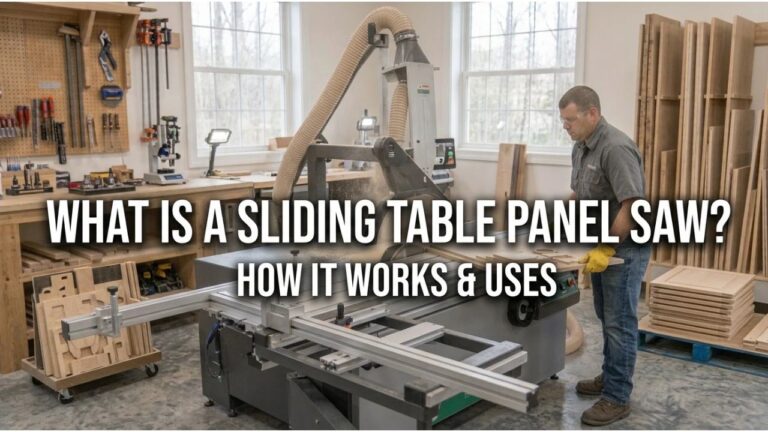
What Is a Panel Saw Blade? Types, Teeth, Uses, and Selection
A panel saw blade is a circular saw blade designed to cut large sheet materials such as plywood, MDF, particleboard, melamine, laminate panels, and other manufactured boards cleanly and accurately. Depending on the panel saw and material, the blade may use a high tooth count, carbide-tipped teeth, specialized ATB or TCG tooth geometry, and a relatively thin or controlled kerf to reduce chipping and produce smooth edges.
The term does not always describe one single universal blade. A vertical panel saw may use a blade similar to a high-quality circular saw blade, while an industrial sliding or beam panel saw can use much larger, more specialized blades. Some professional machines also use a smaller scoring blade in front of the main blade to prevent the decorative surface from chipping.
The right blade depends heavily on what you are cutting. A blade that works well on construction plywood may not leave a clean enough edge on melamine-faced particleboard. Likewise, an extremely fine 80-tooth blade may produce beautiful crosscuts but may cut slowly or generate excess heat in thicker material.
In this guide, I’ll explain what a panel saw blade is, how it differs from a regular circular or table saw blade, what tooth count and tooth geometry work best, and how to choose blades for plywood, MDF, melamine, laminate, and other sheet goods.
What Does a Panel Saw Blade Do?

A panel saw blade performs the actual cutting in a panel saw.
The panel saw itself provides the frame, guide rails, carriage, table, fence, or sliding mechanism that controls the material and saw.
The blade determines how cleanly the material is cut.
Large sheet materials are different from ordinary solid lumber.
Plywood contains alternating veneer layers.
MDF consists of compressed wood fibers and resin.
Particleboard contains wood particles and adhesive.
Melamine and laminate panels have hard decorative surfaces over an engineered core.
These materials place different demands on a blade.
A good panel saw blade needs to cut through both the surface layer and the core without excessive chipping, burning, vibration, or wandering.
Why Panel Cutting Requires a Good Blade
A rough blade may be acceptable when cutting construction lumber because the edge will often be hidden.
Cabinet panels are different.
If you cut a white melamine cabinet side and the decorative coating chips along the edge, the defect remains visible.
Likewise, veneered plywood can splinter badly when a coarse blade exits the surface.
This is why panel saw blades often use more teeth and more refined carbide tooth geometry than framing blades.
Key Takeaways:
- Panel saw blades are designed primarily for sheet goods rather than rough dimensional lumber.
- Blade tooth count and geometry strongly affect chipping and surface quality.
- The best blade depends on whether you are cutting plywood, MDF, laminate, melamine, or another panel material.
Is a Panel Saw Blade Different From a Circular Saw Blade?
Sometimes yes, but the terms can overlap.
Many vertical panel saws use standard-diameter circular saw blades.
For example, a smaller workshop panel saw may use a blade in a size similar to what you would find on a circular saw or table saw.
The difference is often in the blade specification, not the basic shape.
A panel-cutting blade usually emphasizes clean cutting rather than maximum speed.
It may have:
more teeth, finer carbide, specialized tooth geometry, lower vibration, and a blade body designed for smoother cuts.
A typical framing circular saw blade might have 24 teeth.
A panel-cutting blade of similar diameter might have 40, 48, 60, or more teeth depending on its intended material.
Industrial Panel Saw Blades
Large industrial panel saws may use blades far larger than ordinary handheld saws.
They can be designed for continuous production in cabinet factories and furniture manufacturing.
These blades may use highly specialized carbide tooth patterns and precision-ground plates.
The basic principle is still the same, but they are not interchangeable with small-shop circular saw blades.
Panel Saw Blade vs. Table Saw Blade
A panel saw blade and table saw blade can sometimes be physically interchangeable if diameter, arbor size, RPM rating, kerf, and machine requirements match.
However, their intended cutting characteristics may differ.
A table saw used for ripping hardwood might use a 24-tooth rip blade.
That would cut plywood quickly but might leave noticeable splintering.
A panel saw blade is more likely to use a higher tooth count for cleaner cuts across veneers and decorative surfaces.
Can You Use a Table Saw Blade on a Panel Saw?
Possibly, if the machine manufacturer permits it and all specifications match.
Check:
blade diameter, arbor or bore size, maximum RPM, kerf width, tooth count, and tooth geometry.
Never install a blade simply because it physically fits the arbor.
A blade that is too thick or too thin may interfere with the machine’s riving knife, scoring system, guards, or alignment.
What Tooth Count Is Best for a Panel Saw Blade?
There is no single perfect tooth count.
The correct number depends on blade diameter and material.
Smaller panel saw blades often use roughly 40 to 60 teeth for general sheet cutting.
Larger 10- or 12-inch blades may use 60 to 100 teeth for fine panel work.
Industrial blades can use even more specialized tooth arrangements.
Low Tooth Count
Fewer teeth mean larger gullets between teeth.
Those gullets clear chips efficiently.
This makes low-tooth-count blades faster, but the cut is usually rougher.
They are suitable for construction sheathing and applications where edge quality is not critical.
Medium Tooth Count
A medium tooth count provides a good balance.
This is often the best choice for general-purpose plywood cutting.
You get reasonably fast feed speed with much cleaner edges than a framing blade.
High Tooth Count
High-tooth-count blades remove smaller amounts of material per tooth.
That generally produces a smoother edge.
They work especially well on veneered plywood, laminate-faced panels, and other finished sheet goods.
The tradeoff is slower cutting and potentially more heat if feed rate is too slow.
What Does TPI Mean on a Panel Saw Blade?
TPI means teeth per inch and is more commonly used when describing bandsaw, hacksaw, or jigsaw blades.
Circular panel saw blades are usually described by total tooth count rather than TPI.
For example, you might see a 10-inch 80-tooth blade rather than a circular blade labeled by teeth per inch.
The principle is similar, though.
More closely spaced teeth generally produce finer cuts.
What Is ATB Tooth Geometry?
ATB stands for Alternate Top Bevel.
With ATB blades, the top of each tooth is beveled in alternating directions.
One tooth leans one way, the next tooth leans the opposite way.
This creates a slicing action across the surface fibers.
Why ATB Is Good for Plywood
Plywood consists of thin wood veneers.
A flat tooth can tear the fibers as it exits the surface.
ATB teeth slice through those fibers more cleanly.
For this reason, ATB blades are among the most popular choices for clean plywood and veneered panel cutting.
High-ATB Blades
Some blades use a steeper bevel angle.
These are often called high-ATB blades.
They can produce exceptionally clean edges in veneered plywood and other fragile surfaces.
However, the sharper tooth points may wear faster when cutting very abrasive engineered materials.
What Is TCG Tooth Geometry?
TCG stands for Triple Chip Grind.
A TCG blade alternates between a chamfered tooth and a flat-topped raker tooth.
The chamfered tooth removes the corners of the cut first.
The flat tooth follows and removes the remaining center material.
This tooth geometry is highly durable.
Why TCG Is Good for Laminate and Melamine
Hard decorative surfaces can be abrasive.
A fragile ATB tooth may lose its sharp edge faster.
TCG geometry distributes the cutting load differently and handles abrasive materials well.
It is commonly used for:
laminate, melamine, MDF, particleboard, plastics, and non-ferrous materials when the blade is designed for them.
A TCG blade may not always produce the absolute finest veneer cut compared with a premium high-ATB blade, but its durability makes it an excellent panel-production choice.
Key Takeaways:
- ATB blades are excellent for clean cuts in plywood and wood veneer.
- TCG blades are highly durable and work well on abrasive laminate, melamine, and composite panels.
- Tooth geometry can matter as much as total tooth count.
What Is a Scoring Blade?
A scoring blade is a small auxiliary blade used on some industrial panel saws and sliding table saws.
It cuts a shallow groove into the bottom surface of the panel just before the main blade reaches it.
The main blade then cuts through the full thickness.
Why Scoring Blades Reduce Chipping
When a circular saw blade exits the underside of a coated panel, it can lift and chip the decorative surface.
The scoring blade cuts that surface cleanly first.
This gives the main blade a pre-cut edge and greatly reduces breakout.
Scoring is particularly useful for melamine, laminate, and high-quality veneered panels.
Do All Panel Saws Have Scoring Blades?
No.
Many vertical panel saws and smaller workshop machines use only one main blade.
You can still achieve very clean results with the correct sharp blade.
Industrial cabinet shops often prefer scoring systems because they need consistent chip-free edges at high production speeds.
What Blade Is Best for Plywood on a Panel Saw?
For general plywood, a carbide-tipped ATB blade with a medium-to-high tooth count is usually an excellent choice.
A fine finish blade cuts the face veneer cleanly and reduces splintering.
For a common smaller-diameter panel saw, roughly 40 to 60 teeth may work very well.
For a 10-inch machine, 60 to 80 teeth is common for fine plywood cutting.
These are guidelines, not universal requirements.
Blade geometry and carbide quality are also important.
Cabinet-Grade Plywood
If you are cutting expensive hardwood plywood for cabinets, prioritize cut quality.
A high-ATB blade can produce extremely clean veneer edges.
Use a sharp blade and make sure the panel is properly supported.
Construction Plywood
For subfloor, sheathing, or rough shop work, you can use fewer teeth.
There is little benefit in using an expensive ultra-fine finish blade where the edges will be hidden.
What Blade Is Best for MDF?
MDF is dense and abrasive.
It can also produce a huge amount of fine dust.
A carbide-tipped blade with relatively high tooth count and durable geometry works well.
TCG blades are often a strong choice because MDF’s resin and compressed fibers can wear cutting edges.
MDF Does Not Splinter Like Plywood
Because MDF has no wood veneer grain, it does not splinter in exactly the same way.
Instead, the challenge is producing a smooth edge without burning and keeping the blade sharp.
A dull blade can make MDF edges fuzzy or darkened from friction.
Dust Collection Matters
Panel saw blade selection cannot solve MDF dust.
Use effective dust extraction and appropriate respiratory protection.
MDF cutting creates fine airborne particles that can spread throughout the shop.
What Blade Is Best for Melamine?
Melamine is one of the more demanding materials for panel cutting because the decorative coating can chip easily.
For a single-blade system, use a high-quality fine-tooth carbide blade specifically intended for melamine or laminate.
TCG is commonly used.
Some premium high-ATB blades also perform very well.
Best Results With Scoring
If your machine includes a properly aligned scoring blade, use it.
A scoring system can produce nearly chip-free cuts on both surfaces.
Without scoring, correct blade height, sharp carbide, rigid material support, and proper feed rate become more important.
What Blade Is Best for Laminate Panels?
Laminate surfaces are hard and abrasive.
A TCG carbide blade is commonly the best general choice.
The alternating chamfer and flat teeth handle the hard surface while maintaining durable cutting edges.
Very fine ATB blades can also work, but they may dull more quickly in abrasive laminate.
If you cut laminate panels every day, blade durability matters almost as much as edge quality.
What Blade Is Best for Particleboard?
Particleboard cuts well with carbide-tipped blades, but it can wear blades faster than ordinary wood because of adhesive and abrasive particles.
For raw particleboard, a medium-to-high tooth count carbide blade is usually sufficient.
For melamine-faced particleboard, use a blade optimized for coated panels.
Again, TCG is a very practical choice.
What Blade Is Best for OSB?
OSB does not normally require a fine-finish panel blade.
It is a structural sheet material made from large wood strands and adhesive.
A lower- or medium-tooth-count carbide blade cuts it efficiently.
Using a premium 80-tooth finish blade on construction OSB is generally unnecessary.
A 24- to 40-tooth blade may be adequate depending on blade diameter and desired edge quality.
What Is Blade Kerf?
Kerf is the width of the cut made by the blade.
A thicker blade removes more material.
A thin-kerf blade removes less.
Thin-Kerf Panel Saw Blades
Thin kerf reduces cutting resistance.
This can help smaller motors and portable panel saws maintain speed.
It also creates less waste.
However, thinner blade plates can be more susceptible to deflection if the blade overheats or is pushed aggressively.
Full-Kerf Blades
Thicker blades are generally more rigid.
Industrial panel saws with powerful motors often use more substantial blades because stiffness helps maintain straight cuts during high production.
Always use the kerf recommended for your machine.
Why Blade Diameter Matters
Panel saw blades come in many diameters.
The correct size is determined by the machine.
Never install a larger blade because you want more cutting depth unless the manufacturer explicitly permits it.
A larger blade may contact the guard, frame, or internal components.
It may also have a different maximum safe RPM.
Likewise, a smaller blade can alter cutting depth and geometry.
Use the specified diameter.
Why Arbor Size Matters
The arbor is the shaft or mounting point that holds the blade.
The hole in the blade must match the machine.
A loose or incorrect arbor fit can cause vibration and dangerous blade movement.
Do not enlarge an arbor hole yourself.
Use a blade manufactured for the correct arbor size or a machine-approved bushing system if specifically permitted.
What Does Blade RPM Rating Mean?
Every blade has a maximum rotational speed.
The saw should never run the blade faster than that rating.
A smaller saw can spin at several thousand RPM.
Large industrial blades often operate at different rotational speeds.
Always verify compatibility between blade diameter and saw speed.
Blade overspeed is a serious safety hazard.
Why Carbide-Tipped Blades Are Best for Panel Saws
Carbide is much harder than ordinary steel.
That allows the teeth to retain sharp edges through repeated cuts in abrasive engineered panels.
Most professional panel saw blades therefore use carbide tips brazed onto a steel blade body.
Carbide Quality Matters
A cheap blade with poor carbide can dull quickly.
A premium blade may cost several times more but produce cleaner cuts and stay sharp much longer.
For a professional cabinet shop cutting thousands of panels, blade life can be more important than purchase price.
For occasional DIY work, a midrange quality blade may be completely sufficient.
Key Takeaways:
- Use the blade diameter, arbor, kerf, and RPM rating specified by the panel saw manufacturer.
- Carbide-tipped blades provide much better life in engineered sheet goods than plain steel blades.
- Thin kerf reduces cutting resistance, while thicker blades generally provide greater rigidity.
Why Does a Panel Saw Blade Chip the Material?
Several problems can cause chipping.
The blade may be dull.
The tooth count may be too low.
The tooth geometry may not match the material.
The sheet may not be supported properly.
The scoring blade, if fitted, may be misaligned.
Feed speed can also matter.
If you push too fast, teeth may tear through the surface instead of cutting cleanly.
Blade Runout
A blade that does not rotate perfectly flat can also create poor edges.
Possible causes include a warped blade body, dirty arbor flange, damaged spindle, or improperly tightened mounting hardware.
If a normally excellent blade suddenly produces inconsistent cuts, inspect the saw as well as the teeth.
Why Does a Panel Saw Blade Burn MDF or Plywood?
Burning usually indicates excessive friction.
A dull blade is one of the most common causes.
A dirty blade can also create heat because resin and adhesive buildup changes cutting geometry.
Other causes include feeding too slowly, using too many teeth for a thick cut, blade misalignment, or a carriage that forces the blade sideways.
Do not simply push harder.
Disconnect the saw and inspect the blade and machine alignment.
How Often Should You Sharpen a Panel Saw Blade?
There is no fixed number of cuts.
Blade life varies according to material.
Raw plywood may be relatively gentle.
MDF, particleboard, laminate, and melamine can be much more abrasive.
Signs that sharpening may be needed include increased cutting effort, rougher edges, burning, chipping that was not present before, and visible rounding of carbide tips.
Professional carbide blades can often be sharpened several times if the teeth and plate remain in good condition.
Can You Clean a Panel Saw Blade?
Yes.
Adhesive, resin, and panel residue can accumulate on the blade.
This buildup increases friction and can make a sharp blade behave like a dull one.
Use a blade-cleaning product compatible with carbide-tipped saw blades.
Remove the blade from the machine first.
Do not clean a mounted blade with the saw connected to power.
Avoid aggressive grinding or filing of carbide teeth.
Professional sharpening is better when the cutting edges are actually worn.
When Should You Replace a Panel Saw Blade?
Replace the blade if the plate is cracked, badly warped, or damaged.
Missing carbide teeth are another major warning sign.
Do not continue operating a high-speed circular blade with broken teeth.
A blade that cannot be sharpened safely should also be replaced.
If vibration suddenly increases, stop the saw immediately and inspect the blade before continuing.
Panel Saw Blade Selection Chart
Here is a practical general guide:
| Material | Good Blade Choice | Main Goal |
| Cabinet plywood | Fine-tooth ATB | Clean veneer edges |
| Hardwood veneer plywood | High-ATB | Minimum splintering |
| MDF | Carbide TCG or fine panel blade | Durability and smooth edge |
| Raw particleboard | Medium/fine carbide | Clean efficient cutting |
| Melamine particleboard | Fine TCG or dedicated melamine blade | Reduce coating chips |
| Plastic laminate panel | TCG carbide | Durability |
| OSB | Lower/medium tooth carbide | Fast structural cuts |
| Construction plywood | Medium tooth carbide | Speed and acceptable finish |
Treat this as a starting point.
Your panel saw manufacturer’s blade recommendations should take priority.
Can You Use a Rip Blade in a Panel Saw?
You can sometimes use one physically, but it is rarely the best choice for finished panels.
A rip blade typically has fewer teeth and large gullets.
It is designed to cut quickly along solid-wood grain.
Panel saws frequently crosscut plywood veneers and engineered materials where edge quality is more important.
A dedicated panel blade usually gives cleaner results.
Can You Use a Combination Blade?
Yes.
A good combination blade can be practical if you cut a variety of materials and do not want to change blades frequently.
It may not produce the same chip-free melamine edge as a dedicated panel blade, but it can handle general plywood and shop work well.
For occasional DIY use, a quality combination blade may provide the best balance between price and versatility.
How to Choose the Right Panel Saw Blade
Start with the machine specifications.
Determine the required diameter, arbor size, maximum kerf, and RPM rating.
Then consider the material.
For plywood, look toward ATB.
For melamine, laminate, and abrasive composite panels, consider TCG or a dedicated coated-panel blade.
Next, consider production requirements.
If you make ten cuts per month, you may value versatility.
If you make 300 melamine cuts every day, durability and edge quality justify a specialized blade.
Finally, buy a reputable carbide blade rather than choosing only by tooth count.
An accurately ground 60-tooth premium blade can outperform an inexpensive 80-tooth blade.
Common Mistakes When Choosing a Panel Saw Blade
A common mistake is assuming that more teeth always means a better blade.
High tooth count helps finish quality, but too many teeth can slow cutting and increase heat.
Another mistake is using a framing blade on finished cabinet panels.
The cut may be fast, but chipped veneers create extra work.
Some users also install a blade based only on diameter while ignoring arbor, kerf, and RPM compatibility.
And finally, do not ignore the material itself.
The best plywood blade is not necessarily the best blade for abrasive laminate.
FAQs about What Is a Panel Saw Blade
What is a panel saw blade?
A panel saw blade is a circular cutting blade designed for sheet materials such as plywood, MDF, particleboard, melamine, and laminate panels.
Is a panel saw blade different from a regular circular saw blade?
It can be similar in size and construction, but panel blades generally emphasize higher tooth counts, cleaner cuts, and tooth geometry suited to sheet materials.
What tooth count is best for a panel saw?
It depends on blade diameter and material. Medium-to-high tooth counts are commonly used for clean plywood and cabinet panels.
What is the best blade for plywood?
A carbide-tipped ATB blade with a relatively high tooth count is an excellent choice for clean plywood cuts.
What is the best blade for melamine?
A fine-tooth TCG or dedicated melamine blade is commonly used to reduce chipping.
What is the best blade for MDF?
A durable carbide blade, often with TCG geometry, works well because MDF is dense and abrasive.
What is ATB on a saw blade?
ATB means Alternate Top Bevel. The teeth alternate bevel directions to slice wood fibers cleanly.
What is TCG on a saw blade?
TCG means Triple Chip Grind. It alternates chamfered and flat teeth and is well suited to abrasive composite and laminated panels.
What is a scoring blade?
A scoring blade is a smaller blade that makes a shallow cut in the panel surface ahead of the main blade to reduce chipping.
Do all panel saws have scoring blades?
No. Many smaller and vertical panel saws use only one main blade.
Can I use a table saw blade on a panel saw?
Possibly, if diameter, arbor size, kerf, RPM rating, and machine requirements all match.
Can I use a circular saw blade on a panel saw?
Some smaller panel saws use standard circular-saw-style blades. Always follow the machine manufacturer’s specifications.
What is kerf?
Kerf is the width of material removed by the saw blade.
Are thin-kerf blades good for panel saws?
They can be useful on lower-powered machines because they require less cutting force, but the machine must be designed for that kerf.
Why does my panel saw chip plywood?
Common causes include a dull blade, too few teeth, incorrect tooth geometry, poor material support, or feed speed that is too fast.
Why does my panel saw blade burn MDF?
A dull or dirty blade, slow feed, excessive tooth count, or poor alignment can create excess friction and heat.
Can panel saw blades be sharpened?
Quality carbide-tipped blades can often be professionally sharpened several times if the blade body and teeth are not damaged.
Conclusion
So, what is a panel saw blade? It is a circular saw blade optimized for cutting large sheet materials such as plywood, MDF, particleboard, melamine, laminate, and similar panels with a clean, straight edge.
There is no single panel saw blade that is ideal for every material.
For plywood and veneered panels, a fine-tooth ATB blade is usually an excellent choice because it slices surface fibers cleanly.
For melamine, laminate, MDF, and other abrasive engineered panels, a TCG carbide blade often provides better durability while still producing smooth cuts.
Industrial panel saws may also use a separate scoring blade to prevent chipping on decorative surfaces.
Before purchasing a blade, match the diameter, arbor size, kerf, and maximum RPM to your machine. Then choose tooth count and tooth geometry based on the material you cut most often.
My recommendation is to avoid choosing a panel saw blade by tooth count alone. A sharp, accurately manufactured carbide blade with the correct tooth geometry will usually produce better results than a cheaper blade that simply has more teeth.
For general plywood work, choose a quality fine-tooth carbide panel blade. If you frequently cut melamine or laminate, step up to a dedicated coated-panel or TCG blade for cleaner edges and longer blade life.