
Why Does My Husqvarna Chainsaw Leak Bar Oil? 9 Common Causes
A small amount of bar oil around a chainsaw after use is not necessarily a problem. The chain and guide bar are designed to receive oil during operation, so some residual oil can remain on the bar, chain, and surrounding components.
However, if you notice a large puddle of oil underneath your saw or it continues leaking heavily while stored, there may be a problem with the oiling system.
If you are wondering, why does my Husqvarna chainsaw leak bar oil? common causes include an overfilled oil tank, normal residual oil from the guide bar and chain, storage position, a clogged oil outlet, damaged oil lines, a faulty oil pump, or a damaged oil tank or cap.
The first step is to identify where the oil is actually coming from. Cleaning the saw before inspecting it can make this much easier.
Why Does My Husqvarna Chainsaw Leak Bar Oil?
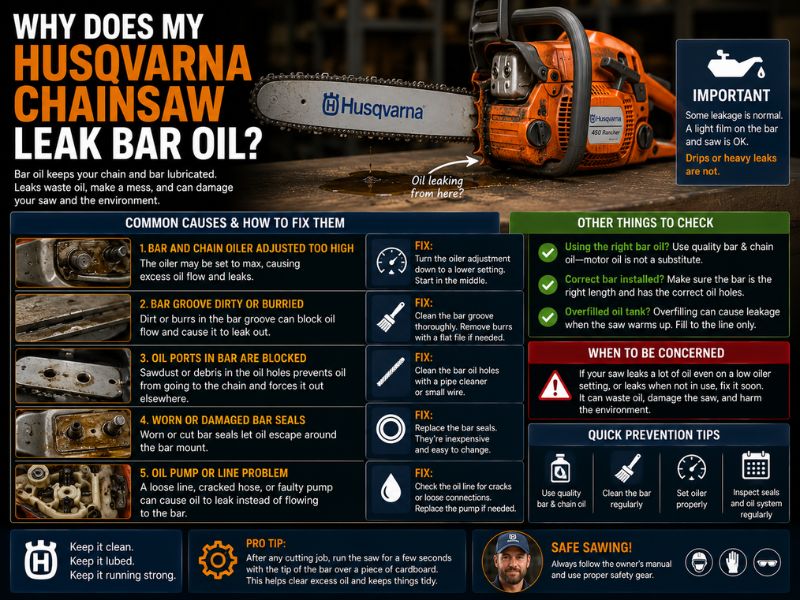
A Husqvarna chainsaw uses an automatic oiling system to deliver bar and chain oil to the guide bar and chain while the saw is running.
Because oil is constantly being delivered during cutting, some oil can remain on the chain, guide bar, and inside the clutch-cover area after the engine is turned off.
This can sometimes look like a leak.
Common causes of excessive oil leakage include:
- Overfilled oil reservoir
- Normal residual oil on the bar and chain
- Storing the chainsaw on its side
- Clogged oil outlet
- Excessive oil delivery
- Damaged oil pump
- Cracked or loose oil line
- Damaged oil tank or cap
- Internal oil-system problems
Before replacing parts, clean the saw and determine exactly where the oil originates.
9 Common Reasons a Husqvarna Chainsaw Leaks Bar Oil
1. Bar Oil Reservoir Is Overfilled
An overfilled bar oil reservoir can make it appear as though the chainsaw has a serious leak.
When the oil tank is filled beyond the recommended level, expansion, movement, or changes in position can cause oil to escape around the cap or other areas.
Check the oil level and avoid filling beyond the manufacturer’s recommended level.
If you recently filled the reservoir and immediately noticed oil underneath the saw, overfilling is one of the easiest things to rule out.
2. The Chainsaw Is Stored on Its Side
Storage position can affect how oil moves inside the chainsaw.
If the saw is placed on its side, bar oil may reach areas where it would not normally accumulate during operation.
This can result in oil dripping onto the surface underneath the machine.
Before assuming there is a mechanical leak, clean the saw and store it in the position recommended by Husqvarna for your particular model.
If the leakage only occurs while the saw is stored in a certain position, the storage position may be contributing to the problem.
3. Oil Is Coming From the Guide Bar and Chain
Some oil around the bar and chain is completely normal.
The automatic oiler intentionally sends oil to these components to reduce friction and wear.
After cutting, excess oil can remain on:
- Guide bar
- Chain
- Sprocket area
- Clutch cover
- Nearby surfaces
When the chainsaw is placed down, this residual oil can slowly drip.
A small amount of oil after operation does not necessarily mean the oil tank or oil pump is leaking.
4. The Oil Outlet or Oil Port Is Clogged
Sawdust, dirt, and debris can accumulate around the guide bar oil holes.
If these passages become restricted, oil may not distribute correctly along the guide bar.
This can cause uneven lubrication and oil buildup around certain areas.
Remove the guide bar when appropriate for your model and clean the oil passages according to the manufacturer’s maintenance instructions.
Keeping the bar groove and oil holes clean is an important part of chainsaw maintenance.
5. The Oil Pump Is Damaged or Worn
The automatic oiler pump controls the delivery of bar oil to the guide bar.
If the pump becomes worn or damaged, it may deliver oil incorrectly.
Possible symptoms include:
- Excessive oil consumption
- Poor chain lubrication
- Oil accumulating in unusual areas
- Oil continuing to flow abnormally
- Visible leakage around the oiling system
Oil pump problems can be more difficult to diagnose because the pump is part of the chainsaw’s internal oiling system.
If cleaning and basic checks do not solve the issue, professional inspection may be necessary.
6. The Oil Line Is Cracked, Loose, or Damaged
An internal oil line carries bar oil from the reservoir toward the oil pump and guide bar.
Over time, the line can become cracked, loose, blocked, or otherwise damaged.
A damaged oil line can cause oil to leak inside the saw rather than reaching the guide bar correctly.
You may notice oil accumulating around the bottom of the machine or near the clutch-cover area.
Inspect accessible oil-line connections for visible damage, but follow the service instructions for your specific Husqvarna model before removing internal components.
7. The Oil Tank or Cap Seal Is Damaged
The oil reservoir and cap need to remain properly sealed.
A damaged cap, gasket, seal, or oil tank can allow oil to escape.
Check for:
- Cracks
- Damaged threads
- Loose cap
- Worn gasket
- Oil around the cap opening
If the tank itself is cracked, it should not simply be patched with an unreliable temporary solution. Replace the damaged component with a suitable part.
8. Sawdust or Dirt Is Trapping Excess Bar Oil
Chainsaws naturally produce large amounts of sawdust.
Oil can mix with sawdust around the clutch cover, sprocket, and guide bar area, creating a thick oily buildup.
When the saw is placed down, this mixture can release oil and make it look like the chainsaw is leaking.
Regular cleaning can prevent this buildup.
Remove accumulated debris around the bar and sprocket area according to the manufacturer’s maintenance instructions.
9. A Seal or Internal Component Is Leaking
If the oil continues to leak heavily after basic checks, an internal component may be responsible.
Potential issues can include:
- Damaged seals
- Oil pump problems
- Internal oil-line damage
- Cracked internal components
- Other oil-system faults
These problems may require partial disassembly of the chainsaw.
If you cannot identify the source safely, professional service is the better option.
Why Does My Husqvarna Chainsaw Leak Bar Oil When Sitting?
A chainsaw can leave a small amount of oil underneath it after being used.
This happens because oil remains on the guide bar and chain after the automatic oiler has lubricated them.
However, continuous or excessive leakage while the saw is sitting can indicate another problem.
Normal Oil Seepage After Use
Some residual oil can drip from the bar and chain after operation.
This is especially noticeable when the chainsaw has just been used and then placed on a surface.
Overfilled Oil Tank
Too much oil in the reservoir can increase the likelihood of leakage.
Check the oil level and avoid filling beyond the recommended amount.
Storage Position
A particular storage position can allow oil to move through the oiling system and collect in unusual areas.
Follow the storage recommendations for your specific Husqvarna model.
Damaged Oil Tank or Cap
A cracked tank or damaged cap seal can cause leakage even when the chainsaw is not running.
Inspect the tank and cap carefully.
Internal Oil-System Leak
If oil continues to form a significant puddle while the chainsaw is sitting, an internal oil-line, pump, or seal problem may need to be investigated.
Why Is My Husqvarna Chainsaw Leaking Bar Oil From the Bottom?
Oil appearing underneath the chainsaw does not necessarily mean the oil tank itself is leaking.
Oil may travel from the bar and chain, clutch-cover area, oil outlet, or internal oiling system before reaching the bottom of the machine.
To identify the source, first clean the entire area.
Then check:
- Oil tank and cap
- Guide bar and oil holes
- Clutch-cover area
- Oil outlet
- Accessible oil lines
- Oil pump area
A clean surface makes it much easier to identify fresh oil.
How to Find Where Your Husqvarna Chainsaw Is Leaking Oil
Step 1: Clean the Chainsaw
Remove accumulated sawdust, dirt, and oily debris from the exterior and around the guide bar.
Make sure the engine is off and the machine is cool before cleaning.
Step 2: Check the Oil Tank and Cap
Inspect the reservoir, cap, and sealing area for cracks or visible oil.
Make sure the cap is properly installed.
Step 3: Inspect the Oil Line
Look for visible damage or loose connections in accessible areas.
Do not disassemble internal components unless you are familiar with the correct service procedure.
Step 4: Check the Oil Outlet
Inspect the guide bar oiling hole and surrounding area for sawdust or debris.
A blocked passage can interfere with proper lubrication.
Step 5: Inspect the Guide Bar and Chain
Check for excessive oil accumulation around the bar, chain, and sprocket area.
Some oil residue here is normal.
Step 6: Check the Oil Pump Area
If the leak appears to originate from inside the machine, the oil pump or another internal component may need inspection.
How to Stop a Husqvarna Chainsaw From Leaking Bar Oil
The appropriate fix depends on the source.
Use the Correct Bar and Chain Oil
Use the type of oil recommended for your chainsaw and operating conditions.
Avoid Overfilling
Fill the reservoir according to the manufacturer’s instructions.
Clean the Oiling System
Regularly remove sawdust and debris from the guide bar oil holes and surrounding areas.
Inspect the Oil Cap and Tank
Replace damaged caps, seals, or tanks when necessary.
Check Oil Lines
Damaged or loose oil lines should be repaired or replaced using appropriate components.
Store the Saw Correctly
Use the storage position recommended for your specific model.
Service the Oil Pump
If the automatic oiler is malfunctioning, the oil pump may need inspection or replacement.
Is It Normal for a Husqvarna Chainsaw to Leak Bar Oil?
A small amount of oil residue after using a Husqvarna chainsaw can be normal.
The chain and guide bar are intentionally lubricated during operation, so some oil will remain on these components.
However, a large puddle of oil, continuous leakage, or oil leaking from the body of the saw is not something to ignore.
The difference is mainly the amount and source of the oil.
If oil is simply dripping from the chain and guide bar after cutting, it may be residual lubricant.
If oil is coming from the tank, oil line, pump, or another internal area, there may be a mechanical problem.
How to Prevent Bar Oil Leaks on a Husqvarna Chainsaw
Regular maintenance can reduce excessive oil leakage and keep the lubrication system working correctly.
Maintain the Correct Oil Level
Do not overfill the reservoir.
Clean the Guide Bar
Remove sawdust and debris from the bar groove and oil passages regularly.
Clean the Sprocket Area
Accumulated sawdust and oil can collect around the clutch cover and sprocket.
Inspect the Oil Cap
Check the cap and sealing area for damage.
Monitor Oil Consumption
If your chainsaw suddenly begins using much more bar oil than usual, investigate the cause.
Follow the Manufacturer’s Maintenance Schedule
Different Husqvarna models have different designs and maintenance requirements.
Use the instructions specific to your chainsaw.
Frequently Asked Questions
Why does my Husqvarna chainsaw leak bar oil when not running?
Some residual oil from the guide bar and chain can drip after use. However, excessive leakage while the saw is sitting can be caused by an overfilled reservoir, storage position, damaged oil tank or cap, oil-line problems, or an internal oil-system fault.
Why is my Husqvarna chainsaw leaking oil from the bottom?
Oil may be coming from the guide bar, clutch-cover area, oil outlet, oil line, reservoir, or oil pump and then collecting underneath the saw. Clean the area first to identify the actual source.
Is it normal for a Husqvarna chainsaw to leak bar oil?
A small amount of oil residue after use can be normal because the chain and guide bar are lubricated during operation. A large or continuous leak is not normal and should be investigated.
Why does my chainsaw leak bar oil after I turn it off?
Oil remaining on the chain and guide bar can drip after the engine is stopped. If the oil continues to leak heavily, check the oil tank, cap, storage position, oil line, and automatic oiler system.
How do I stop my Husqvarna chainsaw from leaking bar oil?
First identify the source. Check the oil level, cap, guide bar, oil holes, clutch-cover area, and accessible oil lines. Clean accumulated sawdust and replace damaged components as necessary.
Why is my Husqvarna chainsaw using too much bar oil?
Excessive oil consumption can be related to the automatic oiler, oil pump, oil-line condition, guide bar, or operating conditions. Check the oiling system and compare oil consumption with your model’s normal operating behavior.
Final Thoughts on Why Your Husqvarna Chainsaw Leaks Bar Oil
If you are wondering why does my Husqvarna chainsaw leak bar oil, remember that a small amount of oil around the guide bar and chain after use can be normal. The automatic oiler is designed to continuously lubricate these components, so some oil will remain after cutting.
However, excessive leakage should be investigated. Start by checking the oil reservoir, cap, storage position, guide bar, oil outlet, and clutch-cover area. Clean away sawdust and old oil first so you can identify the source of fresh leakage.
If the leak appears to come from an oil line, pump, seal, or another internal component, the chainsaw may require repair or professional service.
Keeping the oil system clean, using the correct bar and chain oil, maintaining the proper oil level, and following the maintenance instructions for your specific Husqvarna model can help prevent many oil-related problems.
