What Can You Cut With a Jab Saw? Materials, Uses, and Limitations
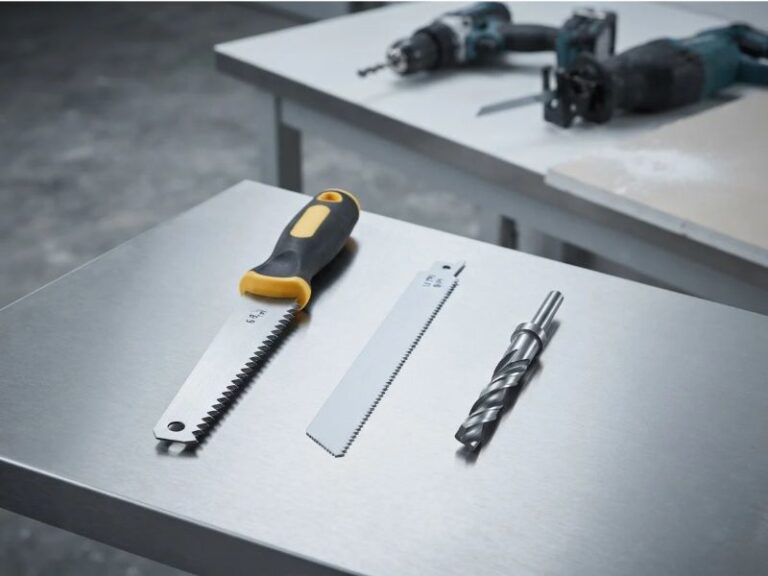
A jab saw is best known for cutting drywall, but it can handle several other lightweight materials too. Depending on the blade design and thickness of the material, you can use a jab saw on drywall, gypsum board, some plaster, thin wood, plywood, wood paneling, foam board, and certain soft plastics.
However, a jab saw is not a universal cutting tool. Its short, narrow blade and coarse teeth are designed mainly for quick interior cuts in soft building materials. It may technically cut harder materials, but that does not mean it will cut them efficiently or cleanly.
For example, a jab saw is excellent for creating an electrical outlet opening in drywall. It may also work for cutting through thin wood lath behind plaster. But it is a poor choice for thick lumber, metal, tile, cement board, or other dense materials unless the saw specifically has a blade designed for them.
The easiest way to understand what you can cut with a jab saw is to look at each material individually.
What Can You Cut With a Jab Saw?
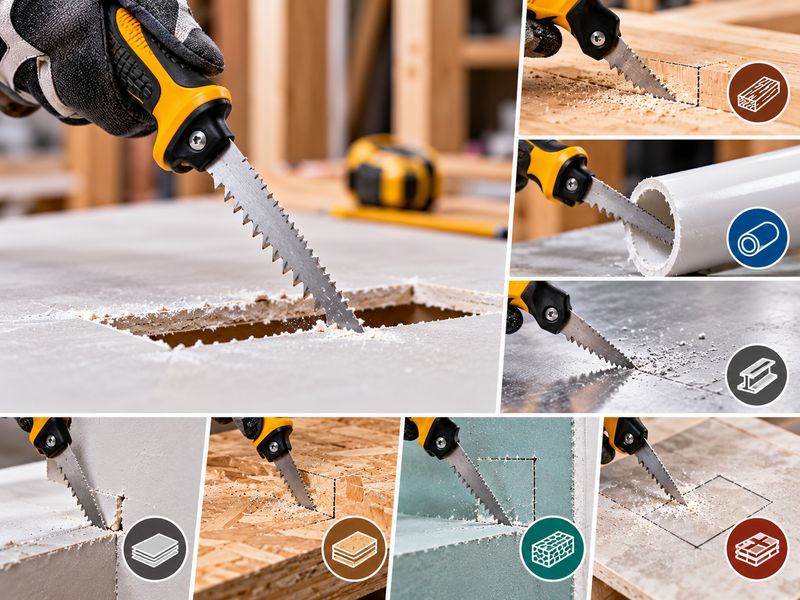
A jab saw works best on relatively soft, thin building materials.
Its most common use is drywall, but it can also cut some other materials when the job is small and the finish does not need to be perfect.
Here is a quick overview:
| Material | Can a Jab Saw Cut It? | How Well Does It Work? |
| Drywall | Yes | Excellent |
| Gypsum board | Yes | Excellent |
| Plaster | Sometimes | Fair |
| Wood lath | Yes | Fair to good |
| Thin wood | Yes | Fair |
| Plywood | Yes, if thin | Fair |
| Wood paneling | Yes | Good for small openings |
| Foam board | Yes | Good |
| Soft plastic | Sometimes | Fair |
| Cement board | Technically possible | Poor |
| Tile | Generally no | Poor |
| Metal | Not with a standard blade | Poor |
| 2×4 lumber | Technically possible | Not practical |
The main strength of a jab saw is not cutting every possible material. It is making small interior openings quickly and with good manual control.
Can a Jab Saw Cut Drywall?
Yes. Drywall is the material a jab saw is primarily designed to cut.
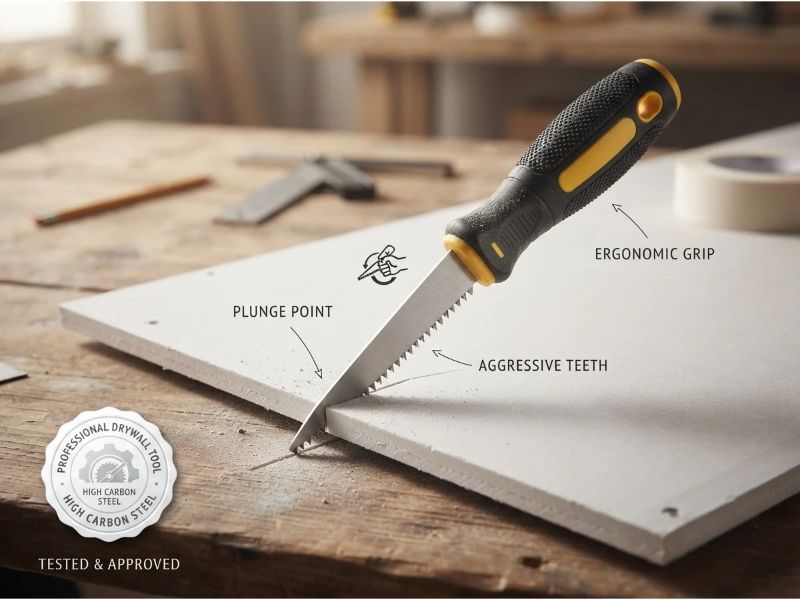
A typical jab saw has a pointed nose that can be carefully pushed through gypsum board to create a starter opening.
Once the blade is inside the drywall, its coarse teeth cut the gypsum core quickly.
This makes a jab saw especially useful for:
Electrical outlet openings, light switches, plumbing access holes, vents, speaker openings, access panels, and small drywall repairs.
Unlike a full-size hand saw, a jab saw does not need to start from the edge of the sheet.
That ability to begin in the middle of drywall is one of its biggest advantages.
Can a Jab Saw Cut Gypsum Board?
Yes. Gypsum board and drywall are essentially the same type of material in this context, so a jab saw works very well.
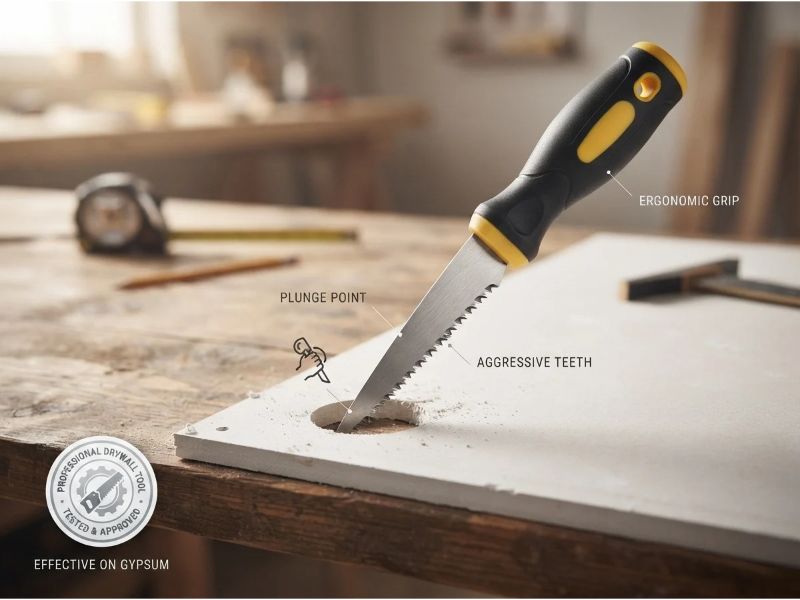
The soft gypsum center is easy for the coarse saw teeth to remove.
For long straight cuts, however, a utility knife is normally better because you can score and snap the board with much less dust.
A jab saw is most useful for holes, openings, curves, and irregular shapes.
Can a Jab Saw Cut Plaster?
A jab saw can cut some plaster, but plaster is generally harder and more brittle than drywall.
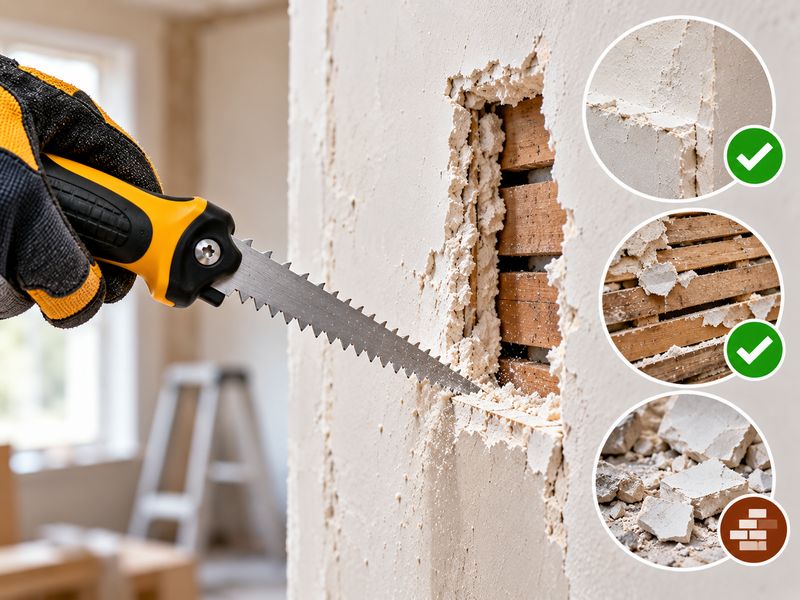
Modern gypsum-based plaster or thin plaster may be manageable.
Older plaster walls can be much more difficult because the plaster may sit over wood lath or metal lath.
The saw may pass through the plaster surface and then hit a completely different material underneath.
Another concern is cracking. Aggressive sawing can cause surrounding plaster to loosen or chip.
For small cuts in relatively soft plaster, a jab saw may work.
For thick traditional plaster, an oscillating multi-tool with the correct blade is often easier to control.
Can a Jab Saw Cut Wood Lath?
Yes. A jab saw can usually cut thin wood lath.
This is useful when working on older plaster-and-lath walls.
Wood lath consists of relatively thin strips, so the saw teeth can usually work through them.
However, cutting the lath can cause it to vibrate. That movement may loosen nearby plaster.
For controlled renovation work, an oscillating multi-tool may reduce the amount of movement transferred to the surrounding wall.
A jab saw still works when you only need a small opening and can cut carefully.
Can a Jab Saw Cut Wood?
Yes, a jab saw can cut thin or soft wood, but it is not designed primarily as a woodworking saw.
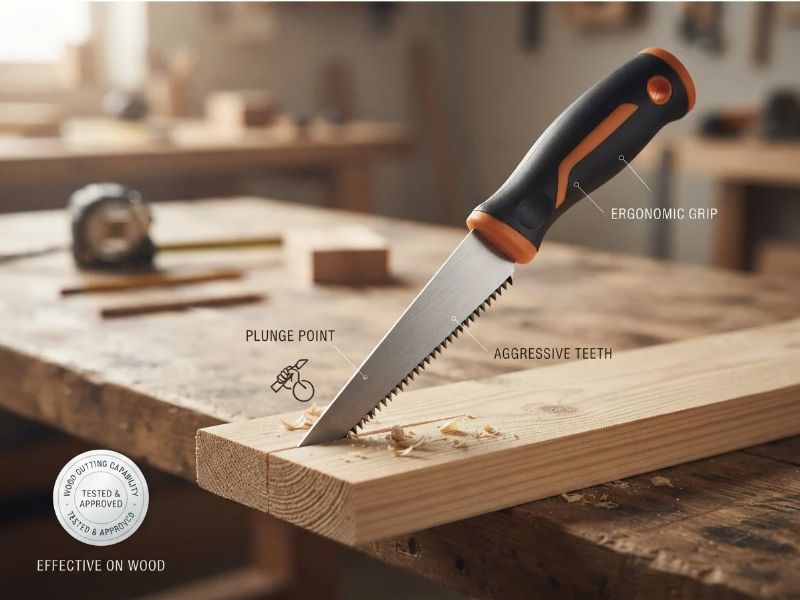
Its coarse teeth tend to leave rough edges.
You may use one for a small hidden cut where appearance is not important.
For example, it can work on a thin piece of wood blocking, paneling, or lath.
For thicker lumber or clean finish work, a dedicated wood saw is much better.
Can a Jab Saw Cut Plywood?
A jab saw can cut thin plywood, particularly when making a small interior opening.
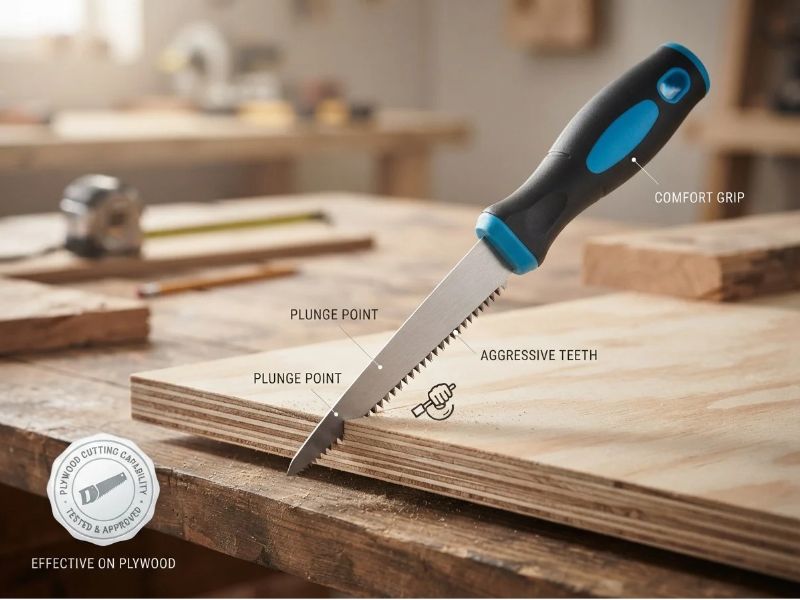
However, plywood has multiple bonded wood layers, and the aggressive teeth of a jab saw can cause splintering.
This makes it less suitable when the cut edge will remain visible.
For a hidden opening behind a fixture or trim, the rough edge may not matter.
For cleaner plywood cuts, use a jigsaw with a suitable wood blade, circular saw, or fine-tooth hand saw.
Can a Jab Saw Cut Wood Paneling?
Yes. Thin wood paneling is one of the more practical non-drywall materials for a jab saw.
The narrow blade is useful when making openings for:
Electrical boxes, switches, cables, small vents, or access points.
The main limitation is edge quality.
Wood paneling can splinter, particularly if it has a finished surface.
If appearance matters, use a finer wood-cutting blade.
If the opening will be covered by a wall plate or trim, a jab saw may be perfectly adequate.
Can a Jab Saw Cut a 2×4?
A jab saw may eventually cut through a 2×4, but it is not a practical tool for the job.
The blade is short, and the tooth geometry is not optimized for thick framing lumber.
Cutting through a 2×4 would take much more effort than using a proper wood saw.
A hand saw, reciprocating saw, circular saw, or jigsaw is usually more appropriate.
There is another important issue: a 2×4 inside a wall may be a structural stud.
Do not cut framing simply because your saw can physically remove the material.
Can a Jab Saw Cut Foam Board?
Yes. A jab saw can cut foam board and other lightweight foam materials fairly easily.
The material is soft, so the blade usually passes through without much resistance.
A jab saw is useful when the opening is:
Curved, irregular, internal, or too large for a utility knife to handle comfortably.
For long straight cuts in thin foam board, a sharp utility knife may still create a cleaner edge.
The saw is more helpful for rough cutouts and shapes.
Can a Jab Saw Cut Plastic?
A jab saw can cut some soft or thin plastic, but results vary.
Plastic behaves differently from drywall.
Coarse teeth can grab thin plastic and cause cracking, chipping, or vibration.
For a rough opening in thin plastic paneling, a jab saw may work.
For harder plastics such as acrylic, PVC sheet, or other rigid materials, use a blade specifically intended for plastic if a clean result is important.
The thicker and more brittle the plastic becomes, the less suitable a standard jab saw is.
Can a Jab Saw Cut Cement Board?
Technically, a jab saw may cut small amounts of cement backer board, but it is generally a poor choice.
Cement board is much harder and more abrasive than drywall.
A standard jab saw can become dull quickly, and cutting may be slow and tiring.
For cement board, a carbide scoring tool, carbide blade, or cement-board-rated cutting tool is usually much better.
A jab saw is more suitable for foam or gypsum-based backer boards than cement-based boards.
Can a Jab Saw Cut Tile?
A standard jab saw is generally not suitable for cutting ceramic or porcelain tile.
Tile is hard and brittle, while the teeth on a typical jab saw are designed for soft materials.
Trying to saw through tile with a standard blade may damage the teeth without producing a useful cut.
Tile normally requires tools such as a tile saw, tile cutter, carbide tool, or diamond blade, depending on the type of tile and cut.
Can a Jab Saw Cut Metal?
A normal drywall jab saw should not be treated as a metal saw.
Its coarse teeth are not designed for steel, sheet metal, or other common metals.
It may scratch or slowly damage very thin soft metal, but that is not the same as being a suitable metal-cutting tool.
If you encounter metal lath, metal studs, or sheet metal behind a wall, switch to an appropriate metal-cutting blade or tool.
Trying to force a drywall saw through metal can dull or damage it quickly.
Can a Jab Saw Cut Fiberglass?
It depends on the fiberglass material.
Some thin fiberglass panels may be physically cut with a jab saw, but fiberglass is abrasive and can wear ordinary teeth.
Cutting fiberglass can also create fine dust and irritating fibers.
A blade designed for fiberglass or other abrasive materials is usually the better option.
For occasional rough cutting, a jab saw may work, but it is not the first tool I would choose.
Can a Jab Saw Cut Insulation?
A jab saw can physically cut some rigid insulation products, particularly foam insulation board.
However, it is not usually the best tool for soft fiberglass or mineral-wool insulation.
Those materials compress rather than providing a solid surface for saw teeth.
For batt insulation, an insulation knife or other dedicated cutting tool typically provides better control.
For rigid foam board, a utility knife or fine cutting tool may leave a cleaner edge than a coarse jab saw.
What Is a Jab Saw Best Used For?
A jab saw is at its best when making small interior openings in drywall or similar soft sheet materials.
Its pointed tip and narrow blade make it particularly useful where a normal hand saw cannot start.
A good example is an electrical outlet cutout.
You can mark the opening, carefully insert the pointed tip through the drywall, and follow the line with short saw strokes.
The same approach works for plumbing openings, access holes, light fixtures, and wall vents.
That is the type of work the saw is designed to handle.
What Materials Should You Avoid Cutting With a Jab Saw?
A standard jab saw is usually a poor choice for hard, thick, abrasive, or metallic materials.
That includes most:
Metal, thick hardwood, ceramic tile, porcelain tile, masonry, concrete, thick cement board, and structural lumber.
This does not always mean the saw is physically incapable of removing any material.
It means another tool will usually cut faster, last longer, and provide better control.
Does the Jab Saw Blade Matter?
Yes.
Not every jab saw has exactly the same blade.
A drywall-specific jab saw usually has coarse, aggressive teeth designed to remove gypsum quickly.
Some keyhole-style saws or replaceable-blade jab saws can use different blades for:
Wood, plastic, drywall, or other materials.
If you plan to cut something other than drywall, checking the manufacturer’s material rating is more useful than relying only on the name “jab saw.”
The correct blade can significantly change what the tool is capable of cutting well.
Jab Saw vs Keyhole Saw for Different Materials
A jab saw and keyhole saw are closely related, but a keyhole saw is sometimes more versatile.
A drywall jab saw normally prioritizes fast cutting in gypsum board.
A keyhole saw may use a thinner blade that is better suited to curves or small cuts in wood and plastic.
If drywall is your main material, a jab saw is usually the simpler choice.
If you want one narrow hand saw for several lightweight materials, a keyhole saw with suitable blades may offer greater flexibility.
Jab Saw vs Utility Knife
A utility knife is better for long straight drywall cuts.
A jab saw is better for interior openings and irregular shapes.
For example, if you need to reduce the width of a full drywall sheet, score and snap it with a utility knife.
If you need to make a rectangular opening in the center of the drywall for an outlet, the jab saw is more convenient.
Most people doing drywall work benefit from owning both because they solve different problems.
Jab Saw vs Jigsaw
A jigsaw is a power tool and can cut many materials that would be difficult for a jab saw.
With the correct blade, a jigsaw can handle:
Wood, plywood, plastic, and drywall.
It is also faster for larger curves and long irregular cuts.
The jab saw has an advantage when the job is small because it requires no battery, electricity, or setup.
For one drywall opening, a manual jab saw may actually be more convenient than getting out a power tool.
How Thick of Material Can a Jab Saw Cut?
There is no single maximum thickness because jab saws vary in blade length and design.
The practical limitation is not simply whether the blade reaches through the material.
A jab saw is designed for thin sheet materials, not thick stock.
Standard drywall thicknesses are comfortably within its normal use.
Thin wood or paneling may also be manageable.
Once the material becomes thick enough that the short blade cannot move freely or clear debris, another saw is usually more efficient.
How to Know If a Jab Saw Is the Right Tool
Before using a jab saw, consider three things: material hardness, material thickness, and desired cut quality.
If the material is relatively soft and thin and you need a small interior opening, the jab saw is often an excellent choice.
If the material is hard, thick, or abrasive, look for another tool.
Also consider whether the edge will remain visible. A jab saw generally produces a practical construction cut rather than a furniture-quality finish.
That is perfectly acceptable for drywall openings that will later be hidden behind trim or fixtures.
Safety When Cutting Different Materials With a Jab Saw
The biggest safety concern is often not the material you can see.
When cutting an installed wall, the cavity behind it may contain electrical wiring, plumbing pipes, gas lines, framing, or other building components.
Avoid driving the blade deeply into an unknown wall.
Use short, controlled strokes and only enough blade depth to cut the material.
Eye protection is also useful because gypsum, plaster, wood, and other materials can create loose chips and dust.
If the material creates significant airborne dust, use appropriate respiratory protection and dust-control methods.
Frequently Asked Questions About What a Jab Saw Can Cut
What materials can a jab saw cut?
A jab saw can cut drywall, gypsum board, some plaster, thin wood, wood lath, plywood, paneling, foam board, and some soft plastics.
What is a jab saw mainly designed to cut?
A jab saw is primarily designed for drywall and other soft wallboard materials.
Can a jab saw cut wood?
Yes, especially thin or soft wood. However, the cut is generally rougher than one made with a dedicated wood saw.
Can a jab saw cut plywood?
Yes, if the plywood is relatively thin. The coarse teeth may cause splintering.
Can a jab saw cut plaster?
It can cut some plaster, although traditional plaster can be harder and more brittle than drywall.
Can a jab saw cut cement board?
It may cut a small amount, but a standard jab saw is not ideal for abrasive cement board.
Can a jab saw cut plastic?
Some thin or soft plastic can be cut, but coarse teeth may crack or chip harder plastics.
Can a jab saw cut metal?
A standard drywall jab saw is not designed for metal. Use an appropriate metal-cutting blade or tool.
Can a jab saw cut tile?
Not effectively. Ceramic and porcelain tile require tools designed for hard tile materials.
Can a jab saw cut a 2×4?
It may be physically possible, but a jab saw is not a practical tool for thick framing lumber.
Can a jab saw cut foam board?
Yes. Foam board is soft enough for a jab saw, although a utility knife may produce cleaner straight cuts.
Is a jab saw only for drywall?
No. Drywall is its main purpose, but the saw can handle several other soft and relatively thin materials.
Final Thoughts
So, what can you cut with a jab saw? The tool works best on drywall and gypsum board, but it can also handle some plaster, wood lath, thin wood, plywood, paneling, foam board, and certain soft plastics.
Its short, pointed blade makes it particularly useful for small interior openings, such as electrical boxes, plumbing access holes, vents, and fixture cutouts.
A jab saw becomes less useful as the material gets harder, thicker, or more abrasive. It is generally not the right tool for metal, ceramic tile, masonry, thick cement board, or heavy lumber.
The simplest rule is to use a jab saw when the material is thin enough, soft enough, and the cut is small enough for a narrow hand saw. For harder materials or jobs where a clean finished edge matters, switch to a blade or tool specifically designed for that material.