
Why Does My Chainsaw Die When I Give It Gas? 9 Causes
A chainsaw that starts and idles normally but suddenly dies when you squeeze the throttle can be frustrating. This symptom usually means the engine cannot keep up when it needs more fuel, air, or ignition power.
If you are wondering, why does my chainsaw die when I give it gas? common causes include a dirty carburetor, restricted fuel filter, clogged fuel line, dirty air filter, old fuel, incorrect carburetor adjustment, a fouled spark plug, or a blocked exhaust.
The exact behavior can provide useful clues. A saw that immediately dies when you open the throttle may have a different issue from one that hesitates, bogs down, and then stalls.
Why Does My Chainsaw Die When I Give It Gas?
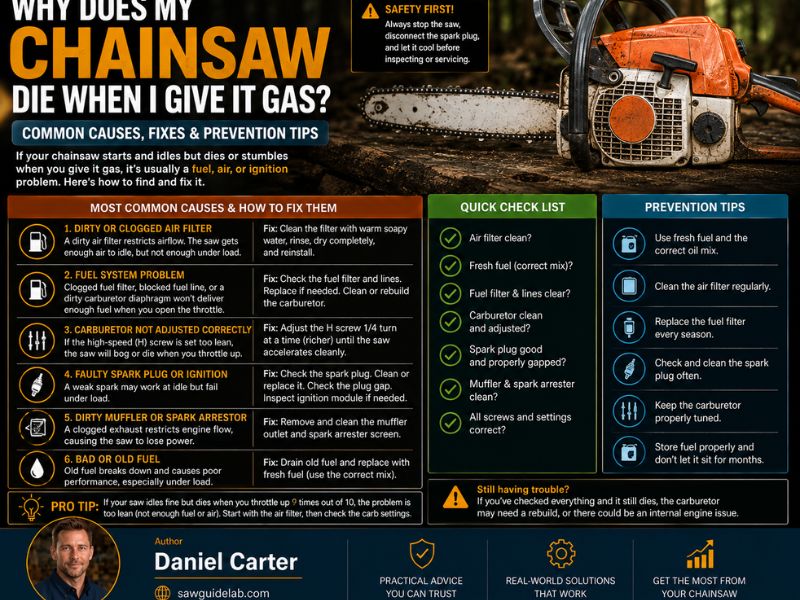
When a chainsaw is idling, the engine requires relatively little fuel and air. When you press the throttle, engine speed increases and the fuel and air supply must increase as well.
If something prevents the engine from getting the correct mixture, it may hesitate, lose power, and stall.
Common causes include:
- Dirty carburetor
- Clogged fuel filter
- Blocked or damaged fuel line
- Dirty air filter
- Old or incorrect fuel
- Incorrect carburetor adjustment
- Fouled spark plug
- Clogged spark arrestor
- Air leaks or engine problems
Start with the simplest checks before making carburetor adjustments or disassembling engine components.
9 Common Reasons Your Chainsaw Dies When You Give It Gas
1. The Carburetor Is Dirty
A dirty carburetor is one of the most common causes of a chainsaw that starts but dies under throttle.
Old fuel can leave deposits inside the carburetor. These deposits can restrict the small passages and jets responsible for delivering fuel.
At idle, the engine may receive enough fuel to keep running. When you open the throttle, however, fuel demand increases and the restriction becomes more noticeable.
Common symptoms include:
- Engine starts normally
- Rough or unstable idle
- Hesitation when accelerating
- Engine dies when throttle is opened
- Chainsaw runs better with the choke partially engaged
If the carburetor is contaminated, it may need cleaning or servicing.
2. The Fuel Filter Is Clogged
The fuel filter prevents dirt and debris from entering the carburetor.
Over time, the filter can become restricted.
At idle, the limited fuel flow may be sufficient to keep the engine running. When you give it gas, the engine needs considerably more fuel, and the restriction can cause it to stall.
A clogged fuel filter can also cause:
- Poor acceleration
- Loss of power
- Difficult starting
- Engine surging
- Stalling under load
Check and replace the fuel filter according to your chainsaw manufacturer’s recommendations.
3. The Fuel Line Is Blocked or Damaged
The fuel line carries gasoline from the tank to the carburetor.
If the line is kinked, cracked, collapsed, or partially blocked, fuel delivery can become inconsistent.
A damaged fuel line may also allow air to enter the fuel system.
Inspect the lines for visible damage and replace them if necessary.
Because fuel-system designs differ between chainsaw models, use the correct replacement components and follow the manufacturer’s service instructions.
4. The Air Filter Is Dirty
The engine needs the correct amount of air to maintain the proper air-fuel mixture.
A heavily clogged air filter restricts airflow.
This can cause the engine to run poorly when you increase the throttle.
Symptoms of a severely dirty air filter can include:
- Poor acceleration
- Reduced power
- Rough running
- Excessive fuel consumption
- Stalling
Inspect the filter regularly, especially if you operate your chainsaw in dusty conditions.
Clean or replace it according to the manufacturer’s instructions.
5. The Chainsaw Has Old or Incorrect Fuel
Fuel quality matters greatly in small two-stroke engines.
Gasoline can degrade during storage, and contaminated or improperly mixed fuel can affect combustion and fuel-system components.
Using the wrong fuel-to-oil ratio can also cause performance problems.
Depending on the type of mistake, incorrect fuel can contribute to:
- Poor acceleration
- Excessive smoke
- Fouled spark plug
- Loss of power
- Stalling
Use the exact fuel specification and mixture recommended for your chainsaw.
If the fuel is old or contaminated, replace it using the manufacturer’s recommended procedure.
6. The Carburetor Is Improperly Adjusted
The carburetor controls how fuel and air are delivered to the engine.
If the mixture is incorrectly adjusted, the engine may idle but fail when you open the throttle.
A mixture that is too lean or too rich can cause poor acceleration and stalling.
However, you should not randomly turn the carburetor adjustment screws.
Incorrect adjustment can cause poor performance and, in some circumstances, excessive engine temperature or damage.
Always follow the adjustment procedure and specifications for your specific chainsaw.
7. The Spark Plug Is Fouled or Weak
The spark plug ignites the air-fuel mixture inside the engine.
A spark plug that is fouled, worn, damaged, or incorrectly gapped may not provide reliable ignition.
The engine may start but misfire or stall when the throttle is opened.
Inspect the spark plug for:
- Carbon buildup
- Fuel fouling
- Damaged electrode
- Excessive wear
- Incorrect gap
If the plug is defective, replace it with the correct type specified by the manufacturer.
8. The Spark Arrestor or Exhaust Is Clogged
A chainsaw needs to expel exhaust gases efficiently.
If the spark arrestor or exhaust becomes heavily restricted by carbon buildup, the engine may struggle to breathe at higher RPM.
This can cause:
- Poor acceleration
- Loss of power
- Engine bogging
- Overheating
- Stalling
Inspect and clean the spark arrestor according to the manufacturer’s maintenance instructions.
9. There Is an Air Leak or Engine Problem
If the basic fuel, air, and ignition checks do not solve the problem, there may be a more complicated issue.
Possible causes include:
- Intake air leak
- Crankcase leak
- Damaged seals
- Low compression
- Worn piston or cylinder
- Ignition problems
These problems generally require more advanced testing.
If your chainsaw still dies under throttle after basic maintenance, professional diagnosis may be appropriate.
How to Fix a Chainsaw That Dies When You Give It Gas
Rather than changing several components at once, troubleshoot the saw systematically.
Step 1: Check the Fuel
Make sure the fuel is fresh and mixed according to the manufacturer’s specification.
If you suspect old or contaminated fuel, replace it.
Step 2: Inspect the Air Filter
Check for dirt, sawdust, and other debris.
Clean or replace the filter according to the manufacturer’s instructions.
Step 3: Check the Spark Plug
Inspect the spark plug for fouling, wear, or damage.
Replace it if necessary.
Step 4: Inspect the Fuel Filter and Fuel Line
Look for restrictions, cracks, kinks, or other damage.
Replace components that are worn or blocked.
Step 5: Check the Carburetor
If the basic checks do not solve the problem, the carburetor may be dirty or improperly adjusted.
Clean or service it according to the manufacturer’s procedure.
Step 6: Inspect the Spark Arrestor
Check the exhaust system for carbon buildup or other restrictions.
Clean or replace the spark arrestor as recommended.
Step 7: Check for Air Leaks
If the chainsaw continues to stall and the basic components are working correctly, an intake or crankcase air leak may need to be tested by a qualified technician.
Why Does My Chainsaw Idle but Die When I Accelerate?
A chainsaw that idles but dies when you accelerate often has a problem with fuel delivery or mixture.
At idle, the engine needs relatively little fuel. When you press the throttle, fuel demand increases significantly.
If a fuel filter, fuel line, carburetor passage, or jet is restricted, the engine may not receive enough fuel to respond to the increased demand.
Other possibilities include:
- Dirty air filter
- Incorrect carburetor adjustment
- Exhaust restriction
- Ignition problems
- Air leaks
The difference between idling and accelerating is an important diagnostic clue.
Why Does My Chainsaw Bog Down When I Give It Gas?
If the chainsaw does not immediately stop but instead hesitates, sounds weak, or loses RPM before recovering or stalling, it is often described as bogging down.
Possible causes include:
- Dirty carburetor
- Restricted fuel supply
- Incorrect fuel mixture
- Dirty air filter
- Exhaust restriction
- Carburetor adjustment problems
Pay attention to whether the engine improves when the choke is partially engaged. If it does, the engine may be receiving an excessively lean mixture during normal operation, although other problems can produce similar symptoms.
Why Does My Chainsaw Only Run With the Choke On?
If your chainsaw runs with the choke engaged but dies when you turn the choke off, the engine may be struggling to receive enough fuel during normal operation.
Possible causes include:
- Dirty carburetor
- Clogged fuel filter
- Restricted fuel line
- Air leak
- Incorrect carburetor adjustment
The choke creates a richer starting mixture.
If the engine requires that richer mixture to continue running, the normal mixture may be too lean.
Do not use the choke as a permanent workaround. Find and correct the underlying problem.
Can Bad Gas Cause a Chainsaw to Die When You Give It Gas?
Yes.
Old, contaminated, or incorrectly mixed fuel can cause a chainsaw to start but lose power or stall when you increase engine speed.
Fuel problems can also contribute to deposits inside the carburetor, creating additional fuel-delivery issues.
Use fresh fuel and follow the manufacturer’s exact fuel specifications.
Proper fuel storage is also important if the chainsaw will sit unused for an extended period.
Is It Safe to Keep Using a Chainsaw That Dies Under Throttle?
It is not a good idea to continue using a chainsaw that repeatedly stalls when you accelerate.
Unexpected loss of power during a cut can affect your control of the tool.
Before troubleshooting or servicing:
- Turn the engine off
- Allow hot components to cool
- Follow the manufacturer’s safety instructions
- Keep the chain away from people and objects
- Disconnect the spark plug lead when appropriate for servicing
When operating a chainsaw, use appropriate personal protective equipment, including eye and hearing protection and suitable chainsaw protective equipment.
If the saw has an internal engine problem, fuel leak, or other issue you cannot safely diagnose, seek qualified service.
How to Prevent Chainsaw Stalling Under Throttle
Regular maintenance can prevent many acceleration problems.
Use Fresh Fuel
Use fuel according to the manufacturer’s specifications and avoid storing mixed fuel longer than recommended.
Maintain the Air Filter
Clean or replace the air filter regularly, particularly when cutting in dusty conditions.
Replace the Fuel Filter When Needed
A restricted fuel filter can limit fuel delivery and cause poor acceleration.
Keep the Carburetor Clean
Avoid leaving old fuel in the system for extended periods.
Maintain the Spark Plug
Inspect and replace the spark plug according to the recommended service interval.
Keep the Exhaust Clear
Inspect the spark arrestor and exhaust system for carbon buildup.
Follow Manufacturer Specifications
Chainsaw carburetor settings, fuel requirements, idle speeds, and maintenance procedures vary between models.
Use the specifications for your particular machine rather than relying on generic adjustment values.
Frequently Asked Questions
Why does my chainsaw die when I give it gas?
Common causes include a dirty carburetor, clogged fuel filter, restricted fuel line, dirty air filter, old fuel, incorrect carburetor adjustment, fouled spark plug, clogged spark arrestor, or an air leak.
Why does my chainsaw idle but die when I accelerate?
The engine may not be receiving enough fuel when demand increases. A dirty carburetor, restricted fuel filter, blocked fuel line, or incorrect mixture can cause this symptom.
Why does my chainsaw bog down when I give it gas?
Bogging can be caused by fuel-delivery problems, an incorrect air-fuel mixture, a dirty air filter, exhaust restriction, or carburetor problems.
Why does my chainsaw only run with the choke on?
This can indicate that the engine is running too lean under normal conditions because of restricted fuel delivery, a dirty carburetor, an air leak, or incorrect adjustment.
Can a dirty carburetor make a chainsaw stall?
Yes. Deposits can restrict fuel passages and prevent the engine from receiving enough fuel when you increase the throttle.
Can bad gas cause a chainsaw to die?
Yes. Old or contaminated fuel can cause poor combustion and can also contribute to carburetor deposits and fuel-system restrictions.
How do I fix a chainsaw that dies when I give it gas?
Start with fresh fuel, then inspect the air filter, spark plug, fuel filter, fuel line, carburetor, and spark arrestor. If the problem remains, the saw may need further diagnosis for an air leak, compression issue, or other mechanical fault.
Final Thoughts on Why Your Chainsaw Dies When You Give It Gas
If you are wondering why does my chainsaw die when I give it gas, start with the basics: fuel, air, and spark.
Fresh fuel, a clean air filter, a good spark plug, and unrestricted fuel delivery are the easiest areas to inspect. If those components are working correctly, move on to the carburetor, spark arrestor, and possible air leaks.
The specific symptom can help narrow down the cause. A saw that immediately dies, one that bogs down first, and one that only runs with the choke on can each point toward different problems.
Avoid making random carburetor adjustments. Use the manufacturer’s specifications for your particular chainsaw, and if basic troubleshooting does not solve the problem, professional diagnosis may be necessary.
