Why Do Scroll Saw Blades Break? 10 Common Causes and How to Prevent It
Scroll saw blades are designed to make precise cuts through wood, plastic, and other materials. Because they are thin and flexible, they can follow tight curves and intricate patterns that would be difficult to cut with many other saws.
However, that thin design also makes scroll saw blades vulnerable to breakage. If you frequently find yourself replacing blades during a project, there is usually a reason behind it.
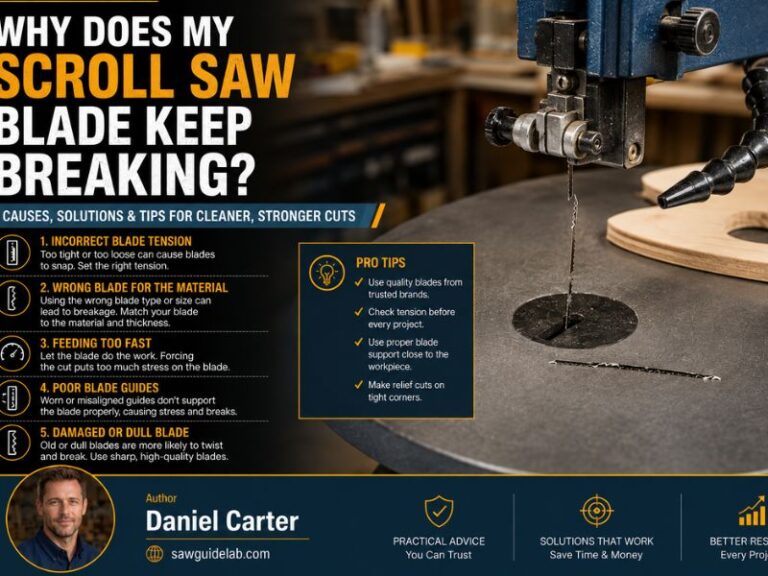
So, why do scroll saw blades break? The most common causes include incorrect blade tension, pushing the workpiece too hard, using the wrong blade, cutting material that is too thick, excessive speed, improper installation, tight turns, overheating, and worn blades.
Fortunately, most of these problems can be prevented with the right blade, proper saw setup, and controlled cutting technique.
Why Do Scroll Saw Blades Break?

A scroll saw blade can break when repeated stress, heat, or excessive force causes the thin metal to fatigue or fail.
Common causes include:
- Too much blade tension
- Too little blade tension
- Excessive feed pressure
- Incorrect blade type
- Material that is too thick
- Excessive cutting speed
- Incorrect blade installation
- Tight or sudden turns
- Overheating
- Worn or damaged blades
- Misalignment or machine problems
The location where the blade breaks can also provide a useful clue. If several blades break near the same blade holder, for example, the problem may be related to tension, clamping, or alignment rather than the blade itself.
10 Common Reasons Scroll Saw Blades Break
1. The Blade Tension Is Too High
Excessive blade tension is one of the most common causes of premature blade failure.
A scroll saw blade needs enough tension to remain stable while cutting. However, making the blade extremely tight does not necessarily make the saw perform better.
Too much tension places additional stress on the thin metal. This can cause the blade to break suddenly, particularly near the upper or lower blade holder.
Instead of tightening the blade as much as possible, follow the tensioning procedure recommended for your particular scroll saw.
2. The Blade Tension Is Too Low
A blade can also break because it is too loose.
When tension is insufficient, the blade may vibrate, flex, and move sideways during each stroke. This repeated movement can cause fatigue over time.
A blade with insufficient tension may also produce:
- Wavy cuts
- Excessive vibration
- Poor cutting accuracy
- Difficulty following a pattern
- Increased blade movement
The correct tension provides stability without putting unnecessary stress on the blade.
3. You Are Pushing the Workpiece Too Hard
A scroll saw blade is designed to remove material gradually.
If you force the workpiece through the blade, you increase the load on the blade and can cause it to bend sideways.
This is particularly common when cutting thick hardwood or when trying to finish a cut quickly.
Instead, use steady and controlled pressure. Let the blade’s teeth do the cutting rather than forcing the material through the machine.
If you can see the blade bending significantly while cutting, reduce the feed pressure.
4. You Are Using the Wrong Blade
Scroll saw blades come in different sizes, tooth patterns, and configurations.
A blade that works well for thin plywood may not be appropriate for thick hardwood. Similarly, a blade designed for rougher cutting may not be ideal for intricate patterns.
When choosing a blade, consider:
- Material type
- Material thickness
- Tooth size
- Tooth pattern
- Cutting speed
- Required level of detail
Using a blade that is too delicate for the job can overload it and cause premature breakage.
5. The Material Is Too Thick
Even the correct blade can struggle if the material is beyond what it is designed to cut efficiently.
Thick material creates more resistance. The operator may then compensate by pushing harder, which puts additional stress on the blade.
If you regularly cut thick stock, choose a blade appropriate for the material’s thickness and hardness.
Do not try to make an unsuitable fine blade perform a job intended for a more substantial blade.
6. The Scroll Saw Is Running Too Fast
High speed is not automatically better.
Depending on the material and blade, excessive speed can increase:
- Heat
- Vibration
- Blade fatigue
- Tooth wear
- Cutting resistance
Some materials require a more controlled cutting speed, particularly when making detailed cuts.
Use the speed range recommended by your scroll saw manufacturer and adjust it according to the material and blade being used.
7. The Blade Is Installed Incorrectly
Improper installation can place uneven stress on the blade.
Before operating the saw, make sure the blade is:
- Correctly oriented
- Properly seated
- Securely clamped
- Straight between the upper and lower arms
If the blade is twisted or bent while being installed, it may develop a weak point that eventually breaks.
Take extra care around the blade holders because repeated bending in these areas can significantly shorten blade life.
8. You Are Making Tight Turns Too Quickly
One of the biggest advantages of a scroll saw is its ability to make tight curves.
However, extremely sharp turns can place substantial sideways stress on a thin blade.
If you rotate the workpiece too aggressively, the blade can bend or twist.
When making tight turns:
- Slow down
- Rotate the workpiece gradually
- Avoid forcing the blade sideways
- Use an appropriate fine blade for intricate work
For very small curves, using a blade designed for detailed cutting can make the process easier.
9. The Blade Is Overheating
Excessive heat can reduce blade life and contribute to breakage.
A blade may overheat when:
- The material is too thick
- The blade is too fine
- The blade is dull
- Cutting speed is inappropriate
- The workpiece is being forced
- Material is building up between the teeth
If the blade becomes unusually hot, stop cutting and determine why.
Using the correct blade and reducing unnecessary cutting pressure can help control heat buildup.
10. The Blade Is Old, Worn, or Damaged
Scroll saw blades are consumable parts.
Even when installed correctly, a blade will eventually become worn from repeated use.
A blade can also become damaged from a previous cutting mistake.
Look for:
- Kinks
- Bends
- Missing teeth
- Cracks
- Discoloration
- Excessive wear
A damaged blade should be replaced rather than reused.
How to Prevent Scroll Saw Blades From Breaking
Preventing blade breakage starts with reducing unnecessary stress.
Choose the Right Blade
Match the blade to the material and its thickness.
Do not use an extremely fine blade simply because it produces a cleaner cut if the material is too thick or hard for it.
Set the Correct Tension
Use the manufacturer’s recommended tensioning procedure.
Avoid overtightening the blade.
Use Controlled Feed Pressure
Let the blade cut through the material rather than forcing the workpiece.
A steady feed rate generally provides better control and reduces stress.
Adjust the Speed
Choose a speed suitable for the material and blade.
You do not always need maximum speed to achieve a good cut.
Slow Down on Tight Curves
Make gradual turns and avoid forcing the workpiece sideways against the blade.
Inspect the Blade Regularly
Replace blades that are visibly damaged, excessively worn, or no longer cutting efficiently.
Why Do Scroll Saw Blades Break Near the Holder?
If the blade repeatedly breaks close to the upper or lower blade holder, pay particular attention to tension and installation.
Possible causes include:
- Excessive tension
- Incorrect clamping
- Blade bent during installation
- Misalignment
- Damaged blade holder
- Repeated bending at the same point
If multiple blades fail at exactly the same location, inspect the holder and the alignment of the saw.
The problem may not be the blades themselves.
Why Do Scroll Saw Blades Break in the Middle?
A blade that breaks somewhere in the middle may be experiencing excessive flexing, heat, vibration, or cutting pressure.
Check:
- Blade type
- Material thickness
- Feed pressure
- Cutting speed
- Tight curves
- Blade condition
If the blade becomes dull, the increased cutting resistance can also contribute to breakage.
Can a Dull Scroll Saw Blade Break?
Yes.
As a blade becomes dull, it becomes less efficient at removing material. This increases resistance during cutting.
The operator may then push harder, which increases the stress on the blade.
A dull blade can also generate more heat.
If you notice that the saw is taking significantly longer to cut through material or you need to apply more pressure than usual, it may be time to replace the blade.
How Long Should a Scroll Saw Blade Last?
There is no universal lifespan for a scroll saw blade.
Blade life depends on:
- Material being cut
- Material thickness
- Blade type
- Cutting speed
- Feed pressure
- Cutting technique
- Blade quality
- Amount of use
A blade used occasionally for thin plywood can last much longer than one used continuously for thick hardwood.
Rather than relying on a specific number of hours, monitor the blade’s cutting performance and physical condition.
What Does the Location of the Break Tell You?
The location of a broken blade can help narrow down the cause.
Break near the top holder:
Check tension, clamping, installation, and upper-holder alignment.
Break near the bottom holder:
Inspect lower-holder tension, alignment, and installation.
Break in the middle:
Check feed pressure, material thickness, cutting speed, heat, and blade condition.
Break during tight curves:
Consider reducing the turning speed and using a blade designed for intricate cutting.
This is not a definitive diagnosis, but it can help you identify where to start troubleshooting.
Frequently Asked Questions
Why do scroll saw blades break so easily?
Scroll saw blades are thin and designed for precision rather than heavy-duty cutting. Excessive tension, pressure, heat, vibration, or an unsuitable blade can cause them to break.
Does too much tension break scroll saw blades?
Yes. Excessive tension puts unnecessary stress on the blade and can cause premature failure, particularly near the blade holders.
Can pushing wood too hard break a scroll saw blade?
Yes. Excessive feed pressure can bend and overload the blade, especially when cutting thick or dense material.
Why does my scroll saw blade keep breaking in the same place?
Repeated breakage at the same location can indicate a problem with tension, blade installation, alignment, or one of the blade holders.
Does cutting speed affect scroll saw blade life?
Yes. An inappropriate speed can increase heat, vibration, and blade fatigue. Use a speed suitable for the blade and material.
Can a dull scroll saw blade cause breakage?
Yes. A dull blade increases cutting resistance, which can lead to more feed pressure, heat, and stress on the blade.
Final Thoughts on Why Scroll Saw Blades Break
If you are asking why do scroll saw blades break, the problem is usually caused by excessive stress, incorrect setup, or using a blade that is not suitable for the job.
Start by checking the blade tension and making sure you have selected the correct blade for the material and thickness. Then focus on your cutting technique. Avoid forcing the workpiece, slow down when making tight turns, and use an appropriate cutting speed.
If blades continue breaking despite proper tension and technique, inspect the scroll saw itself for misalignment, damaged blade holders, excessive vibration, or other mechanical problems.
A properly selected and installed blade, combined with controlled cutting pressure and regular inspection, can significantly reduce blade breakage and help you get cleaner, more consistent results.