Why Does My Scroll Saw Blade Keep Breaking? 10 Common Causes & Fixes
A scroll saw is designed for making detailed cuts, curves, and intricate patterns, but frequent blade breakage can make even a simple project frustrating. If you find yourself replacing the blade over and over again, the problem may not be the blade itself.
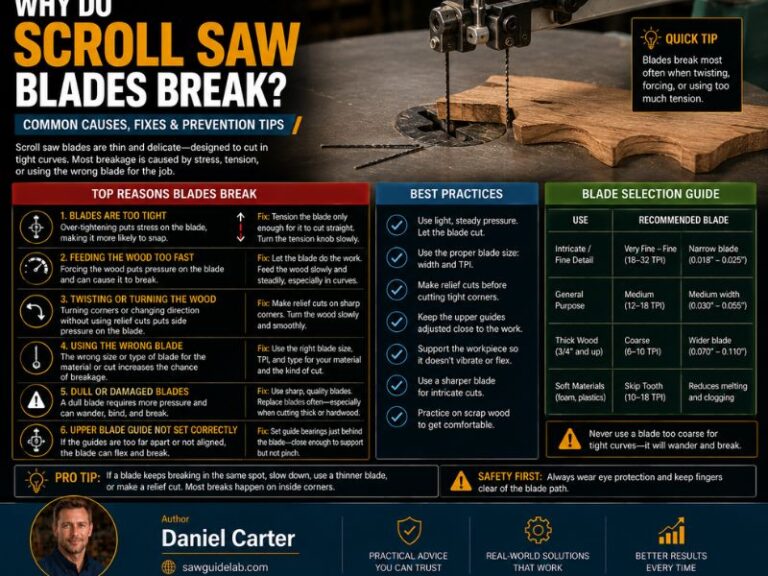
So, why does my scroll saw blade keep breaking? Common causes include incorrect blade tension, pushing the workpiece too hard, using the wrong blade for the material, running the saw at an unsuitable speed, incorrect blade installation, and alignment problems.
The good news is that most blade-breakage problems can be prevented once you identify the underlying cause. Proper blade selection, tension, cutting technique, and machine setup can significantly extend blade life.
Why Does My Scroll Saw Blade Keep Breaking?
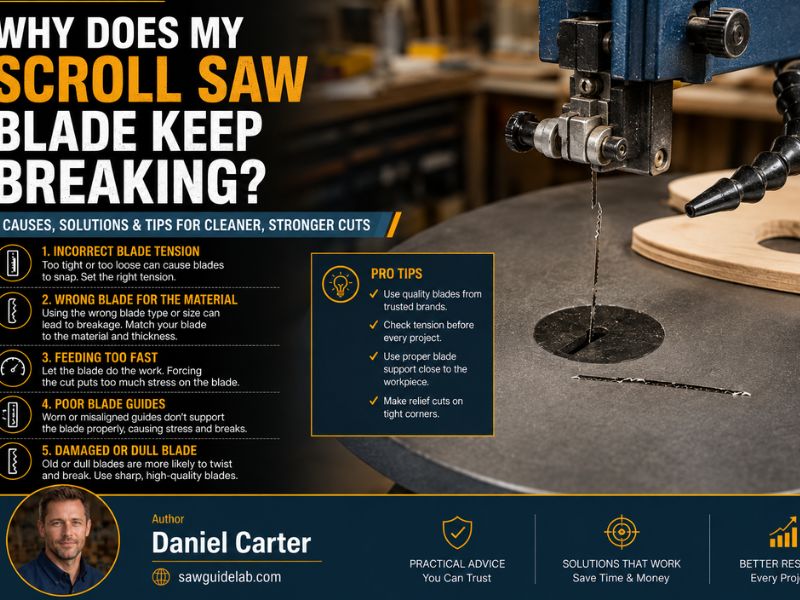
Scroll saw blades are thin and designed to make precise cuts. Because of their small size, they can be damaged by excessive tension, heat, vibration, or sideways pressure.
The most common reasons a scroll saw blade keeps breaking include:
- Blade tension is too high
- Blade tension is too low
- Excessive pressure on the workpiece
- Incorrect blade type
- Blade is too fine for the material
- Saw speed is too high
- Blade is installed incorrectly
- Blade is hitting the table or workpiece
- Saw alignment or mechanical problems
- Blade is worn, damaged, or poor quality
If your blade consistently breaks in the same location, that can provide an important clue about what is causing the problem.
10 Common Reasons Your Scroll Saw Blade Keeps Breaking
1. The Blade Tension Is Too High
One of the most common reasons for repeated blade breakage is excessive tension.
A scroll saw blade needs enough tension to remain straight and stable while cutting. However, tightening it too much places unnecessary stress on the thin metal.
Excessive tension can cause the blade to break suddenly, sometimes shortly after installation.
Signs that the blade may be over-tensioned include:
- Blade breaks shortly after installation
- Blade feels extremely tight
- Blade breaks near a blade holder
- Frequent breakage even during light cutting
Use the tensioning procedure recommended by your scroll saw manufacturer rather than simply making the blade as tight as possible.
2. The Blade Tension Is Too Low
Too little tension can also cause problems.
A loose blade can vibrate, flex, and move sideways during cutting. This increases stress on the blade and can eventually cause it to fatigue and break.
A blade with insufficient tension may also produce:
- Excessive vibration
- Wandering cuts
- Rough edges
- Difficulty following a pattern
- Frequent blade movement
The goal is not maximum tension. The goal is proper tension for the particular blade and machine.
3. You Are Pushing the Wood Too Hard
A scroll saw blade is designed to cut through the material as the blade moves up and down.
If you push the workpiece forward too aggressively, the blade can become overloaded.
This is particularly common when cutting thick hardwood or trying to finish a cut quickly.
Instead of forcing the material, allow the blade to remove the material at its own rate.
If the blade starts bending significantly while you are feeding the wood, slow down and reduce the pressure.
4. You Are Using the Wrong Blade for the Material
Different materials and thicknesses require different scroll saw blades.
A blade suitable for thin plywood may not be appropriate for thick hardwood.
Likewise, a blade designed for fine detail may not be the best choice for fast cutting through thicker stock.
When selecting a blade, consider:
- Material type
- Material thickness
- Tooth size
- Tooth pattern
- Desired cut quality
- Cutting speed
Using a blade that is too small or too delicate for the job can lead to rapid breakage.
5. The Blade Is Too Fine for the Job
Fine-tooth blades are useful when making detailed cuts, but they have less capacity for removing material quickly.
If you use a very fine blade to cut thick material, the teeth can become overloaded.
The blade may also generate more heat because the cut progresses slowly and material can pack between the teeth.
For thicker material, a more appropriate blade with a suitable tooth configuration can make the cutting process easier and reduce stress.
6. The Scroll Saw Speed Is Too High
Running the scroll saw at maximum speed is not always the best approach.
High speed can increase:
- Heat buildup
- Blade fatigue
- Vibration
- Tooth wear
- Stress during tight turns
The appropriate speed depends on the material, blade type, and thickness.
A slower setting can sometimes provide better control, particularly when cutting dense materials or intricate shapes.
Follow the recommendations for your particular scroll saw and blade.
7. The Blade Is Installed Incorrectly
Incorrect installation can cause the blade to experience unusual stress.
Depending on the blade and scroll saw design, make sure the blade is:
- Properly seated in both holders
- Correctly oriented
- Properly clamped
- Straight between the upper and lower arms
If the blade is twisted or not seated correctly, it may bend repeatedly at the same point during every stroke.
That repeated bending can lead to premature failure.
8. The Blade Is Hitting the Workpiece or Table
The blade should move freely through the workpiece and table opening.
If the blade contacts the edge of the table opening or another obstruction, the impact can damage it.
This can happen if:
- The blade is not centered
- The table opening is damaged
- The blade is incorrectly installed
- The workpiece is being moved in an uncontrolled way
- The machine has alignment problems
Check the blade path before cutting, especially after changing blades or making adjustments to the saw.
9. The Scroll Saw Has a Mechanical or Alignment Problem
Sometimes the blade isn’t the real problem.
A worn or improperly adjusted scroll saw can place unusual stress on the blade.
Potential issues include:
- Misaligned blade holders
- Worn components
- Excessive vibration
- Loose hardware
- Arm alignment problems
- Damaged blade clamps
If multiple blades break even when you use the correct tension and cutting technique, inspect the machine itself.
Check that the upper and lower blade holders are aligned and securely mounted.
10. The Blade Is Old, Damaged, or Poor Quality
Scroll saw blades are consumable components.
Even if a blade has not broken, it can become worn through repeated use.
A blade may also have been damaged during installation, storage, or a previous cutting operation.
Look for:
- Bent sections
- Kinks
- Missing teeth
- Discoloration
- Excessive wear
- Visible cracks
A damaged blade should be replaced rather than reused.
Blade quality can also affect durability. However, even a high-quality blade can break quickly if it is incorrectly tensioned or overloaded.
How to Stop Scroll Saw Blades From Breaking
Once you identify the cause, preventing future breakage becomes much easier.
Use the Correct Blade Tension
Follow your scroll saw manufacturer’s recommended tensioning procedure.
Do not tighten the blade excessively just because a tighter blade feels more secure.
Match the Blade to the Material
Choose a blade based on the material type and thickness.
A blade designed for intricate work may not be appropriate for thick stock.
Use the Correct Cutting Speed
Adjust the speed based on the material and blade.
Avoid assuming that the highest speed will always produce the best result.
Let the Blade Cut at Its Own Pace
Do not force the workpiece through the blade.
Use controlled, steady movements and allow the teeth to remove material naturally.
Check Blade Alignment
Make sure the blade is straight and properly seated in the upper and lower holders.
Inspect the Saw Before Cutting
Check for loose components, excessive vibration, damaged clamps, or other mechanical problems.
A few minutes of inspection can prevent repeated blade failures.
How Tight Should a Scroll Saw Blade Be?
A scroll saw blade should be tight enough to remain stable during operation but not so tight that it is unnecessarily stressed.
There is no single tension setting that works for every scroll saw and blade.
The correct tension depends on factors such as:
- Saw design
- Blade length
- Blade thickness
- Blade type
- Manufacturer recommendations
Many experienced users use the blade’s feel or sound as a rough indication of tension, but this should not replace the manufacturer’s instructions.
If the blade is too loose, it may vibrate and wander.
If it is too tight, it can break prematurely, particularly near the blade holders.
Why Does My Scroll Saw Blade Break at the Top?
If the blade repeatedly breaks near the top blade holder, examine the upper clamping and tensioning area first.
Possible causes include:
- Excessive tension
- Blade not seated correctly
- Damaged blade clamp
- Blade being bent during installation
- Misalignment
- Repeated stress at the same location
A sharp bend in the blade near the holder can create a weak point.
Inspect the blade holder and make sure the blade is installed according to the manufacturer’s instructions.
Why Does My Scroll Saw Blade Break at the Bottom?
A blade that repeatedly breaks near the bottom can indicate a similar problem with the lower blade holder or alignment.
Check for:
- Excessive tension
- Incorrect installation
- Damaged lower clamp
- Misalignment
- Contact with the table opening
- Excessive vibration
If the blade consistently breaks at exactly the same location, inspect that area of the machine carefully.
How Long Should a Scroll Saw Blade Last?
There is no fixed lifespan for a scroll saw blade.
Blade life depends on:
- Material being cut
- Material thickness
- Blade type
- Cutting speed
- Feed pressure
- Number of tight turns
- Blade quality
- Tension
- User technique
A blade used for delicate cuts in thin plywood may last much longer than one used continuously on thick hardwood.
Replace the blade when it becomes dull, damaged, or difficult to control rather than waiting for it to break.
Can You Prevent Scroll Saw Blade Breakage?
You can greatly reduce blade breakage with proper setup and technique.
Before cutting, make sure:
- The correct blade is installed.
- The blade is properly seated.
- Tension is appropriate.
- The blade holders are aligned.
- The workpiece is suitable for the blade.
- The saw speed is appropriate.
- You are not forcing the material.
- The machine is free from excessive vibration.
If the same blade continues breaking despite correct setup and technique, the scroll saw itself may need inspection.
Frequently Asked Questions
Why does my scroll saw blade keep breaking?
The most common causes are incorrect blade tension, excessive feed pressure, using the wrong blade, incorrect speed, improper installation, alignment problems, and worn or damaged blades.
Why does my scroll saw blade break so quickly?
A blade can break quickly if it is over-tensioned, overloaded, installed incorrectly, or used on material that is too thick or hard for its design.
How tight should a scroll saw blade be?
The blade should be tight enough to remain stable during cutting without excessive tension. Use the tensioning procedure recommended by your scroll saw manufacturer.
Why does my scroll saw blade break at the top?
Breakage near the top can be caused by excessive tension, incorrect clamping, improper installation, blade bending, or misalignment around the upper blade holder.
Why does my scroll saw blade break at the bottom?
Repeated bottom breakage can result from excessive tension, improper installation, lower-holder problems, misalignment, vibration, or contact with the table opening.
Does high tension cause scroll saw blades to break?
Yes. Excessive tension places additional stress on the thin blade and can cause premature breakage, particularly around the blade holders.
Can pushing wood too hard break a scroll saw blade?
Yes. Excessive feed pressure can bend and overload the blade, especially when cutting thick or dense material.
Final Thoughts on Why Your Scroll Saw Blade Keeps Breaking
If you are asking why does my scroll saw blade keep breaking, start by checking the basics: blade tension, blade selection, installation, cutting speed, and feed pressure.
The blade should be properly tensioned without being excessively tight, and it should be matched to the material you are cutting. Avoid forcing the workpiece through the blade, particularly when working with thick or dense material.
If blades continue breaking despite using the correct blade and technique, inspect the scroll saw for alignment problems, excessive vibration, damaged blade holders, or other mechanical issues.
A properly installed blade, appropriate tension, suitable cutting speed, and controlled feed rate can significantly reduce breakage and help you get cleaner, more consistent cuts.