What Size Saw Blade to Cut Laminate Flooring? Complete Guide
If you are wondering what size saw blade to cut laminate flooring, use the blade diameter your saw is specifically designed for and choose a fine-tooth carbide blade for a clean finish. For a common 7-1/4-inch circular saw, about 40–60 teeth works well; for a 10-inch table or miter saw, roughly 60–80 teeth is a good range; and a 12-inch miter saw often benefits from an 80–100-tooth finish blade. For frequent laminate cutting, a laminate-specific carbide or polycrystalline-diamond blade can last much longer.
The important point is that blade diameter and tooth count do two different jobs. Diameter is mainly determined by the saw. You should not choose a larger or smaller blade simply because you think it will cut laminate better. Tooth count, tooth geometry, sharpness, kerf, and blade material have a much greater effect on chipping and edge quality.
Laminate flooring is surprisingly abrasive. Its hard wear layer can dull ordinary woodworking blades faster than softwood does, and a coarse construction blade can leave noticeable chips along the decorative surface. That does not mean you need an exotic blade for a small room, but you do need the right cutting edge.
In this guide, I’ll explain what blade size works for circular saws, table saws, miter saws, and jigsaws; how many teeth you need; which tooth geometry cuts laminate cleanly; whether carbide or diamond is better; how to prevent chipping; and which blade I recommend for different installation situations.
What Size Saw Blade to Cut Laminate Flooring?
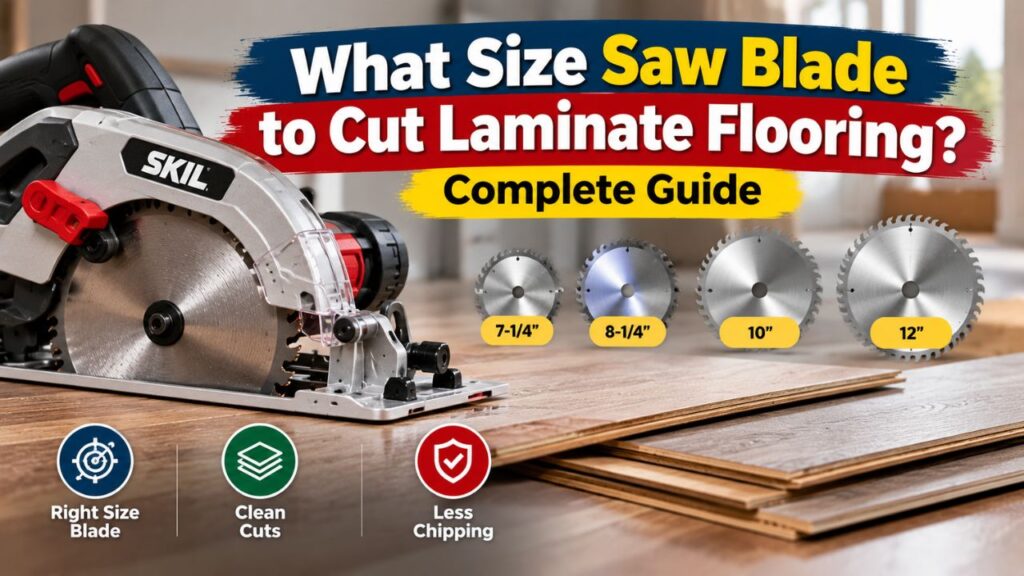
The correct blade diameter is the size approved for your saw.
For most DIY flooring installations, common combinations are:
| Saw Type | Common Blade Size | Good Tooth Count for Laminate |
| Circular saw | 7-1/4 inch | 40–60 teeth |
| Compact circular saw | 4-1/2 to 6-1/2 inch | Fine-tooth blade appropriate for saw |
| Table saw | 10 inch | 60–80 teeth |
| Miter saw | 10 inch | 60–80 teeth |
| Miter saw | 12 inch | 80–100 teeth |
| Track saw | Usually 6-1/2 to 6-1/4 inch class | Fine finish/laminate blade |
| Jigsaw | No circular blade diameter | Fine laminate blade, selected by TPI and material |
These numbers are practical ranges rather than strict rules.
A high-quality 40-tooth 7-1/4-inch blade can leave an excellent cut, while a poor or dull 60-tooth blade can chip badly.
For laminate, I care about blade quality, tooth geometry, and sharpness at least as much as tooth count.
Never Change Blade Diameter Just to Get More Teeth
If your circular saw is designed for a 7-1/4-inch blade, use a compatible 7-1/4-inch blade with the correct arbor and speed rating.
Do not install a 10-inch blade, modify guards, or otherwise try to adapt a blade the saw was not designed to use.
Likewise, installing an undersized blade is not automatically a smart way to gain a finer tooth pattern. The saw is engineered around specific blade dimensions, guards, maximum RPM, cutting depth, and arbor configuration.
Choose the best laminate-cutting blade within the specifications of your saw.
Is Blade Diameter or Tooth Count More Important?
For cut quality, tooth count and tooth design matter more.
Blade diameter primarily determines whether the blade fits the tool and how much cutting depth is available.
Tooth count affects how aggressively the blade removes material.
A coarse blade with relatively few teeth cuts quickly but usually leaves a rougher edge. A finer blade puts more cutting edges through the material during each revolution, which generally creates a cleaner finish.
Laminate flooring usually benefits from a finer blade because its decorative surface can chip.
Why More Teeth Usually Cut Cleaner
With more teeth, each individual tooth removes a smaller amount of material.
That reduces the aggressive tearing action that can fracture the laminate wear layer.
However, extremely high tooth counts are not always better.
Too many teeth can reduce chip clearance, increase heat, and slow cutting, especially when ripping long pieces.
The goal is a fine finish blade appropriate for your saw and the type of cut, not simply the blade with the highest number printed on the package.
Best Circular Saw Blade Size for Laminate Flooring
A 7-1/4-inch circular saw is one of the most common tools for DIY laminate-floor installations.
For this saw, I recommend a 7-1/4-inch carbide blade with approximately 40–60 teeth.
A 40-tooth finish blade can provide an excellent balance between cutting speed and edge quality.
A 60-tooth blade can produce an even finer finish when preventing visible chipping is the priority.
For occasional flooring work, either can be a very practical choice.
When to Choose 40 Teeth
A 40-tooth blade makes sense if you want one blade for both laminate flooring and general finish woodworking.
It removes chips efficiently and is less likely to feel excessively slow during longer cuts.
If most of your cut ends will be hidden under baseboard or transitions, a good 40-tooth carbide blade is usually more than adequate.
When to Choose 60 Teeth
Choose a 60-tooth blade when you want a cleaner edge and expect to make mostly crosscuts.
It can be particularly useful on factory-finished flooring where small chips would be noticeable.
For an entire flooring project, however, blade material and durability still matter. Laminate can dull a conventional fine-finish blade faster than ordinary lumber.
Best Table Saw Blade for Laminate Flooring
For a standard 10-inch table saw, a 60- to 80-tooth carbide finish blade is an excellent range for laminate flooring.
A table saw is especially useful for long rip cuts, such as trimming the first or last row to width.
If you will make many rips, I would lean toward a blade that balances fine finish with reasonable chip clearance rather than using the highest possible tooth count.
A 60-tooth high-quality blade can often be a better all-around flooring choice than an ultra-fine blade designed primarily for crosscutting veneers.
Why Table Saws Work Well for Laminate
The table supports the flooring and keeps the cutting path very controlled.
A fence also makes long rip cuts straight and repeatable.
The disadvantage is that the blade exits through the top surface of the workpiece on a typical table saw, so the decorative face is often more vulnerable to chipping.
A zero-clearance throat plate, sharp blade, and correct feed speed can improve the result substantially.
Best Miter Saw Blade for Laminate Flooring
A miter saw is one of the fastest tools for repeated crosscuts during flooring installation.
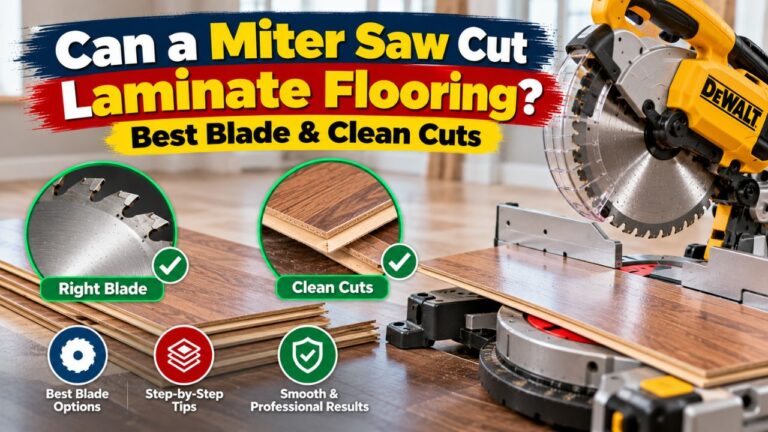
For a 10-inch miter saw, I recommend approximately 60–80 teeth.
For a 12-inch miter saw, approximately 80–100 teeth is a practical fine-finish range.
The larger blade requires more teeth to maintain a comparably fine tooth pitch.
Why a Fine Miter Saw Blade Helps
Miter saws make rapid crosscuts, and a coarse construction blade can chip the laminate surface noticeably.
A fine-tooth carbide blade reduces that risk.
For flooring installation where nearly every row requires a crosscut, the miter saw can save a significant amount of time compared with carrying every plank to a table saw.
Low or Negative Hook Angle Can Improve Control
Many fine miter-saw blades use a low or negative hook angle.
This geometry makes the blade less aggressive as it enters the material and can improve control and finish quality.
A blade specifically designed for sliding miter saws or fine crosscutting is usually a better choice than a high-hook ripping blade.
What Tooth Count Is Best for Laminate Flooring?
For most circular-blade saws, laminate flooring does best with a medium-high to high tooth count compared with rough construction work.
A useful starting point is:
7-1/4-inch blade: 40–60 teeth
10-inch blade: 60–80 teeth
12-inch blade: 80–100 teeth
You do not need to treat these numbers as absolute limits.
Blade design matters too much for that.
A specialized 48-tooth laminate blade can outperform a generic 80-tooth blade if its tooth geometry and cutting material are better suited to abrasive laminate.
Key Takeaways:
- Blade diameter should match the saw, not the flooring.
- Tooth count affects cut smoothness more directly than blade diameter.
- For laminate, use a finer blade than you would normally use for framing lumber.
What Type of Saw Blade Is Best for Laminate Flooring?
The best blade has a cutting edge designed to handle hard, abrasive surfaces while leaving a clean edge.
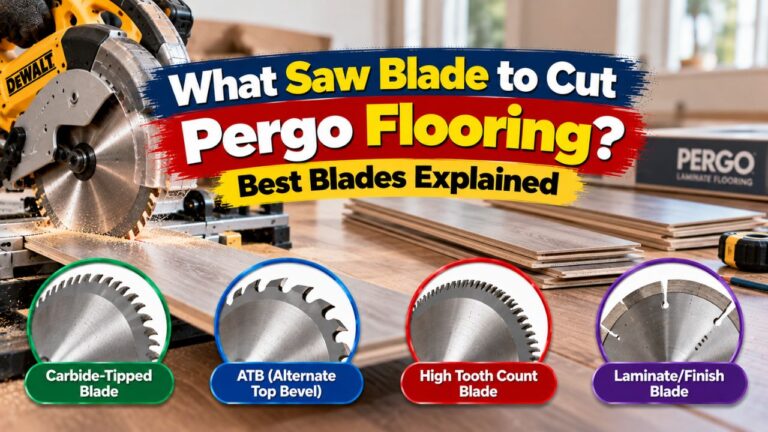
For most DIY installations, carbide-tipped blades provide the best combination of price, availability, and performance.
For frequent professional laminate work, polycrystalline diamond, or PCD, blades can offer much longer life.
Carbide-Tipped Blade
Carbide is substantially harder and more wear-resistant than ordinary steel saw teeth.
That makes carbide-tipped blades a strong choice for laminate.
A good carbide blade can handle an entire residential project if used correctly, although blade life depends on flooring composition, number of cuts, and blade quality.
For most homeowners, carbide is what I recommend.
PCD or Diamond-Tipped Blade
PCD blades use extremely hard cutting edges made from polycrystalline diamond.
These are designed for abrasive engineered materials such as laminate, fiber cement, composites, and certain panel products.
They can last dramatically longer than conventional carbide under demanding use.
The drawback is cost.
For one bedroom, buying a premium PCD blade may not make economic sense.
For a professional installer cutting laminate regularly, it can be worth the investment.
High-Speed Steel Blade
Plain high-speed-steel blades can cut laminate, but they generally do not offer the durability I want for a flooring project.
The abrasive wear layer can dull them relatively quickly.
If you already own a proper carbide blade, use that instead.
ATB vs. TCG: Which Tooth Geometry Is Better?
Two tooth patterns commonly appear on woodworking and laminate blades: ATB and TCG.
ATB means Alternate Top Bevel.
TCG means Triple Chip Grind.
ATB Blades
ATB teeth alternate their bevel direction.
This creates sharp points that slice wood fibers cleanly and produce excellent crosscuts in many wood products.
A fine-tooth ATB blade can work very well on laminate flooring, especially for occasional DIY cuts.
TCG Blades
Triple Chip Grind uses alternating tooth shapes that divide the cutting load differently.
TCG geometry is commonly used for harder and more abrasive materials such as laminates, melamine, plastics, and nonferrous materials when the blade is specifically rated for them.
For frequent laminate cutting, TCG is often my preferred tooth geometry because it combines clean cutting with good durability.
Which Should You Buy?
If you already own a sharp fine-tooth ATB finish blade, you probably do not need to buy another blade for a small flooring installation.
If you are purchasing specifically for laminate or expect to cut a lot of it, a laminate-rated TCG or PCD blade is an excellent choice.
How Many Teeth Does a 7-1/4-Inch Blade Need for Laminate?
For a typical 7-1/4-inch circular saw, I recommend 40–60 teeth.
A 24-tooth framing blade is generally too coarse for clean laminate cuts.
It will cut the plank, but the decorative layer may chip noticeably.
A 40-tooth blade is a useful all-around option.
A 60-tooth blade is better when finish quality is particularly important.
For a large project, a laminate-specific blade may last longer even if its tooth count is not dramatically higher.
How Many Teeth Does a 10-Inch Blade Need?
For a 10-inch miter saw or table saw, 60–80 teeth is a strong range.
A 60-tooth blade gives a good combination of finish and cutting efficiency.
An 80-tooth blade is more appropriate when you prioritize exceptionally clean crosscuts.
If most of your work consists of ripping laminate flooring lengthwise, I would not automatically choose an ultra-high 80-tooth crosscut blade. A properly designed 60-tooth combination or laminate blade may run cooler and feed more comfortably.
How Many Teeth Does a 12-Inch Miter Saw Blade Need?
Because a 12-inch blade has a larger circumference, it typically uses more teeth to produce a similar fine finish.
For laminate flooring, 80–100 teeth is a practical range.
A good 80-tooth finish blade can handle flooring crosscuts very well.
A 100-tooth blade may produce an extremely smooth edge, although the extra tooth count can increase cost and may not provide a meaningful advantage for cut ends that will be hidden under molding.
What Size Jigsaw Blade Should You Use for Laminate Flooring?
Jigsaw blades are selected differently because they do not use circular diameter and tooth counts like circular saw blades.
For a jigsaw, choose a fine-tooth blade specifically designed for laminate or clean cutting in hardwood and laminated materials.
The blade needs enough cutting length to pass through the plank while remaining well supported.
Fine laminate jigsaw blades often fall roughly in the low-to-mid teen TPI range or higher depending on tooth design.
However, TPI alone should not determine your purchase.
A specialized laminate blade with carbide teeth or bidirectional tooth geometry may produce better results than a generic blade with a higher TPI.
Should You Use a Thin-Kerf Blade for Laminate?
A thin-kerf blade can work very well.
Because it removes less material, the saw motor has less resistance to overcome. This can be helpful on cordless circular saws and lower-powered tools.
A narrow kerf also wastes less material.
However, thin blades can be slightly more susceptible to deflection if you force the saw.
For flooring, where accurate straight cuts matter, use moderate feed pressure and allow the blade to do the work.
Blade stability and quality are more important than choosing the thinnest kerf you can find.
How to Prevent Chipping When Cutting Laminate Flooring
The blade is only one part of a clean cut.
Even the best laminate blade can chip if the plank is unsupported or fed incorrectly.
Orient the Decorative Face Correctly
With a standard circular saw, the blade generally enters the bottom of the plank and exits through the top.
The exit surface tends to experience more tear-out.
For this reason, place the decorative face down when using a conventional handheld circular saw.
With a table saw, the blade normally enters from underneath and exits the top, so putting the decorative face up or down depends on where you want the cleanest surface and the blade/setup being used. In many cases, the top surface is more vulnerable to tear-out.
With a miter saw, the exact cleanest-face behavior depends on blade travel and tooth direction, so test an offcut first if appearance is critical.
Use a Sharp Blade
If a blade starts requiring noticeably more pressure, making rougher cuts, or creating more chips, replace or sharpen it as appropriate.
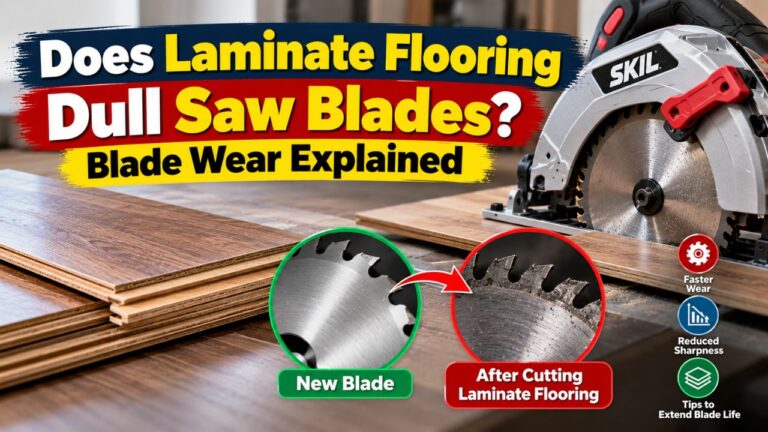
Laminate can dull cutting edges faster than ordinary wood.
Support the Plank
A vibrating flooring plank is much more likely to chip.
Support it securely on both sides of the cut without trapping the blade.
Keep the Blade at Full Speed
Start the saw before the teeth enter the material.
Allow the motor to reach operating speed and then begin the cut smoothly.
Do Not Force the Saw
Excessive feed pressure can deflect the blade, overload the motor, and fracture the laminate surface.
Use steady forward movement.
Painter’s Tape Can Help
Applying painter’s tape across a visible cut line can reduce minor surface breakout and make pencil marks easier to see.
It is a supplementary technique rather than a substitute for the correct blade.
Key Takeaways:
- Correct blade orientation and plank support are almost as important as tooth count.
- A sharp blade dramatically reduces chipping.
- Let the saw cut at its own pace rather than forcing it through the flooring.
Which Blade Should You Use for Crosscuts?
For crosscuts, prioritize a clean finish.
I recommend a high-tooth-count carbide blade.
On a 7-1/4-inch circular saw, around 60 teeth is excellent.
On a 10-inch miter saw, around 80 teeth gives a very clean crosscut.
For a 12-inch miter saw, an 80- to 100-tooth finish blade works well.
Because crosscuts are relatively short, chip clearance and heat are less problematic than during long rip cuts.
Which Blade Should You Use for Rip Cuts?
For long rip cuts, especially when trimming an entire row, you need a balance between clean finish and efficient material removal.
A blade that is excessively fine can heat up during a long rip.
For a 7-1/4-inch circular saw, a quality 40-tooth blade can work very well.
For a 10-inch table saw, a 60-tooth combination or laminate blade provides a good compromise.
If the rip edge will disappear beneath baseboard, there is little benefit in sacrificing cutting speed for a microscopic improvement in edge quality.
The board still needs to remain structurally intact and free of major chipping.
Is a 24-Tooth Blade Good for Laminate Flooring?
I would generally avoid a 24-tooth framing blade when clean cuts matter.
It is designed for fast construction cuts rather than fine finished surfaces.
It will physically cut laminate, but the aggressive teeth can chip the wear layer.
If you only need a rough hidden cut and have no other blade, it may be usable, but for a flooring project I would spend a modest amount on a proper fine-tooth blade.
The reduction in damaged planks is worth it.
Is a 40-Tooth Blade Good for Laminate Flooring?
Yes.
A high-quality 40-tooth 7-1/4-inch carbide blade is one of my preferred general-purpose choices.
It cuts cleanly enough for most perimeter cuts while remaining efficient for longer cuts.
If you want one blade that can handle laminate and other finish woodworking after the flooring project is complete, 40 teeth is particularly practical.
Is a 60-Tooth Blade Good for Laminate Flooring?
Yes, especially for clean crosscuts.
A 60-tooth 7-1/4-inch finish blade provides a very smooth edge and reduces chipping when sharp.
On a 10-inch saw, 60 teeth is also a useful general laminate range, although an 80-tooth blade can provide an even finer crosscut.
Is an 80-Tooth Blade Good for Laminate Flooring?
Yes, particularly on a 10-inch miter or table saw.
An 80-tooth blade is excellent for clean crosscuts and factory-finished flooring.
It may be more blade than you need for hidden perimeter cuts, but it is a strong choice when finish quality matters.
Is a 100-Tooth Blade Better?
Not automatically.
A 100-tooth blade on a 12-inch miter saw can produce a very smooth cut.
A 100-tooth blade on a different tool or in a long ripping application may cut unnecessarily slowly or create extra heat.
Choose the tooth count relative to blade diameter, saw type, and cut direction.
The highest tooth count is not universally the best blade.
Laminate-Specific Blade vs. Regular Wood Blade
A regular fine-tooth carbide wood blade can work perfectly well for an occasional project.
A laminate-specific blade becomes more valuable when you are making hundreds of cuts or want maximum blade life.
Laminate blades are often designed specifically to handle hard wear surfaces and engineered cores.
A professional flooring installer may therefore benefit from TCG carbide or PCD.
A homeowner installing one room can usually get excellent results from a quality carbide finish blade.
My Recommended Blade by Saw Type
| Saw | My Practical Recommendation |
| 7-1/4″ circular saw | 40–60T carbide finish blade |
| 10″ table saw | 60–80T carbide/laminate blade |
| 10″ miter saw | 60–80T fine crosscut blade |
| 12″ miter saw | 80–100T fine crosscut blade |
| Track saw | Manufacturer-size fine finish/laminate blade |
| Jigsaw | Fine laminate-specific blade |
| Professional high-volume work | Consider TCG or PCD blade |
For most DIY homeowners, a good carbide finish blade is the best value.
When Should You Replace the Blade?
Do not judge blade condition only by visual appearance.
A blade may still look acceptable but perform poorly.
Replace or service it when you notice significantly more chipping than before, burning along the cut, increased feed pressure, reduced cutting speed, vibration, or excessive noise.
Before throwing a blade away, check whether resin or flooring residue has accumulated around the teeth.
Cleaning can sometimes restore performance.
If the carbide teeth are genuinely dull or damaged, use a sharpening service when the blade is valuable enough to justify it.
Safety When Cutting Laminate Flooring
Laminate cutting produces fine dust and small chips.
Wear eye protection and follow appropriate respiratory protection practices, particularly when making many cuts indoors.
Whenever possible, set up the saw outdoors or in a designated cutting area rather than filling the installation room with dust.
Check the blade guard before cutting and disconnect power or remove the battery before replacing blades.
Make sure the blade’s diameter, arbor size, maximum RPM rating, and application are compatible with your saw.
Do not remove guards or modify the saw to make an incompatible blade fit.
Support the flooring securely and keep hands away from both the visible top of the blade and the portion extending underneath the plank.
FAQs about what size saw blade to cut laminate flooring
What size saw blade do I need for laminate flooring?
Use the blade diameter specified by your saw.
For a typical 7-1/4-inch circular saw, use a 7-1/4-inch fine-tooth carbide blade. For a 10-inch miter or table saw, use a compatible 10-inch blade.
How many teeth should a saw blade have for laminate flooring?
A practical range is around 40–60 teeth for a 7-1/4-inch blade, 60–80 teeth for a 10-inch blade, and 80–100 teeth for a 12-inch blade.
Blade geometry and quality also matter.
Is a 40-tooth blade enough for laminate?
Yes. A quality 40-tooth 7-1/4-inch carbide blade can make very clean flooring cuts and is an excellent all-around choice.
Is a 60-tooth blade better for laminate flooring?
A 60-tooth blade usually leaves a smoother edge on a 7-1/4-inch circular saw, making it particularly good for finish crosscuts.
It may cut slightly slower than a 40-tooth blade.
Can I use a 24-tooth circular saw blade?
You can cut laminate with one, but it is not my recommendation.
A coarse 24-tooth framing blade is more likely to chip the decorative surface.
What blade should I use on a 10-inch miter saw?
A 60- to 80-tooth fine crosscut carbide blade is a good choice for most laminate flooring.
Choose a laminate-specific blade if you expect heavy use.
What blade should I use on a 12-inch miter saw?
An 80- to 100-tooth fine-finish blade works well for laminate crosscuts.
What blade should I use on a table saw?
For a 10-inch table saw, approximately 60–80 teeth works well.
A TCG laminate blade is particularly useful for repeated laminate cutting.
Is carbide good for cutting laminate?
Yes.
Carbide-tipped blades are durable, widely available, and suitable for most DIY laminate projects.
Is a diamond blade better for laminate flooring?
A PCD blade can last much longer when cutting abrasive laminate, but it costs more.
It makes the most sense for frequent or professional use rather than a small one-time project.
Is TCG better than ATB for laminate?
TCG is often excellent for abrasive laminates and engineered panels because of its durability and tooth geometry.
A fine ATB blade can still make very clean laminate-flooring cuts.
Should I use a thin-kerf blade?
A quality thin-kerf blade can work very well, especially with cordless or lower-powered circular saws.
Do not force the cut because a thinner blade can deflect more easily.
Should laminate face up or down when using a circular saw?
With most conventional circular saws, place the decorative side down to reduce visible chipping because the blade normally exits through the upper face.
Why does laminate chip when I cut it?
Common causes include a coarse blade, dull teeth, incorrect cutting orientation, poor support, excessive feed pressure, and vibration.
Can I use the same blade for laminate and hardwood flooring?
Yes, a high-quality carbide finish blade can cut both.
However, laminate is highly abrasive and may dull the blade faster than natural hardwood.
Can I use a jigsaw instead of a circular saw?
Yes.
A jigsaw is particularly useful for curves, notches, and irregular cuts. Use a fine laminate-specific jigsaw blade.
What saw blade gives the cleanest laminate cut?
A sharp laminate-specific carbide or PCD blade with fine tooth geometry usually produces the cleanest cut.
For occasional DIY use, a good fine-tooth carbide finish blade is normally sufficient.
Do I need a special laminate blade?
Not necessarily.
A standard quality carbide finish blade can do an excellent job. A specialty laminate blade is more valuable when blade life and repeated clean cuts matter.
Can I put a smaller blade on my saw for laminate?
Only if the saw manufacturer explicitly permits that blade size and all specifications remain compatible.
Do not change blade diameter simply to alter tooth count.
What causes a laminate blade to become dull so fast?
The hard wear layer is abrasive.
Frequent laminate cutting can wear ordinary carbide edges faster than cutting softwood or many natural hardwoods.
Should I use a higher tooth count for crosscuts than rip cuts?
Generally, yes.
Fine crosscuts benefit from more teeth, while long rip cuts need enough chip clearance to prevent excessive heat and resistance.
Conclusion
If you are deciding what size saw blade to cut laminate flooring, start with the blade diameter your saw was designed to use. Do not change diameter simply because a different blade has more teeth.
For a common 7-1/4-inch circular saw, I recommend a 40- to 60-tooth carbide blade. A 40-tooth blade offers an excellent balance of speed and cleanliness, while a 60-tooth blade is better when you want particularly smooth crosscuts.
For a 10-inch table or miter saw, 60–80 teeth is a practical range. For a 12-inch miter saw, 80–100 teeth works well for clean flooring crosscuts.
Tooth count is only part of the decision. A sharp carbide blade with appropriate geometry is better than a cheap high-tooth-count blade. ATB finish blades work well for DIY projects, while TCG and PCD laminate blades are especially attractive for frequent professional cutting because they handle abrasive surfaces more effectively.
For most homeowners, my recommendation is simple: keep the correct factory blade diameter for your saw and buy a quality fine-tooth carbide finish blade. If you are cutting an entire house or regularly installing laminate professionally, consider upgrading to a laminate-specific TCG or PCD blade.
Pair the right blade with solid plank support, correct face orientation, light feed pressure, and full blade speed before entering the material. Those details matter just as much as the tooth count and will give you cleaner laminate cuts with fewer chipped planks.