Can a Drywall Saw Cut Wood? What It Can Cut and When to Use It
Yes, a drywall saw can cut wood, especially thin and relatively soft wood. However, a drywall saw is designed primarily for cutting drywall, gypsum board, and wallboard, so it is usually not the best tool for woodworking.
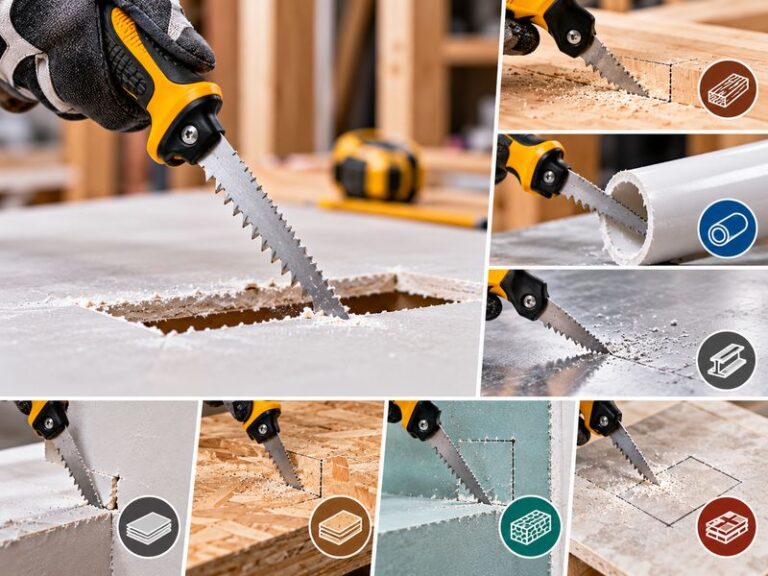
A typical drywall saw, also called a jab saw, has a short, narrow blade with large, aggressive teeth. Those teeth remove soft drywall quickly, but they tend to leave a rougher cut in wood than a saw designed specifically for lumber, plywood, or finish work.
For a quick cut through thin wood, wood paneling, or a small piece of lath behind drywall, a drywall saw may work perfectly well. If you need to cut thick lumber, make a clean edge, or complete several wood cuts, a hand saw, keyhole saw, jigsaw, or another wood-cutting tool will usually be easier and produce better results.
The main question is not simply whether a drywall saw can cut wood—it can. The more useful question is what type of wood you are cutting and how clean or accurate the cut needs to be.
Can a Drywall Saw Cut Wood?
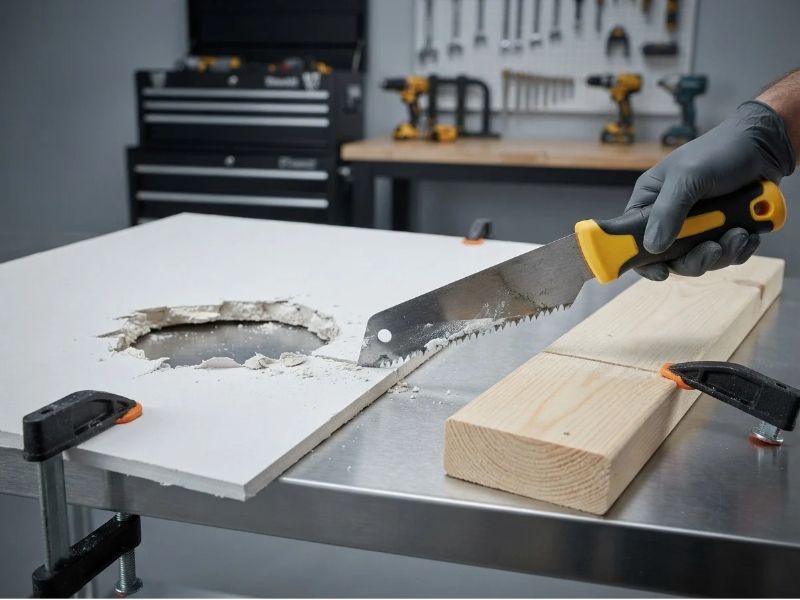
A drywall saw can cut wood, but its performance depends on the thickness, hardness, and type of wood.
It works best on thin materials such as wood lath, paneling, and small pieces of softwood. The pointed blade can also make it useful when you need to start a small interior cut where a full-size hand saw cannot fit.
However, the large teeth found on many drywall saws are optimized for fast, rough cutting rather than smooth woodworking.
When used on wood, you may notice more splintering and a rougher edge.
A drywall saw is therefore best treated as an occasional wood-cutting tool rather than a replacement for a proper wood saw.
Why Can a Drywall Saw Cut Wood?
Both drywall saws and traditional wood saws work by using sharp teeth to remove material as the blade moves back and forth.
The main difference is the way those teeth are designed.
Drywall is relatively soft, so drywall saws often use large, coarse, aggressive teeth. They are designed to move through gypsum board quickly without requiring a lot of strokes.
Wood is stronger and more fibrous. A saw designed for wood normally has a tooth pattern chosen to cut those fibers efficiently while controlling splintering.
A drywall saw’s teeth are still sharp enough to cut wood, but they are not optimized for producing a refined wood cut.
What Types of Wood Can a Drywall Saw Cut?
A drywall saw is most useful on thin or soft wood.
For example, it may work well on wood lath found behind older plaster walls. It can also cut some thin wood paneling or lightweight softwood when precision is not critical.
The thicker and harder the wood becomes, the less practical the drywall saw becomes.
A drywall saw may be usable for a small notch in a thin wooden panel, but you would not normally choose one to cut through a 2×4 or make long cuts in hardwood.
Can a Drywall Saw Cut Plywood?
Yes, a drywall saw can cut thin plywood, but the result may be rough.
Plywood consists of several thin layers of wood veneer bonded together. Coarse drywall saw teeth can pull at those layers and cause splintering around the cut.
For a small rough opening where the edge will be hidden, this may not matter.
For a visible or precise plywood cut, use a tool designed for wood, such as a jigsaw with a suitable blade, circular saw, or fine-tooth hand saw.
If you need to make a small interior opening in thin plywood and do not have another saw available, a drywall saw can still get the job done.
Can a Drywall Saw Cut a 2×4?
Technically, you may be able to work through a 2×4 with a drywall saw, but it is not a practical choice.
A 2×4 is much thicker than the materials a drywall saw is normally designed to handle.
The short blade, aggressive tooth pattern, and compact handle make the job slower and more tiring than necessary.
A standard wood hand saw, reciprocating saw, circular saw, or jigsaw will generally cut framing lumber much more efficiently.
So if you expose a wooden wall stud while cutting drywall, do not automatically continue through the stud with the drywall saw unless cutting the framing is actually part of the project and you know it is appropriate to do so.
Can a Drywall Saw Cut Wood Paneling?
Yes. Thin wood paneling is one of the more suitable wood materials for a drywall saw.
The narrow blade can be useful when making an opening for an outlet, cable, or fixture.
However, the cut may splinter around the edges.
If the finished edge will remain visible, a keyhole saw or jigsaw with a finer wood blade can usually produce a cleaner result.
For an opening that will later be covered by an outlet plate or trim, the rougher edge may not be important.
Can a Drywall Saw Cut Wood Lath?
Yes. A drywall saw can often cut wood lath, particularly when working on older plaster-and-lath walls.
Wood lath consists of thin strips of wood installed behind plaster. Once a drywall or jab saw has passed through the plaster, it may be able to cut through the lath as well.
However, use caution.
Aggressive sawing can cause the lath to vibrate, which may loosen or crack surrounding plaster.
An oscillating multi-tool with an appropriate blade can provide better control when you need to cut plaster and wood lath together.
Will a Drywall Saw Make a Clean Cut in Wood?
Usually not as clean as a proper wood saw.
A drywall saw is built for speed in gypsum board rather than smooth wood edges.
Its coarse teeth may cause:
Splintering, particularly in plywood or finished paneling.
Rough edges, which may require sanding afterward.
Blade wandering, especially during longer cuts.
For rough hidden openings, none of these issues may matter.
For furniture, trim, cabinets, or other visible woodworking, use a saw designed for clean wood cutting.
Drywall Saw vs Wood Hand Saw
A wood hand saw is the better choice for most normal wood cutting.
The longer blade makes it easier to maintain a straight line, while the tooth pattern is designed for wood fibers.
A drywall saw has an advantage in smaller, confined spaces because its blade is short and narrow.
Think of the difference this way:
Use a drywall saw when you need a small rough opening in thin wood or when access is limited.
Use a wood hand saw when you need to cut lumber efficiently and maintain a straighter, cleaner cut.
Drywall Saw vs Keyhole Saw for Wood
A keyhole saw is generally a better choice for small wood cuts than a drywall saw, particularly if the keyhole saw has a blade designed for wood.
Both tools have narrow blades, so both can make interior openings.
However, keyhole saws often have a more tapered blade and may use finer teeth. This can make them easier to control around curves and small shapes.
If you regularly cut both drywall and thin wood, a keyhole saw with suitable blades may be more versatile.
Drywall Saw vs Jigsaw for Wood
For anything beyond a small hand cut, a jigsaw is usually much more practical.
A jigsaw can make:
- Straight cuts
- Curved cuts
- Interior openings
- Cuts through thicker wood
The quality of the cut depends heavily on the blade installed.
A drywall saw requires manual effort and becomes slow on thicker wood, while a jigsaw can handle the same cut much faster.
For one small opening, though, the drywall saw may be simpler because there is no power tool to set up.
Can You Use a Jab Saw to Cut Wood?
Yes. A jab saw can cut wood, and because jab saw and drywall saw are often interchangeable names, the same limitations apply.
It works best for thin, soft wood and rough openings.
A jab saw is not the ideal tool for long cuts, thick lumber, or woodworking where the finished edge matters.
If you need a quick opening through thin paneling or wood lath, however, it can be useful.
When Does Using a Drywall Saw on Wood Make Sense?
Using a drywall saw on wood makes sense when the job is small, rough, and limited.
For example, you might already be cutting an opening through drywall and discover a thin piece of wood behind it. If that wood is non-structural and intended to be removed as part of the project, the drywall saw may be able to complete the cut.
It can also be convenient when making a small hidden opening through thin paneling.
The key is not to expect the drywall saw to perform like a dedicated woodworking saw.
When Should You Not Use a Drywall Saw on Wood?
Avoid using a drywall saw when you need a clean, straight, or highly accurate wood cut.
It is also a poor choice for thick hardwood, framing lumber, large plywood sheets, or repeated woodworking tasks.
If the wood is structural, such as a wall stud or joist, do not cut it simply because your saw can physically get through it. Structural members may be carrying loads or supporting other parts of the building.
Use the proper tool and make sure the material is actually intended to be cut.
How to Cut Thin Wood With a Drywall Saw
If a drywall saw is appropriate for the job, mark your cutting line clearly before beginning.
Secure the wood so that it cannot move while you are cutting.
Start with short, controlled strokes and allow the saw teeth to remove material rather than forcing the blade.
When working with thin plywood or paneling, support the material near the cutting area to help reduce vibration and splintering.
Move slowly when approaching the end of the cut because unsupported wood can break away and leave a rough edge.
If the saw feels excessively difficult to move, switch to a tool designed for wood rather than forcing the drywall blade.
Does Cutting Wood Damage a Drywall Saw?
Occasional cuts through thin wood generally should not be a major problem for a good drywall saw.
However, repeated cutting through hard or thick wood can dull the teeth faster.
A drywall saw is inexpensive enough that this may not matter for occasional construction work, but if you regularly work with wood, using the proper wood-cutting blade will usually provide better performance and longer tool life.
What Is the Best Tool Instead of a Drywall Saw for Wood?
The best alternative depends on the type of cut.
For a long straight cut in lumber, use a wood hand saw or circular saw.
For small curved openings, a keyhole saw or jigsaw works well.
For renovation work in confined areas, an oscillating multi-tool can be very useful.
For demolition or rough framing cuts, a reciprocating saw may be appropriate.
A drywall saw remains useful when the cut is small and convenience matters more than finish quality.
FAQs About Cutting Wood With a Drywall Saw
Will a drywall saw cut wood?
Yes. A drywall saw can cut thin and relatively soft wood, although it usually leaves a rougher edge than a proper wood saw.
Can a drywall saw cut plywood?
Yes, particularly thin plywood. However, its coarse teeth may cause splintering.
Can a drywall saw cut a 2×4?
It may eventually cut through a 2×4, but it is not an efficient or recommended tool for framing lumber.
Can a drywall saw cut wood paneling?
Yes. It can work well for small openings in thin wood paneling, especially if the cut will later be hidden.
Can a drywall saw cut wood lath?
Yes. A drywall saw can cut many thin wood lath strips, although care is necessary when working with plaster-and-lath walls.
Is a drywall saw the same as a wood saw?
No. A drywall saw is optimized for gypsum board, while wood saws have tooth designs better suited to cutting wood fibers.
Is a keyhole saw better than a drywall saw for wood?
Usually yes, particularly if the keyhole saw has a blade specifically designed for wood.
Will cutting wood ruin a drywall saw?
A few cuts through thin wood generally will not ruin the saw, but repeated cutting through dense or thick wood can dull its teeth more quickly.
Final Thoughts
So, can a drywall saw cut wood? Yes. A drywall saw can cut thin plywood, wood paneling, wood lath, and some softwood, particularly when you only need a small or rough opening.
However, being able to cut wood does not make a drywall saw the best wood-cutting tool.
Its coarse teeth are designed primarily for gypsum drywall, which means cuts in wood may be slower, rougher, and more prone to splintering.
For a quick hidden cut through thin wood, using a drywall saw is perfectly reasonable. For thick lumber, long cuts, visible edges, or precision woodworking, choose a saw designed specifically for wood.
The simplest rule is this: use a drywall saw on wood when the cut is small and finish quality is not critical; use a dedicated wood saw when accuracy, speed, or a clean edge matters.