What Saw Blade to Cut Pergo Flooring? Best Blades Explained
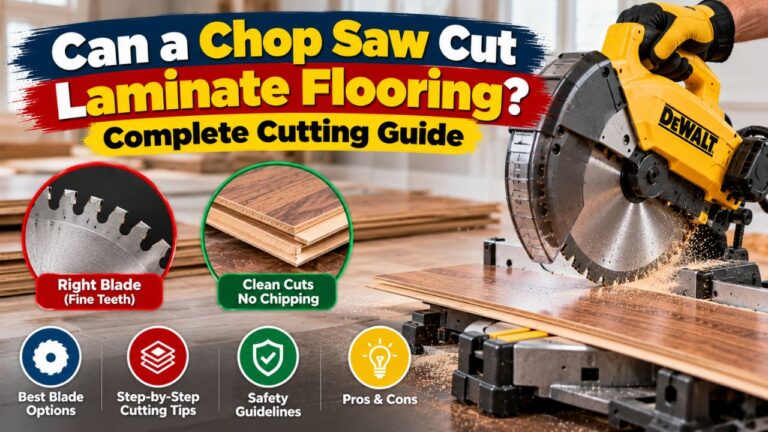
If you are wondering what saw blade to cut Pergo flooring with, a sharp fine-tooth carbide blade designed for laminate, melamine, or finish cutting is usually the best choice for Pergo laminate. For a standard 7-1/4-inch circular saw, a 60-tooth fine-finish or laminate blade is an excellent option. On a 10-inch table or miter saw, a 60- to 80-tooth laminate or fine-finish blade generally provides cleaner edges than a coarse construction blade.
Pergo itself recommends using a fine-tooth blade when sawing laminate and notes that plank orientation should change depending on the type of saw. Its current laminate installation instructions specify placing the patterned surface down when using a jigsaw, table saw, or handheld circular saw, while the patterned surface faces up with a handsaw or crosscut saw.
The biggest mistake is assuming that any ordinary wood blade will produce the same result. Pergo laminate has a hard, wear-resistant decorative surface over a dense fiberboard core. A coarse framing blade will cut through it, but it can produce more chipping and can dull faster than it would when cutting ordinary softwood.
Blade diameter, tooth count, tooth geometry, carbide quality, and saw type all affect the result.
In this guide, I’ll explain the best saw blades for Pergo flooring, ideal tooth counts for circular, table, miter, and jigsaws, which side of the plank should face up, how to reduce chipping, why laminate dulls blades, and how Pergo laminate differs from Pergo vinyl when it comes to cutting.
Best Saw Blade for Pergo Laminate Flooring
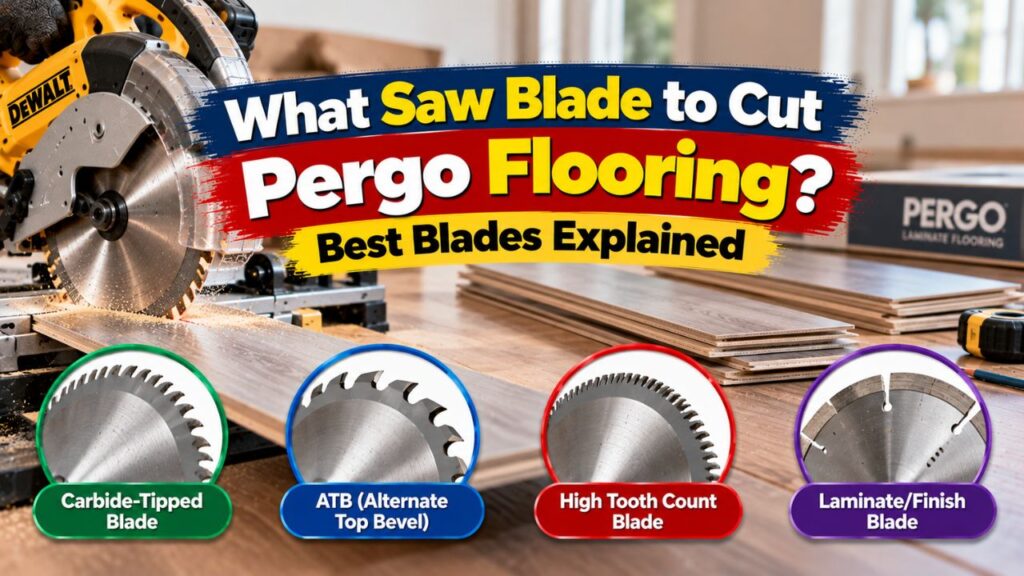
For most DIY Pergo laminate installations, my preferred setup is a fine-tooth carbide-tipped laminate or finish blade.
If the blade manufacturer specifically lists laminate, melamine, veneered plywood, or laminated panels among its recommended materials, that is even better.
Laminate-oriented blades commonly use a high alternate-top-bevel tooth geometry, often abbreviated Hi-ATB, which slices the brittle decorative layer cleanly rather than attacking it with large coarse teeth.
For example, current 7-1/4-inch 60-tooth Hi-ATB blades are specifically sold for fine cutting of materials including laminate and melamine.
A useful starting guide is:
| Saw | Recommended Pergo Laminate Blade |
| 5-1/2 to 6-1/2 in. circular saw | Fine-tooth laminate/finish carbide blade |
| 7-1/4 in. circular saw | About 40–60T; 60T excellent for clean cuts |
| 10 in. miter saw | About 60–80T fine-finish/laminate blade |
| 10 in. table saw | About 60–80T laminate or melamine blade |
| 12 in. miter saw | About 80–100T fine-finish blade |
| Jigsaw | Fine-tooth laminate blade |
| Handsaw | Fine-tooth panel or laminate saw |
These are useful ranges rather than mandatory specifications.
A premium 60-tooth blade specifically engineered for laminate can produce a better cut than an inexpensive 80-tooth general-purpose blade.
The blade also has to fit your saw correctly. Match its diameter, arbor size, maximum RPM rating, kerf, and rotation direction to the tool manufacturer’s specifications.
Key Takeaways:
- Use a sharp fine-tooth carbide blade for Pergo laminate.
- A 60T blade is an excellent choice on a common 7-1/4-inch circular saw.
- Dedicated laminate or melamine blades generally outperform coarse construction blades when minimizing chips is important.
Why Pergo Flooring Needs a Fine-Tooth Blade
Pergo laminate is not simply a piece of wood.
Its surface includes a durable wear layer designed to withstand abrasion, foot traffic, scratches, and everyday use.
Under that finished surface is a manufactured core.
That construction makes laminate relatively hard on cutting tools.
When a coarse saw blade hits the finished layer, each large tooth removes a substantial amount of material. Near the cut edge, this can fracture small pieces of the decorative layer before the tooth cleanly severs them.
The result is chip-out.
Fine teeth remove smaller amounts with each pass and generally put less abrupt force on the brittle surface.
That is why Pergo recommends a fine-tooth saw blade for cutting laminate.
More Teeth Are Not Always Automatically Better
It is easy to assume that a 100-tooth blade must always be better than a 60-tooth blade.
That is not necessarily true.
Too many teeth can increase friction and heat, particularly when the blade is dirty or dull.
Tooth geometry matters as well.
A purpose-built laminate blade may have specialized carbide, a high bevel angle, vibration-control features, and a thin kerf that together produce cleaner cuts than a blade selected only by tooth count.
For most DIY flooring installations, you do not need the highest tooth count available.
You need a blade specifically suited to fine cutting of abrasive laminated material.
Best Circular Saw Blade for Pergo Flooring
A circular saw is one of the most versatile tools for installing Pergo flooring.
It can make ordinary crosscuts, angled cuts, and long rip cuts.
For a common 7-1/4-inch circular saw, I recommend a 60-tooth carbide fine-finish or laminate blade when minimizing chipping is the priority.
Current 7-1/4-inch 60T Hi-ATB blades are available specifically for laminate, melamine, veneered plywood, and other materials where a clean surface matters.
Can You Use a 40-Tooth Circular Saw Blade?
Yes.
A good 40-tooth finish blade can produce perfectly acceptable Pergo cuts, particularly when the cut edge will ultimately be hidden beneath baseboard or molding.
It may also cut slightly faster than an extremely fine blade.
If I already owned a sharp, premium 40T finish blade rated for laminate, I would test it before buying another blade.
If the test cut is clean enough, there is no need to replace it.
Can You Use a 24-Tooth Blade?
A 24T construction blade will cut through Pergo.
I would not choose it for finished flooring unless there were no better option.
A 24T blade is optimized primarily for fast cutting in lumber. Its large teeth and gullets are useful for ripping construction wood but tend to leave a rougher edge in laminate.
It may be adequate for a wall-facing rip that will be completely concealed under trim.
For clean end cuts or visible transitions, use a finer blade.
Best Blade for a 5.5-Inch Circular Saw
If you have a compact 5.5-inch circular saw, you do not need to upgrade to a larger saw just to cut Pergo.
A small saw has much more cutting depth than laminate requires.
The challenge is simply finding a suitable blade in the smaller diameter.
Choose the finest carbide laminate or finish blade available that meets your saw’s exact specifications.
Depending on the blade manufacturer, you might find options with roughly 30, 36, 40, or more teeth.
Do not compare those numbers directly with a 7-1/4-inch blade. The smaller circumference naturally changes tooth spacing.
A good 36T laminate blade on a 5.5-inch saw can be an excellent flooring blade.
Best Miter Saw Blade for Pergo Flooring
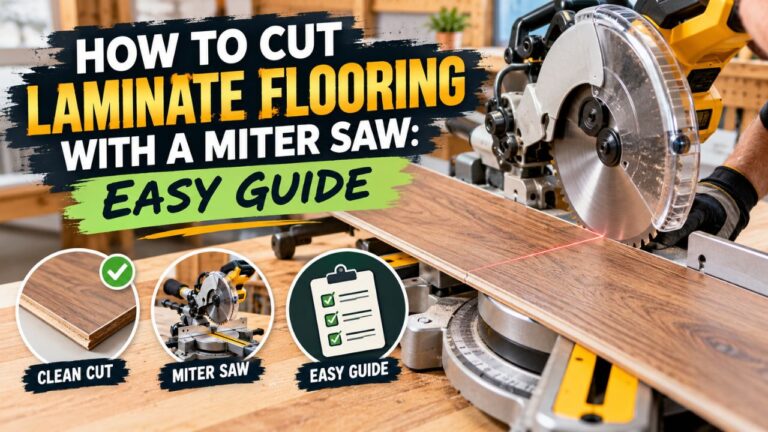
A miter saw is extremely convenient if most of your cuts involve shortening planks at the end of each row.
For a 10-inch miter saw, I would generally choose a 60- to 80-tooth carbide finish blade.
For a 12-inch miter saw, an 80- to 100-tooth fine-finish blade is a useful general range.
Again, look for a blade rated for laminate, melamine, composites, or similarly brittle finished materials rather than focusing on tooth count alone.
Why a Miter Saw Is Useful
The flooring rests flat against a fence and saw table, giving you good support during the cut.
It is also fast.
Once your line is marked, you can position the plank, make the cut, and move immediately to the next piece.
If you are flooring several rooms, that speed can make a significant difference compared with setting up a circular saw for every crosscut.
Which Side Faces Up?
Pergo’s instructions distinguish between different saw types. For a crosscut-style saw, the manufacturer’s instructions indicate keeping the patterned side up, while for a handheld circular saw, table saw, or jigsaw the current general laminate instructions specify patterned side down.
Because blade direction and specific saw configurations can vary, I still recommend making one test cut on leftover flooring before processing the actual installation pieces.
Best Table Saw Blade for Pergo Flooring
A table saw becomes particularly valuable when you need to rip the first or last flooring row lengthwise.
For a typical 10-inch table saw, a 60- to 80-tooth fine-finish laminate blade is a strong choice.
A good laminate blade can make long cuts with relatively little chipping while the fence keeps the width consistent.
Freud’s laminate-oriented blade ranges, for example, use high-tooth-count carbide configurations intended to create chip-free edges in laminate and other coated panels.
Do You Need a 24T Rip Blade?
Normally, no.
For thick hardwood, a low-tooth-count rip blade is ideal because it clears large amounts of wood efficiently.
Pergo laminate is thin.
There is no need for huge gullets to evacuate chips from a deep 2-inch hardwood rip.
A finer blade gives you better edge quality without creating excessive cutting resistance in such thin stock.
Should Pergo Face Up or Down on the Table Saw?
Interestingly, Pergo’s current general laminate instructions specify pattern side down when using a table saw.
Follow the installation instructions for your specific Pergo collection, since individual products and tool configurations can differ.
A scrap test remains useful whenever edge appearance is critical.
Key Takeaways:
- Circular saw: approximately 40–60T, with 60T excellent for clean cuts.
- Miter saw: roughly 60–80T on a 10-inch saw.
- Table saw: a 60–80T laminate or melamine blade works well for long rips.
- Always prioritize a blade specifically rated for laminate over tooth count alone.
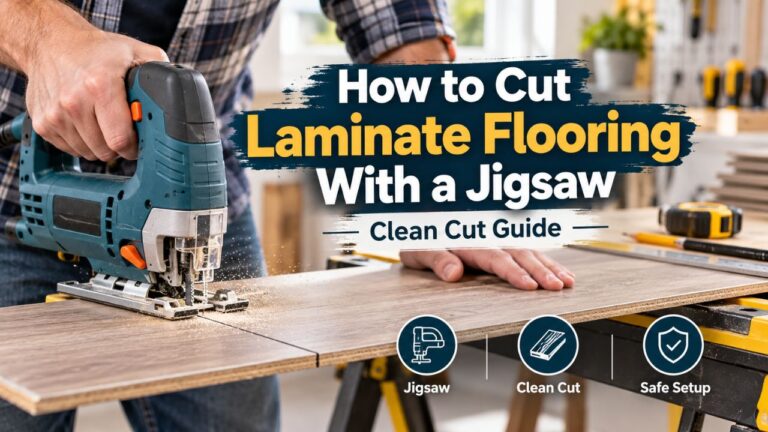
Best Jigsaw Blade for Pergo Flooring
A jigsaw is not the fastest tool for straight flooring cuts, but it is one of the most useful tools during an installation.
It excels at:
Door-frame notches
Heating-register openings
Curved walls
Pipe cutouts
Irregular shapes
Small detail cuts
For Pergo laminate, use a fine-tooth laminate jigsaw blade.
Pergo specifically recommends a fine-tooth blade when using a jigsaw.
Standard vs. Reverse-Tooth Jigsaw Blades
Most conventional jigsaw blades cut on the upward stroke.
That movement tends to create more chipping on the upper surface.
For that reason, Pergo’s current laminate instructions tell installers to put the patterned side down when cutting with a jigsaw.
A reverse-tooth blade cuts in the opposite direction and may allow a different plank orientation.
Do not rely on memory alone.
Look at the tooth direction before cutting and test on a scrap plank.
Pergo itself recommends checking tooth direction to determine how to orient the plank for the cleanest result.
What Tooth Grind Is Best for Pergo Laminate?
For exceptionally clean laminate cuts, Hi-ATB is one of the best tooth geometries.
ATB stands for Alternate Top Bevel.
One carbide tooth is beveled one direction, and the next tooth is beveled the opposite direction.
This creates a slicing action.
Hi-ATB simply increases that bevel angle, helping the teeth shear through delicate finished surfaces with reduced chipping.
High-quality laminate, melamine, and veneered-panel blades often use this design specifically for clean surface cuts.
What About Triple Chip Grind?
You may also encounter TCG, or Triple Chip Grind, blades.
These can be excellent for abrasive materials such as laminates, plastics, composites, and some nonferrous materials.
TCG blades are especially attractive when durability matters because the tooth shape can stand up well to hard manufactured materials.
For a normal residential Pergo installation, however, you do not need to become overly focused on ATB versus TCG.
If the blade manufacturer specifically rates the blade for laminate flooring or laminate panels and it produces a clean test cut, it is suitable.
Why Carbide Is Important for Pergo Flooring
Carbide is one of the most important blade features for laminate.
Pergo’s hard wear layer is abrasive.
A basic steel cutting edge can lose sharpness much more quickly than carbide.
Carbide-tipped blades maintain their edge considerably longer, which means cleaner cuts throughout a flooring project.
For a small bedroom installation, one good blade can be more than sufficient.
For a whole house, expect noticeable wear over time.
The exact blade life depends on flooring construction, blade carbide quality, the number of cuts, feed technique, and whether the blade is kept clean.
Does Pergo Flooring Dull Saw Blades?
Yes, laminate flooring can dull blades faster than ordinary lumber.
That is normal.
The hard wear surface that makes laminate durable under foot traffic is also difficult on cutting edges.
As the blade becomes dull, you may notice that the saw requires greater feed pressure.
The cut can also become rougher.
Other warning signs include additional chip-out, heat, burning, or increased noise.
Do not respond by simply forcing the saw harder through the plank.
That reduces control and can make the cut worse.
Inspect the blade first.
Sometimes the problem is not actually dull carbide but a buildup of adhesive, resin, or flooring residue on the teeth.
Cleaning the blade appropriately may restore performance.
How to Cut Pergo Without Chipping
The best defense against chipping is a good blade.
Begin with a sharp fine-tooth carbide blade rated for laminate.
Then orient the plank correctly for the saw.
According to Pergo’s current general laminate installation instructions, the patterned surface should face down for a jigsaw, table saw, or handheld circular saw and face up for a handsaw or crosscut saw.
Next, support the plank well.
If the waste end drops before the blade completes the cut, the final portion may break rather than being cleanly sawed.
For a circular saw rip, use a straightedge guide.
For a table saw, keep the reference edge firmly against the rip fence.
For a miter saw, hold the plank flat against both the table and fence.
Painter’s tape can sometimes provide additional surface support, but it is not a substitute for a sharp blade.
How to Cut Pergo With a Circular Saw
First measure the plank and mark your cut.
Allow for the expansion gap required by your particular flooring installation.
Place the plank on a stable support with the patterned side oriented according to the Pergo instructions for your saw.
Set the circular saw depth so the blade extends only slightly beyond the bottom of the laminate.
There is no benefit to exposing several inches of blade under a thin plank.
For a short crosscut, use a square to establish the cutting line.
For a long rip, clamp a straightedge at the proper offset from the blade.
Start the saw with the blade clear of the flooring.
Allow it to reach full speed, then guide it steadily through the plank.
Do not force the saw.
Let the carbide teeth do the cutting.
How to Rip Pergo Flooring
Ripping means cutting along the long dimension of the plank.
This is commonly required for the final row beside a wall.
Measure the distance between the previous row and wall at several places.
Subtract the expansion gap required for your floor.
Then transfer those measurements to the plank.
If the wall is straight, you can make a parallel rip.
A table saw is particularly convenient because the fence maintains a constant width.
A circular saw with a straightedge works just as well for a DIY project.
If the wall is noticeably crooked, you may need a scribed or tapered cut rather than a simple parallel rip.
Do not forget which click edge needs to remain.
Normally the factory locking profile connecting to the previous row must stay intact, while the freshly cut side faces the wall.
How to Crosscut Pergo Flooring
Crosscuts shorten the plank and are the cuts you will make most frequently.
A miter saw is one of the fastest options.
A circular saw works perfectly well when properly supported.
A jigsaw can also crosscut Pergo, although it is slower and less ideal for making many perfectly straight cuts.
For all three methods, mark the waste side so you do not accidentally lose material to the blade kerf on the finished side of your measurement.
For repeated cuts, periodically inspect your blade.
Laminate installations can produce enough abrasive cutting to dull a blade during a large project.
Key Takeaways:
- Blade sharpness is the most important factor in controlling chip-out.
- Support the offcut so it cannot tear away before the cut is complete.
- Preserve the click edge needed for installation when ripping perimeter pieces.
Is a Laminate Blade Better Than a General-Purpose Blade?
Usually, yes, when cut quality is the priority.
A general-purpose blade has to compromise between ripping and crosscutting solid wood.
A laminate blade can instead be optimized for brittle, abrasive sheet materials.
Features may include more teeth, specialized carbide, high alternate bevel angles, thinner kerfs, and vibration-control slots.
Specialized laminate-panel blades are explicitly engineered for clean cuts in laminated chipboard, MDF, and similar coated panels.
If you are installing only a small room and already have a good finish blade, you probably do not need to buy a dedicated laminate blade.
For a large flooring project, I would consider one worthwhile.
Can You Cut Pergo With a Regular Wood Blade?
Yes.
The question is how clean you need the cut to be.
A sharp general-purpose carbide blade can cut Pergo effectively.
A coarse framing blade can also physically cut it.
Neither necessarily provides the same edge quality as a laminate-specific fine-tooth blade.
If all cuts will be concealed under baseboards, a good general-purpose blade may be adequate.
If you are making visible cuts around profiles, transitions, or trim, use the finer blade.
Can You Use a Diamond Blade on Pergo?
A diamond blade is generally unnecessary for normal Pergo laminate flooring.
Diamond blades are commonly used for masonry, tile, fiber cement, and specialized abrasive applications.
Pergo laminate is routinely cut with fine-tooth saw blades and conventional woodworking tools; Pergo’s own installation guidance lists jigsaws, handheld circular saws, handsaws, crosscut saws, and table saws.
Use a carbide laminate blade unless the manufacturer of your particular flooring or cutting tool specifically recommends something different.
What If Your Pergo Flooring Is Vinyl Instead of Laminate?
This distinction matters.
Pergo sells both laminate and vinyl flooring.
The cutting recommendation for Pergo rigid vinyl is not necessarily the same as laminate.
Current Pergo rigid-click vinyl instructions state that a straight shortening cut can be made with the decorative side facing up using a special concave vinyl knife: score the surface firmly and then break the plank. More complicated cuts can be sawed, with Pergo recommending a test on scrap to determine which orientation produces the cleanest edge.
Therefore, if your box says Pergo vinyl, rigid vinyl, or rigid click, do not automatically buy a laminate saw blade.
You may be able to complete many cuts with a utility knife.
If you do need to saw rigid vinyl, use a blade rated for the material and follow the specific product instructions.
For this article’s main recommendation, I am referring primarily to Pergo laminate flooring.
Common Mistakes When Choosing a Blade for Pergo
One common mistake is choosing the blade with the highest tooth count without checking what materials it is actually designed to cut.
Another is using an old framing blade simply because it happens to be installed in the saw.
A third mistake is installing a blade that does not match the tool’s arbor or maximum RPM requirements.
Never modify the saw or remove components just to make an incompatible blade fit.
Also avoid forcing a dull blade through laminate.
If cutting resistance increases significantly, stop and inspect the blade.
Finally, do not overlook the easiest solution: a laminate cutter. Pergo notes that a special laminate cutter can cut flooring without electricity and without producing sawdust, making it particularly convenient for indoor installation.
Safety When Sawing Pergo Flooring
Wear eye protection when making power-saw cuts.
Small laminate chips can leave the blade at high speed.
Repeated power-saw use also justifies hearing protection.
Cutting laminate generates fine dust, so use suitable respiratory protection and effective dust collection or work outdoors when practical. Pergo’s own installation information includes respiratory protection among the standard tools for sawing its laminate flooring.
Keep the plank fully supported and your hands away from the blade path.
Disconnect corded tools or remove the battery before changing a blade.
Confirm blade rotation before starting.
For table-saw ripping, use the fence, riving knife, guard, and push devices as appropriate for the operation.
For a circular saw, ensure the lower guard returns freely.
For a miter saw, wait until the blade has completely stopped before reaching near loose offcuts.
If any cut seems awkward or requires you to defeat a safety feature, use a different cutting method.
FAQs about What Saw Blade to Cut Pergo Flooring
What is the best saw blade for Pergo flooring?
For Pergo laminate, a sharp fine-tooth carbide laminate or finish blade is the best general choice. On a 7-1/4-inch circular saw, a quality 60-tooth blade is particularly effective.
How many teeth should a saw blade have for Pergo laminate?
The ideal number depends on blade diameter. Around 40–60 teeth works well for a 7-1/4-inch circular saw, while 60–80 teeth is a useful range for many 10-inch table and miter saw blades.
Can I cut Pergo with a 24-tooth blade?
Yes, but a 24T blade will usually create a rougher edge than a fine-tooth finish blade.
It may be acceptable for hidden perimeter cuts but is not my preferred choice.
Is a 60-tooth blade good for Pergo flooring?
Yes. A 60T carbide fine-finish blade is one of the best choices for a 7-1/4-inch circular saw and can also be suitable in other diameters when designed for laminate.
Can I use an 80-tooth blade for Pergo?
Yes.
An 80T blade can be excellent on a 10-inch table or miter saw, particularly when clean crosscuts are important.
What circular saw blade is best for Pergo?
Use a carbide-tipped finish or laminate blade, typically around 40–60 teeth for a 7-1/4-inch saw.
A 60T Hi-ATB blade is particularly good for controlling chipping.
What miter saw blade should I use for Pergo?
For a 10-inch miter saw, roughly 60–80 teeth is a useful range.
Use a blade specifically intended for laminate, melamine, fine finish work, or other coated materials.
What table saw blade should I use for Pergo?
A 60- to 80-tooth laminate or fine-finish blade is a good choice on a common 10-inch table saw.
Use a sharp blade and a properly adjusted fence.
What jigsaw blade should I use for Pergo?
Use a fine-tooth laminate jigsaw blade.
Check tooth direction and orient the patterned surface accordingly to minimize chipping.
Should Pergo flooring face up or down when cutting?
Pergo’s current general laminate instructions say pattern side down when using a jigsaw, table saw, or handheld circular saw and pattern side up with a handsaw or crosscut saw.
Check the instructions supplied with your specific Pergo product.
Why does my Pergo flooring chip when I cut it?
Common causes include a coarse blade, dull carbide, insufficient workpiece support, vibration, incorrect plank orientation, or allowing the waste section to break away before the cut is complete.
Does Pergo flooring ruin saw blades?
It does not instantly ruin a blade, but laminate is abrasive and can dull cutting edges faster than ordinary softwood.
Carbide blades are therefore strongly preferred.
Is Hi-ATB good for laminate flooring?
Yes.
High Alternate Top Bevel teeth are designed to slice brittle finished surfaces cleanly and are commonly used in high-quality laminate and melamine blades.
Can I use a plywood blade on Pergo?
A fine-tooth plywood blade may work well, particularly if it is also rated for laminate or melamine.
Check the blade manufacturer’s recommended materials.
Can I cut Pergo with a jigsaw?
Yes.
Pergo specifically lists a jigsaw among the tools that can be used to cut laminate flooring and recommends a fine-tooth blade.
Can I cut Pergo with a circular saw?
Yes.
A circular saw is excellent for both crosscuts and long rip cuts when fitted with an appropriate fine-tooth laminate blade.
Can I use a laminate cutter instead of a saw?
Yes.
Pergo recommends a laminate cutter as one option, particularly because it does not require electricity and produces no sawdust.
What blade should I use for Pergo vinyl?
Pergo rigid vinyl is different from laminate. Many straight cuts can be scored and snapped with a special vinyl knife. For cuts that require a saw, follow the specific vinyl installation instructions and use a blade rated for the flooring material.
Conclusion
So, what saw blade to cut Pergo flooring should you choose? If you are installing Pergo laminate, my recommendation is a sharp fine-tooth carbide blade designed for laminate, melamine, or fine-finish cutting.
For the most common saw sizes, a practical setup is a 40- to 60-tooth blade on a 7-1/4-inch circular saw and a 60- to 80-tooth blade on a 10-inch table or miter saw. A quality 60T Hi-ATB circular saw blade is an especially strong all-around choice when you want clean Pergo cuts with minimal chipping.
For a jigsaw, choose a dedicated fine-tooth laminate blade rather than an aggressive fast-cutting wood blade.
Do not judge a blade only by tooth count. Carbide quality, tooth geometry, material rating, sharpness, and compatibility with your saw are equally important.
Pergo’s own guidance also makes plank orientation important. Current general laminate instructions call for the pattern side down with a jigsaw, table saw, or handheld circular saw and up with a handsaw or crosscut saw.
Finally, check whether you actually have Pergo laminate or Pergo vinyl. Pergo rigid vinyl can often be scored and snapped with a knife instead of being sawed.
For standard Pergo laminate, though, the simplest recommendation is clear: use a sharp carbide laminate blade with fine teeth, support the plank properly, orient the finished face correctly for your saw, and test your setup on scrap before cutting the pieces that will go into the floor.