Can I Cut Plaster With a Drywall Saw? Tips, Risks, and Best Methods
Yes, you can cut some plaster with a drywall saw, but whether it works well depends on the type and thickness of the plaster wall.
A drywall saw, also called a jab saw, is designed mainly for gypsum drywall. Drywall is relatively soft, so its coarse teeth can cut through it quickly. Traditional plaster walls are different. They are usually harder, denser, and may be installed over wood lath or metal lath, which can make cutting much more difficult.
If you only need to make a small opening in relatively thin or soft plaster, a drywall saw may work. However, for thick, old, or reinforced plaster, an oscillating multi-tool, reciprocating saw with the correct blade, or another plaster-compatible cutting tool may be a better choice.
The most important thing is to identify what type of wall you have before pushing a drywall saw into it.
Can I Cut Plaster With a Drywall Saw?
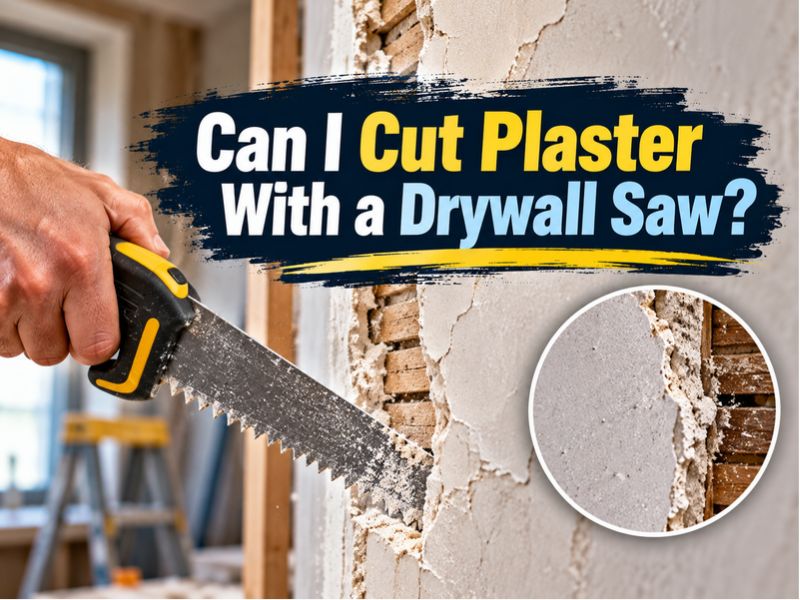
A drywall saw can cut some plaster, particularly thin plaster or modern gypsum-based plaster.
However, it is not always the best tool for traditional plaster walls.
A typical drywall saw has a narrow blade with large, aggressive teeth. Those teeth work extremely well on gypsum board because drywall has a relatively soft core.
Traditional plaster is often much harder.
When you try to cut hard plaster with a drywall saw, you may notice that the saw:
- Cuts very slowly
- Produces rough or chipped edges
- Becomes difficult to control
- Dulls more quickly
So the answer to “Can I cut plaster with a drywall saw?” is yes in some situations, but the tool has clear limitations.
Why Is Plaster Harder to Cut Than Drywall?
Drywall and plaster may look similar once painted, but the wall construction can be very different.
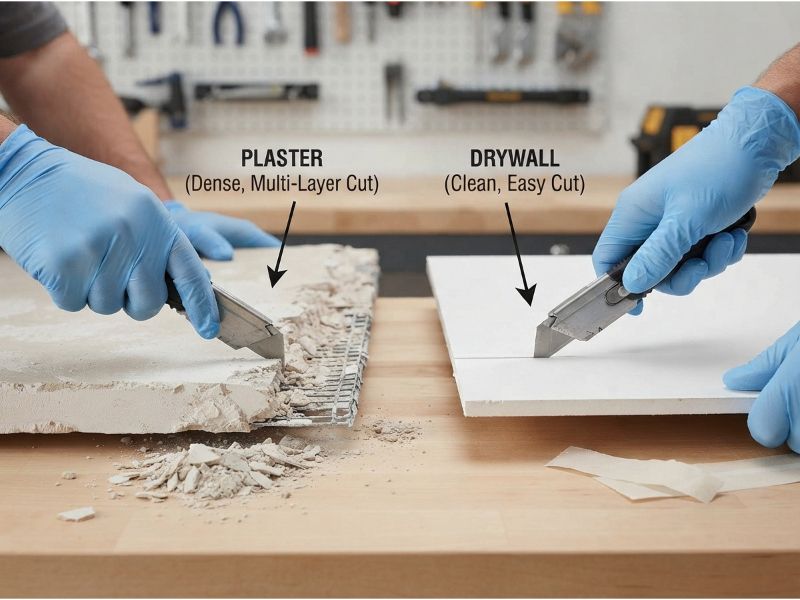
Drywall normally consists of a gypsum core covered with paper. It is manufactured as sheets and attached directly to wall framing.
Traditional plaster walls are usually built in layers. The plaster may be applied over wood lath, metal lath, or another supporting surface.
This makes plaster:
Harder and denser. A drywall saw may struggle to remove material.
More brittle. Cutting can cause cracks or chips around the opening.
More variable. You may cut through soft plaster first and then suddenly hit wood or metal behind it.
This last point is particularly important.
A drywall saw that easily penetrates the surface may stop when it reaches the lath underneath.
Can a Drywall Saw Cut Plaster and Lath?
A drywall saw may cut through the plaster layer, but it may have difficulty with the lath behind it.
Wood Lath
Older plaster walls often contain thin wooden strips called wood lath.
A drywall saw can sometimes cut these strips, but it is not designed primarily as a wood saw. Cutting several pieces of lath can be slow and rough.
There is also a risk of shaking or pulling the lath while sawing, which can loosen nearby plaster.
Metal Lath
A standard drywall saw should generally not be used to cut metal lath.
The teeth are not designed for metal and may become damaged quickly.
If your plaster wall contains metal lath, you will need an appropriate metal-cutting blade or another suitable tool.
Is a Drywall Saw Good for Small Plaster Holes?
For a small opening in relatively soft plaster, a drywall saw may be sufficient.
For example, you might use one to begin an opening for a small access point or minor repair.
However, you should work slowly.
Unlike drywall, plaster can crack beyond the cutting line if you apply too much force or create excessive vibration.
Start with a controlled opening rather than aggressively jabbing the blade through the surface.
If the plaster feels extremely hard, stop rather than forcing the saw.
Can You Jab a Drywall Saw Into Plaster?
It is usually better not to jab a drywall saw aggressively into plaster.
The pointed tip of a jab saw is useful with drywall because gypsum board is soft enough to penetrate.
Traditional plaster can be much harder and more brittle.
Driving the saw forcefully into it can:
- Crack the surrounding plaster
- Damage the blade
- Break plaster away from the lath
- Cause an oversized opening
A better approach is to create a small starter hole first when necessary and then insert the blade carefully.
This gives you more control and reduces stress on the surrounding plaster.
What Is the Best Tool for Cutting Plaster?
For many plaster-wall projects, an oscillating multi-tool is a better option than a drywall saw.
The small oscillating blade gives you controlled cutting and creates less violent back-and-forth movement than some larger saws.
This can help reduce damage around the cut.
An oscillating tool is particularly useful when making:
- Small repair openings
- Electrical box openings
- Access panels
- Controlled rectangular cuts
The correct blade is important. Choose one rated for the materials you expect to encounter.
If the wall includes wood lath, you may need a blade capable of cutting both plaster and wood.
If metal lath is present, use a blade rated for metal.
Drywall Saw vs Oscillating Tool for Plaster
A drywall saw has the advantage of being inexpensive, simple, and easy to carry.
For soft plaster and small jobs, it may work well enough.
An oscillating tool, however, offers better control when dealing with harder plaster or multiple wall materials.
It also allows you to select different blades for:
- Plaster
- Wood
- Metal
- Mixed materials
For an old plaster-and-lath wall, that flexibility can be very useful.
Can a Reciprocating Saw Cut Plaster?
A reciprocating saw can cut plaster, but it is usually more appropriate for demolition or larger openings than careful finish work.
Its blade moves aggressively and may extend deeply into the wall cavity.
That creates two concerns.
First, the vibration can damage surrounding plaster.
Second, the long blade can contact hidden electrical wiring, pipes, or other materials behind the wall.
For a small, precise plaster opening, an oscillating tool is generally easier to control.
How to Cut Plaster With a Drywall Saw
If the plaster is suitable for a drywall saw, begin by marking the opening clearly.
Before cutting, consider what may be behind the wall, including electrical wiring, plumbing, and the lath system itself.
Create a starter opening carefully rather than forcefully stabbing the saw into the plaster.
Insert the blade and use short, controlled strokes along your marked line.
Avoid applying heavy sideways pressure because plaster can chip or crack.
If you hit hard wood or metal, stop and switch to a suitable blade or tool instead of forcing the drywall saw through it.
For a neat repair opening, slow and controlled cutting is usually more important than speed.
How Do I Know If I Have Plaster or Drywall?
Before choosing your cutting tool, it helps to know what your wall is made from.
Drywall usually produces a relatively uniform gypsum core behind the paper surface.
Traditional plaster walls may feel harder and often consist of multiple layers. In older homes, you may also find wood lath immediately behind the plaster.
Existing outlet or switch openings can sometimes provide a safe place to observe the wall construction without making a new hole.
Knowing whether you have drywall, plaster over wood lath, or plaster over metal lath can significantly affect which cutting tool you should use.
How to Avoid Cracking Plaster While Cutting
Plaster is more prone to cracking than drywall, so avoid rushing the cut.
Use a sharp blade and keep your movements controlled.
Do not force a hand saw sideways or apply excessive pressure.
For particularly brittle plaster, an oscillating tool can often create a more controlled cut because it produces less large-scale movement of the wall surface.
You should also avoid making the opening larger than necessary.
Safety When Cutting a Plaster Wall
The visible plaster is only one part of the wall.
Behind it may be electrical wiring, plumbing, wood framing, metal components, or other utilities.
Avoid pushing long blades deeply into a wall when you do not know what is behind it.
Plaster cutting can also produce substantial dust and small debris, so appropriate eye and respiratory protection may be necessary.
Older wall systems can contain materials that require additional precautions. If you are dealing with an older or unknown wall material and are unsure about its composition, identifying the material before creating significant dust is the safer approach.
When Should You Not Use a Drywall Saw on Plaster?
A drywall saw is probably not the right tool if the plaster is:
Very thick, extremely hard, reinforced with metal lath, badly cracked, or part of a wall where you need a very precise finished opening.
It is also a poor choice if you immediately encounter material that the blade is not designed to cut.
Switching tools is better than forcing a drywall saw through an unsuitable wall.
FAQs About Cutting Plaster With a Drywall Saw
Will a drywall saw cut through plaster?
Yes, a drywall saw can cut some types of plaster, especially relatively thin or soft plaster. It may struggle with hard traditional plaster or the lath behind it.
Can I use a jab saw on plaster?
Yes, but a jab saw and drywall saw are often essentially the same tool. Use it carefully because plaster is harder and more brittle than drywall.
Can a drywall saw cut plaster and wood lath?
It may cut the plaster and some thin wood lath, but it is not the most efficient tool for cutting through both materials.
Can a drywall saw cut metal lath?
A standard drywall saw is not designed for metal lath. Use an appropriate metal-cutting blade or tool instead.
What tool is better than a drywall saw for plaster?
An oscillating multi-tool with the correct blade is often a better choice for controlled plaster cutting, particularly when working with plaster-and-lath walls.
Will cutting plaster cause it to crack?
It can. Plaster is brittle, and excessive force or vibration may cause cracking around the cut. Using a sharp blade and controlled technique can reduce the risk.
Final Thoughts
So, can I cut plaster with a drywall saw? Yes, but only when the plaster and wall construction are suitable for the tool.
A drywall saw can work for small cuts in relatively thin or soft plaster, but traditional plaster is usually harder and more brittle than drywall. If the wall contains wood or metal lath, a basic drywall saw may become slow, ineffective, or inappropriate once it reaches the backing material.
For many plaster-wall projects, an oscillating multi-tool with the correct blade offers better control and greater versatility.
If you do use a drywall saw, avoid aggressively jabbing it into the plaster. Start carefully, use short strokes, and stop if you encounter a material the blade is not designed to cut.
The main goal is not simply getting through the wall—it is making the opening without unnecessarily cracking the surrounding plaster or damaging anything hidden behind it.