Can a Drywall Saw Cut Tile Backer Board? What You Need to Know
Yes, a drywall saw can cut some types of tile backer board, but it is usually not the best tool for the job.
The answer depends heavily on what kind of backer board you are cutting. A drywall saw may work reasonably well on foam backer board and some softer gypsum-based tile boards, but it can be slow and difficult to use on cement backer board or fiber-cement board.
Drywall saws are designed for soft gypsum drywall. Cement-based boards are much denser and more abrasive, so they can dull a drywall saw quickly and make the cut rough.
For most cement backer board, a carbide scoring knife, carbide-tipped cutter, jigsaw with the correct blade, or another tool rated for cement board will usually work better.
So, while a drywall saw may get through certain backer boards, the material matters more than the fact that it is called “backer board.”
Can a Drywall Saw Cut Tile Backer Board?
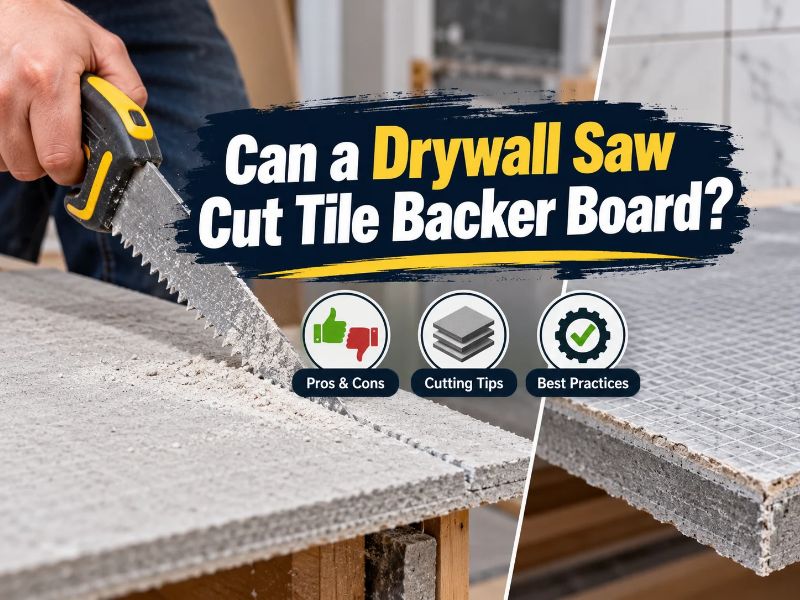
A drywall saw can cut tile backer board in some situations, particularly when the board is soft enough for the saw teeth to bite into.
However, tile backer board is a broad term that includes several different materials.
Common types include:
Cement backer board, which is dense and abrasive.
Fiber-cement board, which combines cement with reinforcing fibers.
Foam backer board, which has a lightweight foam core and coated surface.
Gypsum-based tile backer board, which is closer to drywall in how it cuts.
A drywall saw performs very differently on each one.
If you are cutting a foam or gypsum-based board, the saw may work fairly easily.
If you are cutting a cement-based board, expect much more resistance.
Can a Drywall Saw Cut Cement Backer Board?
Technically, a drywall saw may cut cement backer board, but it is generally not the tool I would choose.
Cement board is much harder than drywall.
A drywall saw has relatively coarse teeth designed to pass through gypsum quickly. When those teeth are used on cementitious material, they can wear down fast.
You may also end up with a rougher edge and need much more effort to complete the cut.
For a very small notch or adjustment, you may be able to use a drywall saw in a pinch.
For larger or repeated cuts, use a tool designed for cement board.
Why Is Cement Board Harder to Cut Than Drywall?
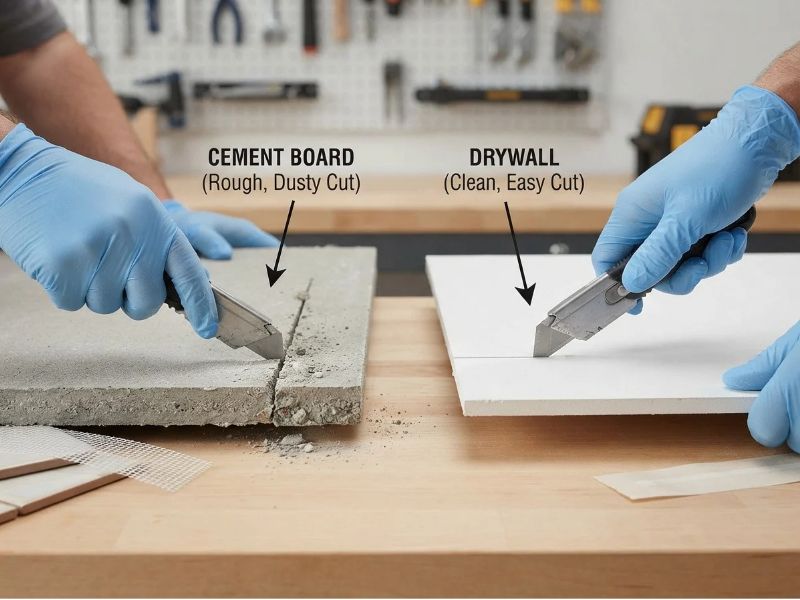
Drywall has a soft gypsum core covered with paper.
Cement backer board contains cement and reinforcing material, which makes it significantly harder and more abrasive.
That difference affects cutting in several ways.
A drywall saw that moves quickly through gypsum may feel slow in cement board. The teeth may become dull, and the cutting action can produce gritty dust instead of the softer gypsum debris you get from drywall.
Cement board is also more likely to chip along a rough cut if the wrong tool or technique is used.
Can a Drywall Saw Cut Foam Backer Board?
Yes. A drywall saw can usually cut foam tile backer board much more easily than cement board.
Foam backer boards are lightweight and relatively soft.
A hand saw can cut through the foam core without much resistance, although a utility knife may be even easier for many straight cuts.
If you are making an irregular opening, such as a cut around a pipe or fixture, a narrow saw can be useful.
Just keep in mind that the surface coating may behave differently from the foam core, so use controlled strokes rather than tearing through the board aggressively.
Can a Drywall Saw Cut Gypsum Tile Backer Board?
Yes. A drywall saw is generally much better suited to gypsum-based tile backer board than to cement board.
Because the core is similar to drywall, the saw teeth can cut through it more easily.
For small openings, plumbing cutouts, and other irregular shapes, a drywall saw may work perfectly well.
For long straight cuts, however, scoring and snapping with the correct knife may still be faster and cleaner.
What Is the Best Tool for Cutting Cement Backer Board?
For straight cuts, a carbide scoring knife or carbide-tipped backer-board cutter is often one of the simplest choices.
The usual process is to score the surface deeply along a straightedge and then snap the board.
For holes, curves, or more complicated shapes, the best tool depends on the board manufacturer and the type of opening.
A jigsaw fitted with an appropriate carbide or abrasive blade may work well for some boards.
An oscillating multi-tool with a suitable carbide blade can also be useful for smaller detailed cuts.
For round openings, a carbide-grit hole saw may be appropriate depending on the material.
The key point is to use a blade or cutter that is actually rated for cementitious backer board.
Drywall Saw vs Carbide Scoring Knife for Backer Board
For straight cement-board cuts, a carbide scoring knife is usually the better choice.
A drywall saw physically removes material with each stroke.
A carbide scoring knife cuts a groove into the board, allowing it to snap along the line.
This usually means less effort and a cleaner workflow for straight cuts.
The drywall saw becomes more useful when you need a small internal opening that cannot simply be snapped.
Even then, a carbide-equipped tool may be more efficient on hard cement board.
Drywall Saw vs Jigsaw for Tile Backer Board
A jigsaw can be a better option for curved and irregular cuts, provided it has the correct blade.
A standard wood blade may wear quickly on cement board, just like a drywall saw.
A blade rated for abrasive or cement-based materials is much more suitable.
Compared with a drywall saw, a jigsaw can cut faster and follow larger curves more easily.
However, it also produces more dust and requires a power source.
For a small one-off cut, a hand tool may still be simpler.
Can You Use a Jab Saw on Tile Backer Board?
A jab saw and drywall saw are often essentially the same type of tool, so the answer is similar.
A jab saw can work on softer tile backer board, especially foam or gypsum-based products.
On cement board, it may cut slowly and wear out quickly.
If you only need to enlarge a small hole, it might work.
If you need to cut several pieces of cement backer board, choose a tool intended for that material.
Can You Cut Tile Backer Board With a Utility Knife?
It depends on the board.
Some foam and gypsum-based boards can be cut very effectively with a utility knife.
Cement board usually requires a carbide scoring tool rather than a standard utility knife, although the exact method depends on the product.
Always check the board manufacturer’s cutting instructions if they are available.
Different backer boards can look similar but require different tools.
How to Cut Backer Board With a Drywall Saw
If you decide to use a drywall saw on a compatible backer board, first mark the cut clearly.
For an interior opening, create a starter hole large enough for the blade to enter without forcing it.
Then use short, controlled strokes along the marked line.
Do not twist the blade aggressively because this can damage the edge of the board or bend the saw.
If cutting becomes extremely difficult, stop rather than forcing the tool.
Heavy resistance is usually a sign that the board is too hard for a drywall saw to be an efficient choice.
Does a Drywall Saw Make a Clean Cut in Backer Board?
It can make an acceptable cut in softer boards, but a drywall saw will not always produce the cleanest edge.
On cement board, the edge may be rough or chipped.
This may not matter if the cut will be hidden behind tile, trim, or a fixture, but accurate openings still make installation easier.
Using the right blade usually improves both speed and edge quality.
Will Cement Board Damage a Drywall Saw?
Cement backer board can wear down drywall saw teeth much faster than drywall.
The material is abrasive.
One small cut may not ruin the saw, but repeated cutting can dull the blade noticeably.
If you frequently work with cement board, using a dedicated carbide cutting tool is usually more economical than repeatedly replacing drywall saws.
What About Cutting Backer Board Around Pipes?
For pipe openings, the best tool depends on the shape and material.
A drywall saw may work for an irregular opening in softer backer board.
For cement board, a carbide-grit hole saw or other board-compatible cutting tool will often produce a cleaner circular opening.
Avoid making the opening much larger than necessary.
A neat cut makes waterproofing and finishing around the penetration easier.
What About Cutting Backer Board for Outlets?
A rectangular electrical-box opening can sometimes be cut with a drywall saw, but cement backer board is much harder than drywall.
For cement board, an oscillating tool with an appropriate carbide blade or another cement-board cutting method may provide better control.
For foam or gypsum-based backer board, a drywall saw may be perfectly adequate.
Again, the board material determines the best tool.
Does Cutting Cement Board Create Dust?
Yes. Cement-based boards can create fine mineral dust when they are sawn or ground.
Power tools generally create more airborne dust than scoring and snapping.
When possible, using a scoring method can help reduce dust.
Follow the backer-board manufacturer’s recommendations and use appropriate eye and respiratory protection when the cutting method produces airborne dust.
When Should You Not Use a Drywall Saw?
Avoid relying on a drywall saw when the tile backer board is:
Very dense, cement-based, fiber-cement, reinforced, or difficult enough that the saw teeth are barely cutting.
It is also not a good choice for long straight cuts where a scoring tool would be faster.
A drywall saw makes the most sense for small, irregular cuts in softer backer-board materials.
FAQs About Cutting Tile Backer Board With a Drywall Saw
Will a drywall saw cut cement board?
It may cut cement board, but it will usually be slow and can dull the saw quickly. A carbide scoring or cutting tool is generally better.
Can a jab saw cut cement backer board?
A jab saw may work for a small cut, but it faces the same limitations as a drywall saw because the tools are often very similar.
Can a drywall saw cut foam backer board?
Yes. Foam backer board is much softer, so a drywall saw can generally cut it without much difficulty.
What is the easiest tool for cutting cement board?
For many straight cuts, a carbide scoring knife is one of the simplest options. More complex cuts may require a jigsaw, oscillating tool, or hole saw with the correct blade.
Can I use a regular utility knife on tile backer board?
You can use one on many foam and gypsum-based boards. Cement board generally requires a more durable carbide scoring tool.
What saw blade is best for cement backer board?
Use a blade specifically rated for cement board, fiber cement, or abrasive masonry-type materials, depending on the tool and board manufacturer.
Final Thoughts
So, can a drywall saw cut tile backer board? Yes, but the answer depends on which type of backer board you have.
A drywall saw works reasonably well on foam and gypsum-based tile backer boards because those materials are relatively soft.
It can also cut small sections of cement backer board, but it is usually slow, rough, and hard on the saw teeth.
For cement board, a carbide scoring knife or another carbide-equipped cutting tool is generally a better choice. For curved or irregular openings, a jigsaw or oscillating multi-tool with the correct blade may be more practical.
If you only need one small cut, a drywall saw might get the job done. But for repeated cement-board work, using a tool made for the material will usually give you faster cuts, better control, and less blade wear.